Morning
- Brush teeth for two minutes with fluoride toothpaste.
- Help young children brush, then check the spots near the gumline.
- Spit after brushing. Use rinsing habits recommended by your dentist.
- Choose water between meals when possible.
Family resource
Simple daily guidance to help families build healthy oral-health habits with confidence.
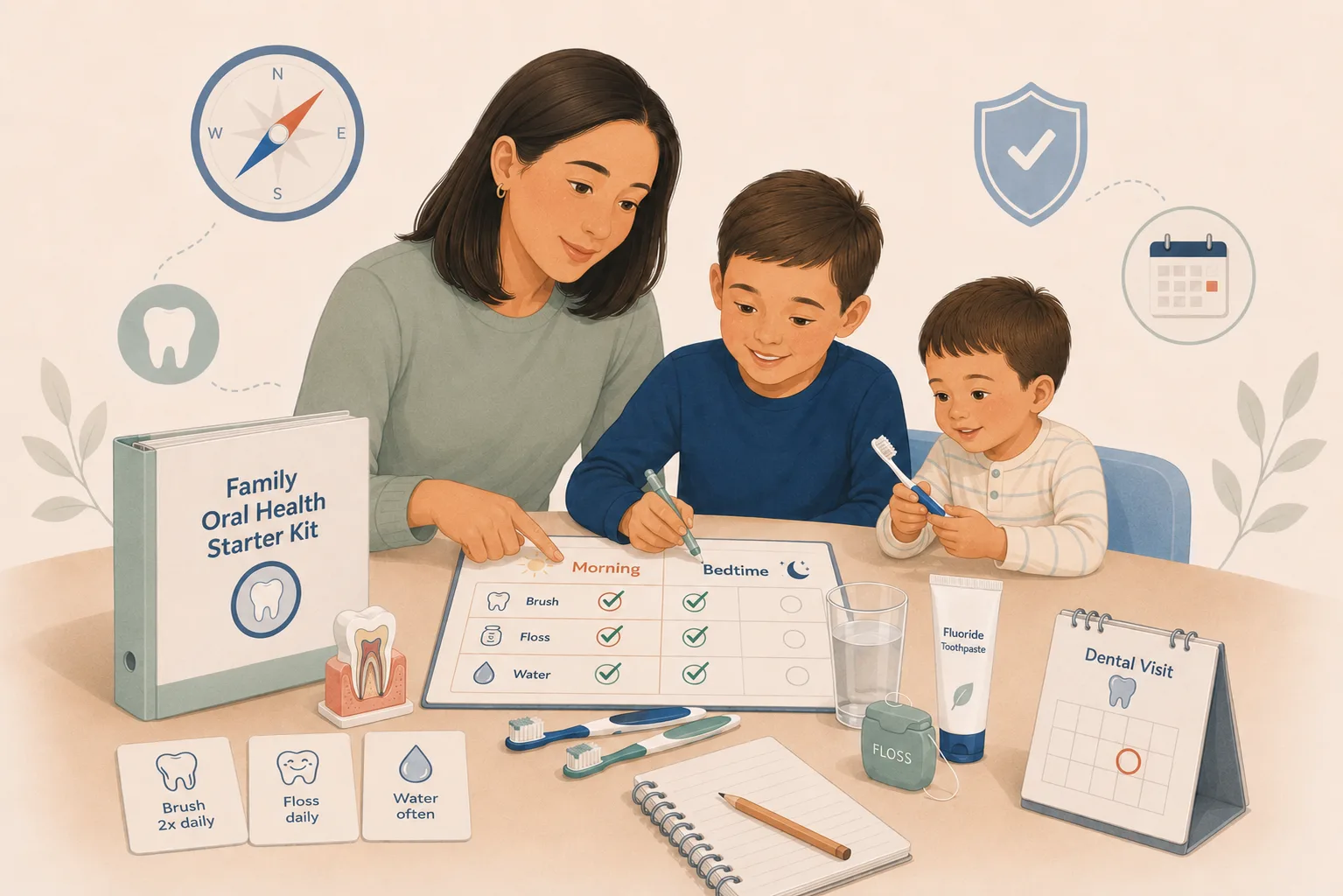
Oral health does not need to be complicated. Small consistent habits matter more than perfection. This guide brings the fundamentals into one practical place so your family can build a routine that feels calm, repeatable, and clear.
Section 1
Keep the routine short enough to repeat on normal days, not just perfect days.
Section 2
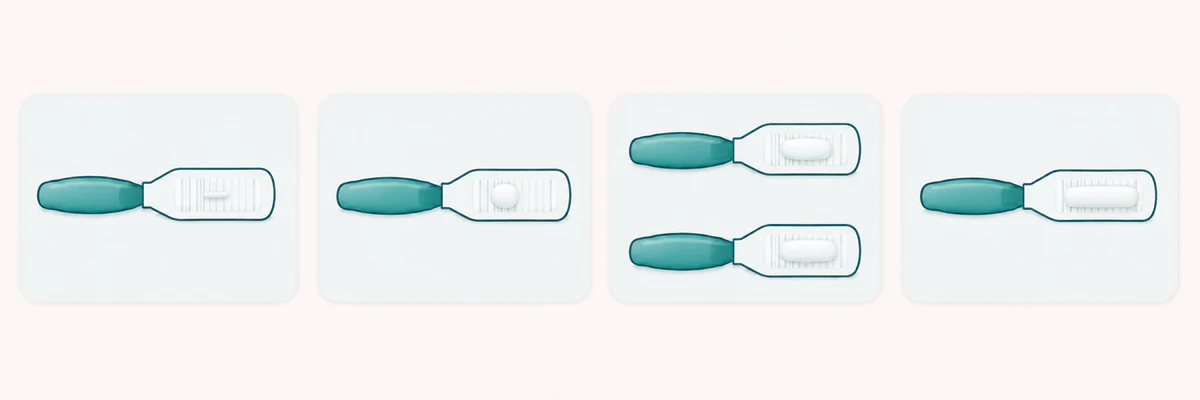
Most families need less toothpaste than advertisements show, especially for young children.
Under 3
Start when the first tooth appears. A tiny smear is enough.
Age 3-6
Supervise brushing and encourage spitting out extra toothpaste.
Older children
Use enough to cover the brush lightly, not a full commercial ribbon.
Adults
A modest amount is usually plenty when brushing all tooth surfaces.
Section 3
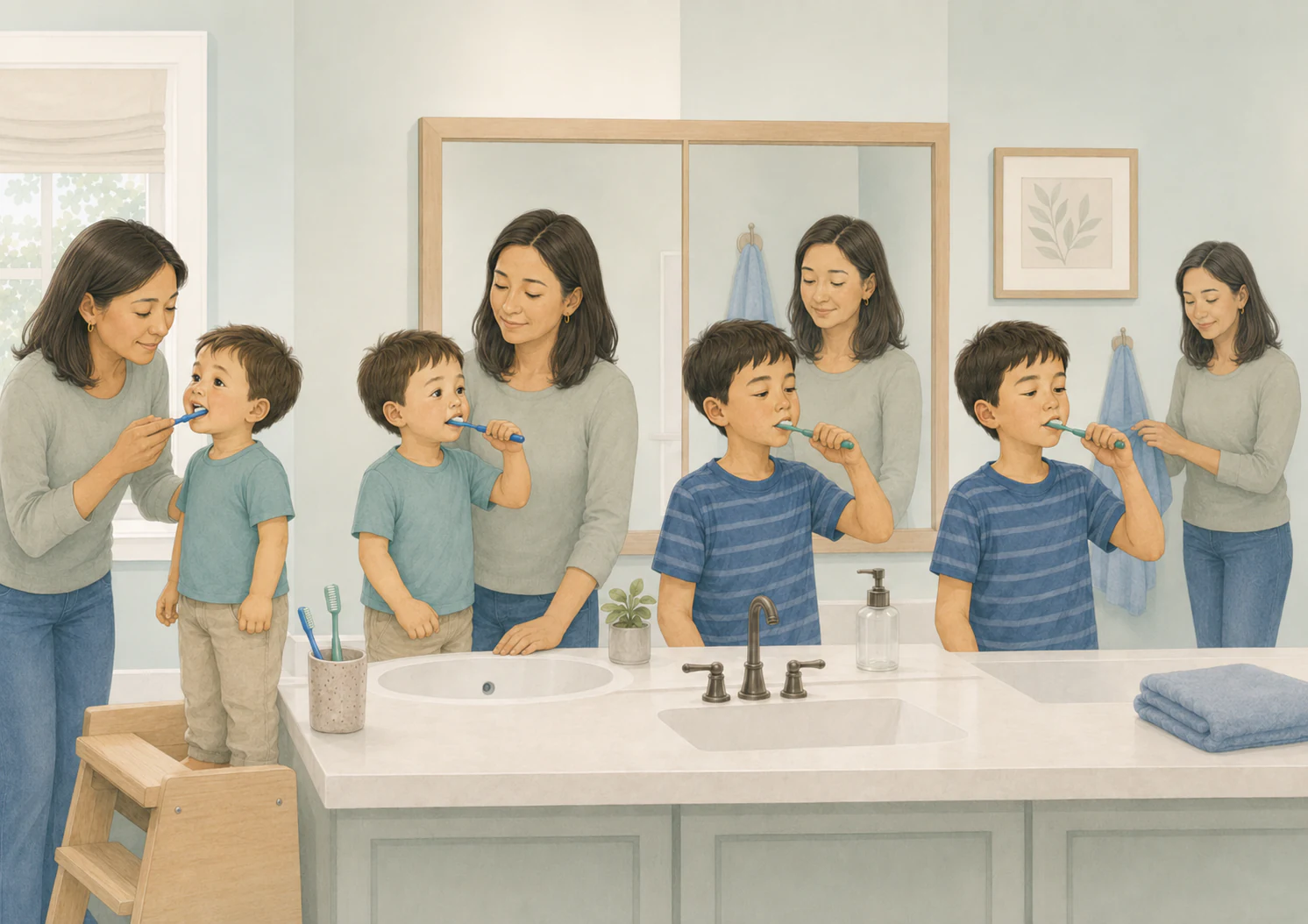
Children develop at different rates. Supervision matters more than age alone.
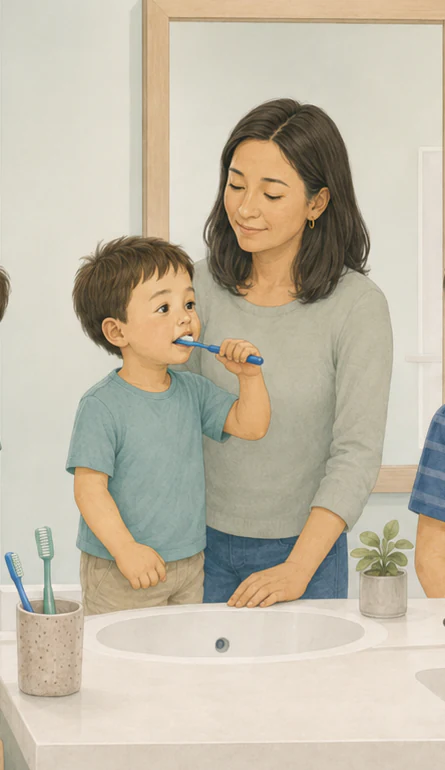
 1
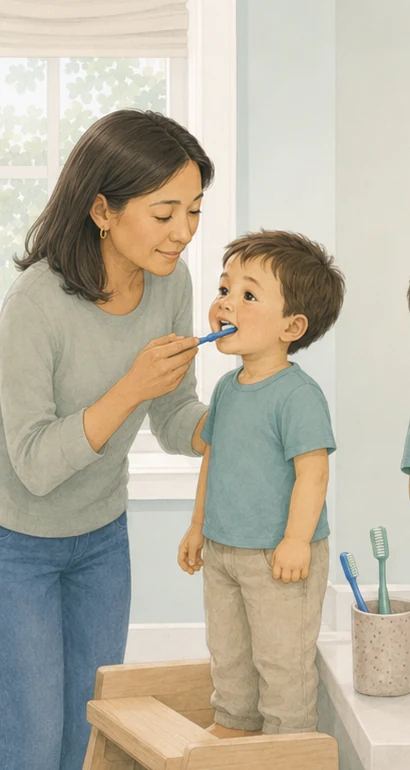
1 For babies and toddlers, the adult does the cleaning with a small, soft brush.
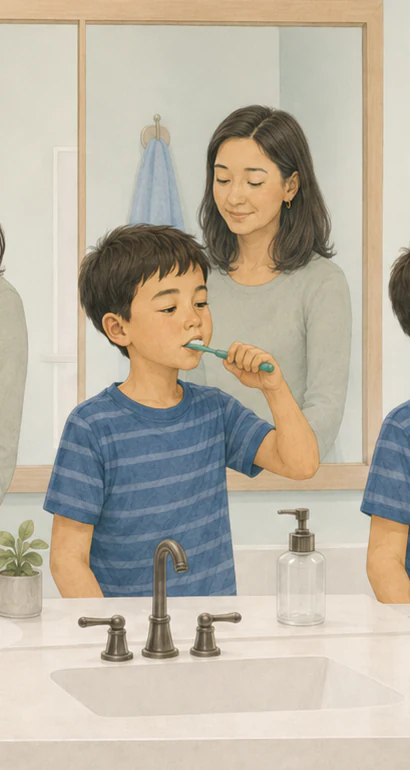
 2
2 The child gets a turn, then the adult finishes the missed areas.
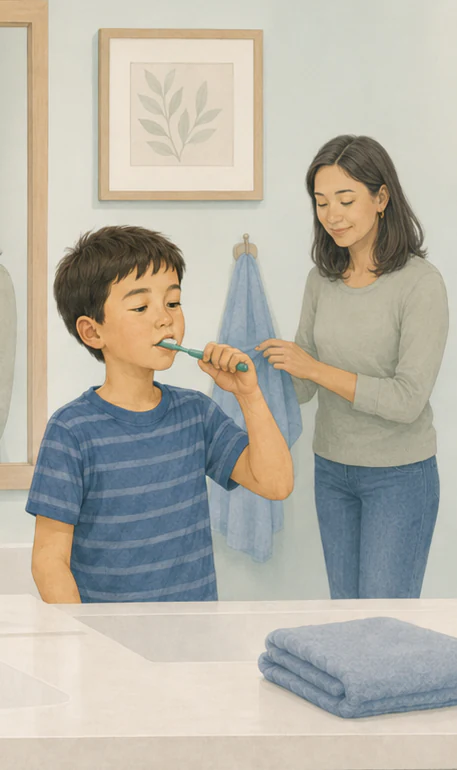
 3
3 The child does more of the brushing while an adult checks technique and toothpaste amount.
 4
4 Older children can own more of the routine, with periodic reminders and check-ins.
A useful sign is not a birthday. It is whether the child can clean every surface gently, spit reliably, and repeat the routine without rushing.
Section 4
For teeth, frequency often matters more than a single drink. Repeated sipping keeps teeth exposed longer.

| Drink | Everyday role | Helpful routine |
|---|---|---|
| Water | Best everyday default | Offer freely between meals and after brushing. |
| Milk | Helpful with meals | Keep it mostly with meals instead of sipping for long periods. |
| Juice | Limit frequency | If used, keep portions small and pair with meals. |
| Sports drinks | Usually occasional | Reserve for specific athletic needs, not daily sipping. |
| Soft drinks | Higher-risk pattern when frequent | Frequency matters. Repeated sipping gives teeth more acid exposure. |
| Sweetened beverages | Keep occasional | Use with meals when possible and return to water afterward. |
Section 5
Dental visits are for prevention, guidance, and early problem-solving, not only for pain.
Many children should have a first dental visit around the first birthday or within six months of the first tooth.
The timing depends on age, dental history, cavity risk, gum health, and your dentist's recommendation.
Cleanings remove buildup that home care cannot fully manage and give families a chance to adjust routines.
Visits may include a health update, exam, cleaning, x-rays when appropriate, prevention advice, and time for questions.
Section 6
A short checklist can make appointments less stressful and more useful.
Section 7
Use this as general guidance. A dental office can help decide the right timing for your situation.
Checkups, cleanings, mild questions, habit coaching, sealant or fluoride questions.
Bring these up at the next planned visit or schedule a routine appointment.New sensitivity, a chipped filling, bleeding gums that keep returning, a visible spot, or discomfort that is not severe.
Call during office hours and ask when the dentist recommends being seen.Tooth pain that disrupts sleep, swelling near a tooth or gum, a cracked tooth with pain, or injury to a tooth.
Contact a dentist promptly. Ask for same-day guidance if symptoms are worsening.Trouble breathing or swallowing, facial swelling spreading quickly, uncontrolled bleeding, major facial trauma, or signs of serious infection.
Seek emergency medical care right away.Section 8
Simple corrections can make family routines calmer and more consistent.
Baby teeth help children eat, speak, smile, stay comfortable, and hold space for adult teeth.
Bleeding often means the gums need gentler, more consistent cleaning. Ongoing bleeding should be discussed with a dentist.
Tooth color varies naturally. Health depends on comfort, gum condition, enamel, decay risk, and a dental examination.
Gentle, thorough brushing with a soft brush is usually more helpful than scrubbing.
Some early cavities and gum problems cause no obvious symptoms. Routine dental visits can catch changes earlier.
References
For dental teams
Use the maintained Oral Compass edition during a conversation, then give patients the same resource to revisit at home.
Available online. No separate printable file is currently offered for this resource.
Section 10
A strong family routine is built through small repeatable steps: brush twice a day, clean between teeth regularly, keep drink frequency simple, and ask for help early when something changes. Missed days happen. Return to the routine without turning oral health into a source of stress.