Independence is the goal, but it is gradual
Many children want to brush their own teeth before they can do it well every time. That is normal. Brushing asks a child to use the right amount of toothpaste, reach every tooth surface, clean near the gumline, and keep the routine going long enough.
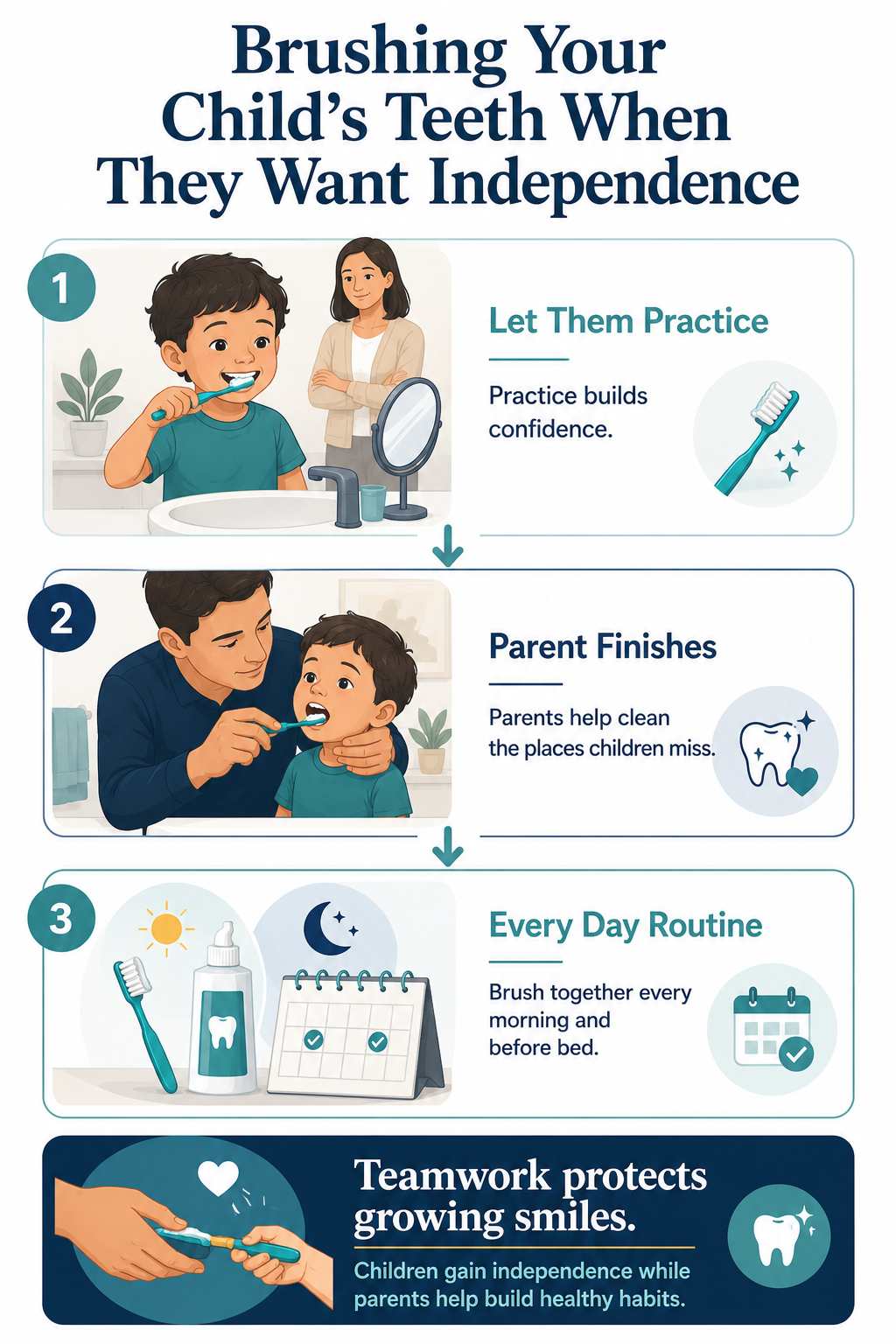
The safest framing is shared responsibility: the child practices, and the caregiver still helps, finishes, or checks. For a fuller day-to-day structure, see the morning and bedtime tooth routine for kids.
Why kids still need help
Young children usually do not brush effectively on their own. Even an enthusiastic child may miss the back teeth, rush the gumline, use too much toothpaste, or stop after a few seconds.
Caregiver help is not a punishment or a sign that the child failed. It is part of learning a health routine.
Three ways to share the job
Child starts, caregiver finishes
Let your child brush first, then say something like, “My turn to get the spots toothbrushes usually miss.” This keeps practice in the routine while making room for adult help.
Caregiver starts, child finishes
If the child is tired or the routine is rushed, the caregiver can brush first and let the child finish with a short turn. This can work well at bedtime.
Take turns by area
Some families divide the mouth into simple zones. The child brushes the front teeth, and the caregiver helps with the back teeth and gumline.
None of these is the one right method. The best version is the one your family can repeat calmly.
What caregivers should still watch
As independence grows, caregivers can keep an eye on the basics:
- Is the toothpaste amount age-appropriate?
- Are the back teeth getting attention?
- Are the outside, inside, and chewing surfaces being brushed?
- Is brushing happening twice a day?
- Is the child spitting out excess toothpaste?
- Does the child need help reaching certain areas?
These are routine checks, not a home dental exam. If you are worried about pain, swelling, injury, spots, bleeding, or a sudden change, contact a dentist.
For a short follow-up sequence and neutral language, see how parents can check a child’s brushing without turning it into a fight.
Calm language can reduce the power struggle
The handoff often goes better when the caregiver avoids making brushing a test. Try language that names teamwork:
- “You do your practice turn, then I will do the helper turn.”
- “Let’s get the back teeth together.”
- “You are learning; I am helping.”
- “Tonight we will keep it short and steady.”
If brushing becomes a frequent battle, look for friction points such as timing, taste, texture, fatigue, or control. A dentist or pediatrician can help if the routine remains very hard or if discomfort might be part of the problem.
When to ask the dentist
Ask your child’s dentist how much help your child still needs. The answer can depend on age, motor skills, attention, tooth spacing, orthodontic appliances, cavity risk, and how the child’s brushing actually looks.
There is no single age when every child is suddenly ready to brush alone. Independence is built by practice, support, and check-backs over time.
Sources
- Frequently Asked Questions — American Academy of Pediatric Dentistry
- Baby Teeth — MouthHealthy / American Dental Association
- Brushing Your Teeth — MouthHealthy / American Dental Association