Why a cracked tooth can feel confusing
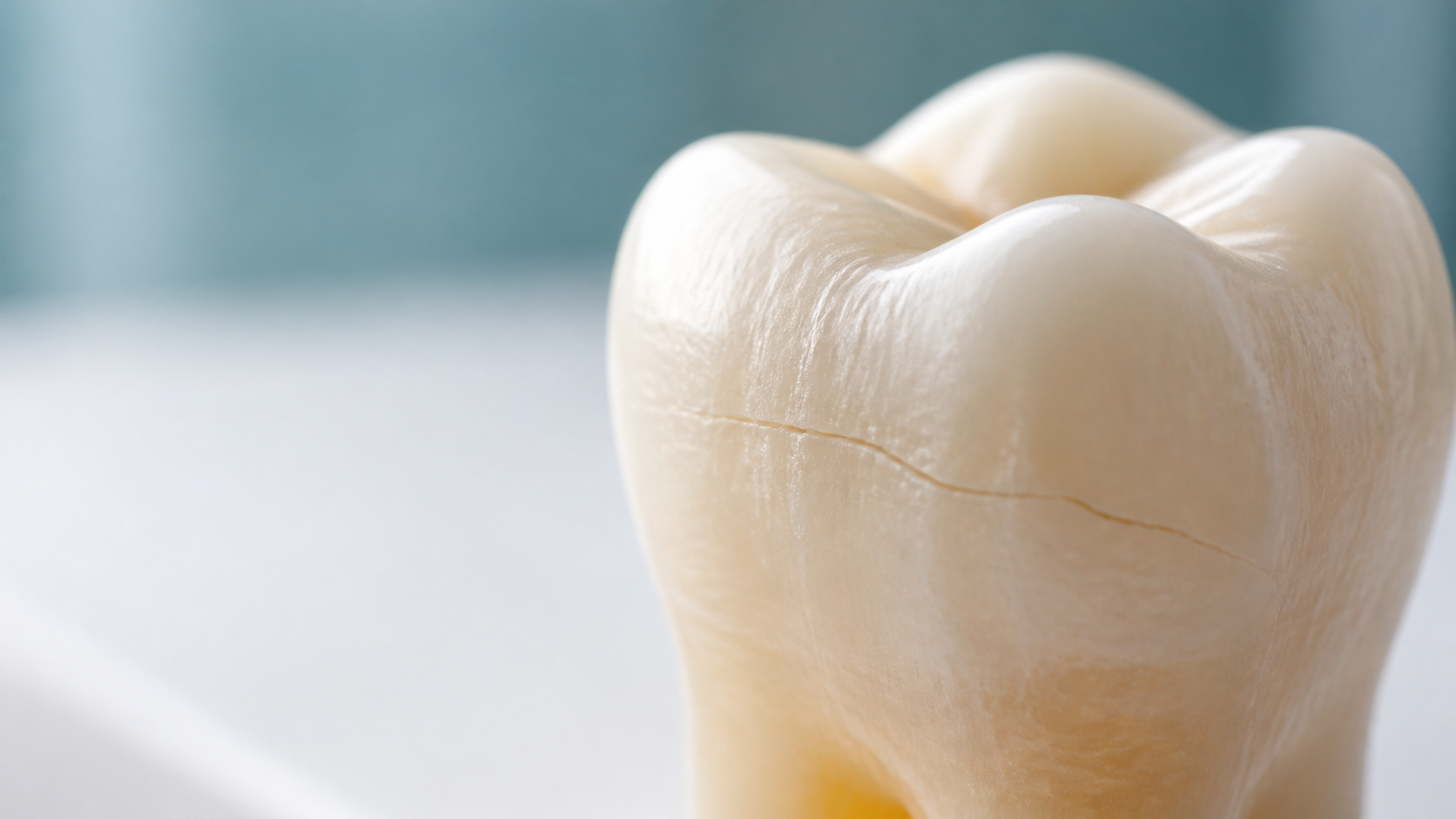
A cracked tooth is not always like a visibly broken tooth. Some cracks are easy to see. Others are small, hidden under a filling, or shaped in a way that is hard to confirm from the outside.
That is why a cracked tooth can feel confusing: the tooth may look mostly normal, but biting, temperature, or pressure can still create symptoms. Those symptoms can have more than one cause, so they cannot tell you the crack type—or confirm that a crack is the cause—on their own.
Symptoms can come and go
Cracks do not all affect the same part of the tooth. A crack may involve the outer tooth surface, the dentin underneath, or deeper structures. The deeper and more complex the crack is, the more carefully it needs to be evaluated.
Some people notice sharp pain when biting or when releasing a bite. Others notice sensitivity to cold or sweets. These patterns can be useful clues for the dental team, but they are not enough to identify the exact problem, confirm a crack, or show how deep a crack may be.
If pain when chewing, a new broken edge, or a change after an injury makes you concerned, contact a dentist promptly for advice about timing. If you have facial swelling, fever, trouble breathing or swallowing, or a significant injury to the mouth or jaw, seek urgent dental or medical care.
What a dentist may be checking
When a dentist is concerned about a crack, the exam may include questions about the pain pattern, a look at existing fillings or crowns, bite-pressure testing in the office, temperature testing, imaging, or magnification. Not every check is needed for every person.
The point of those checks is not only to find a line in the tooth. It is to understand whether the tooth structure, nerve, root, surrounding gum, or existing dental work may be involved.
Why treatment decisions vary
Two teeth can both be described as “cracked” and still need different conversations. Location, depth, symptoms, existing restorations, and the health of the tooth nerve can all change what a dentist recommends.
This article cannot tell you whether a cracked tooth needs monitoring, a filling, a crown, a root canal, extraction, or another plan. That decision depends on an exam and your dentist’s findings.
Questions that can help at the visit
- What makes you think this tooth may be cracked?
- Is the concern limited to the outer tooth structure, or could deeper layers be involved?
- What tests or images helped you understand the finding?
- What signs would make the plan change?
- What are the goals of the option you are recommending?
The main idea
A cracked tooth can be hard to understand because cracks vary in visibility, depth, symptoms, and meaning. The safest next step is not to test the tooth at home or guess the treatment. It is to use your symptoms as context for a dental evaluation.
Sources
- Tooth Fracture — NCBI Bookshelf, StatPearls
- Cracked Teeth and Vertical Root Fractures: A New Look at a Growing Problem — American Association of Endodontists
- Top 10 Dental Symptoms — MouthHealthy, American Dental Association