The simple answer
A dental crown is a restoration that covers more of a tooth than a filling. People sometimes call it a cap. It can help protect and rebuild a tooth when the remaining structure, an old restoration, cracks, wear, or previous treatment make a smaller repair less suitable.
That does not mean a crown is automatically better than a filling. It means the dentist is thinking about how much tooth structure needs support and what the tooth must handle over time.
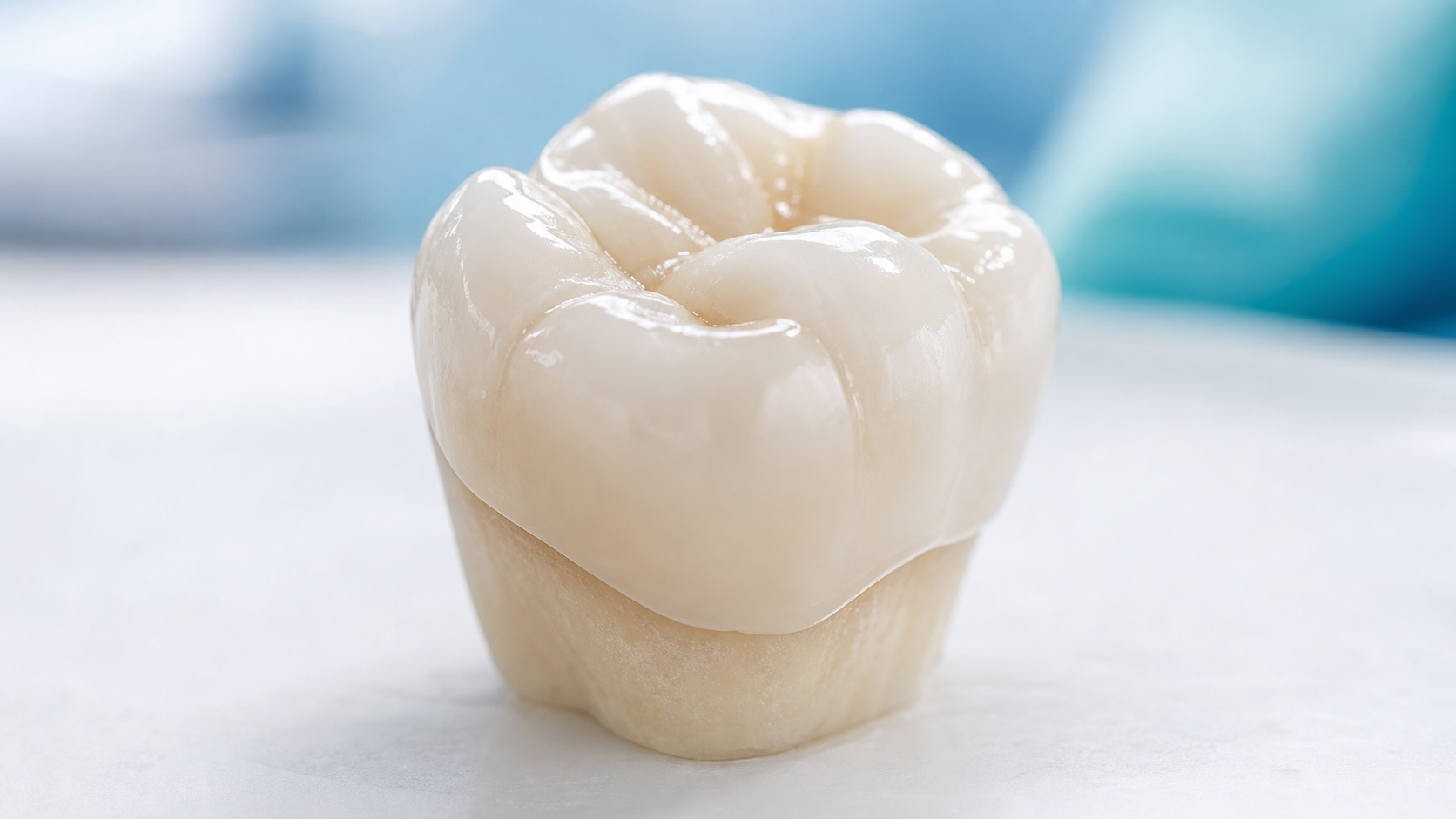
What a crown is
A crown fits over the visible part of a prepared tooth. Its job is to restore shape, protect weakened structure, and help the tooth function when a broader repair is needed.
Crowns can be discussed for different reasons, including a large cavity, a broken or worn tooth, a large existing filling, or a tooth that has had root canal treatment. The reason matters because each tooth has its own starting point.
The planning details can vary. A dentist may use an examination and imaging to understand the tooth, surrounding tissues, bite, and existing restoration before discussing how much preparation is appropriate, whether a temporary restoration is useful, or which material options fit the situation. Those details are not the same for every tooth.
How a crown differs from a filling
A filling repairs a limited area of a tooth. A crown covers more of the tooth.
That difference is easier to understand with a simple image: a filling patches a smaller prepared area, while a crown wraps around the tooth more broadly. The broader coverage may be considered when the tooth needs more protection than a filling can reasonably provide.
Only an exam and dental imaging can show whether a tooth has enough structure for one approach or another.
How crowns differ from veneers and temporary restorations
A veneer is a thinner covering placed mainly on the front surface of a tooth; a crown covers the tooth more broadly. A temporary restoration is a short-term step that may be used while a final restoration is being planned or made. Neither comparison tells you which treatment is right for a particular tooth.
Crowns and veneers can both involve treatment planning, preparation, and material choices, but they serve different purposes. A dentist can explain the expected tradeoffs and alternatives for your own tooth without assuming that one option is always best.
Why a dentist might mention a crown
A dentist may discuss a crown when a tooth has lost a lot of structure, has cracks or heavy wear, has a large older restoration, or needs protection after certain treatments.
Root canal treatment is one common context where a crown may be discussed later. A temporary filling may protect the tooth until a regular filling or crown is placed, but the follow-up restoration depends on the tooth and treatment plan. That does not mean every root canal situation is identical or that every tooth needs a crown.
If tooth pain is part of the reason you are learning about crowns, this tooth-pain overview can help with general vocabulary before a dental visit.
Questions to ask
Good crown questions focus on the reason for the recommendation:
- What part of the tooth needs more coverage?
- Is the concern decay, cracking, wear, an old restoration, root canal treatment, or something else?
- What are the main goals of the crown in my case?
- Are there alternatives, and what are the tradeoffs?
- What should I understand about follow-up and maintenance?
These questions do not replace your dentist’s exam. They help you understand the plan being discussed.
Care and when to check in
A crown still needs routine home care and dental follow-up. Contact a dental professional if a crown feels loose or broken, your bite suddenly feels different, or you have new or worsening tooth pain, swelling, or another concern. These signs do not identify the cause on their own, but they are worth professional evaluation rather than self-repair.
Takeaway
A crown is a broader protective restoration than a filling. It may be discussed when a tooth needs more coverage or support, but the right plan depends on the tooth, the bite, the remaining structure, and a dentist’s evaluation.
Sources
- Crowns — MouthHealthy / American Dental Association
- Dental Filling Options — MouthHealthy / American Dental Association
- Root Canals — MouthHealthy / American Dental Association
- Veneers — MouthHealthy / American Dental Association
- Dental Emergencies — MouthHealthy / American Dental Association