The simple answer
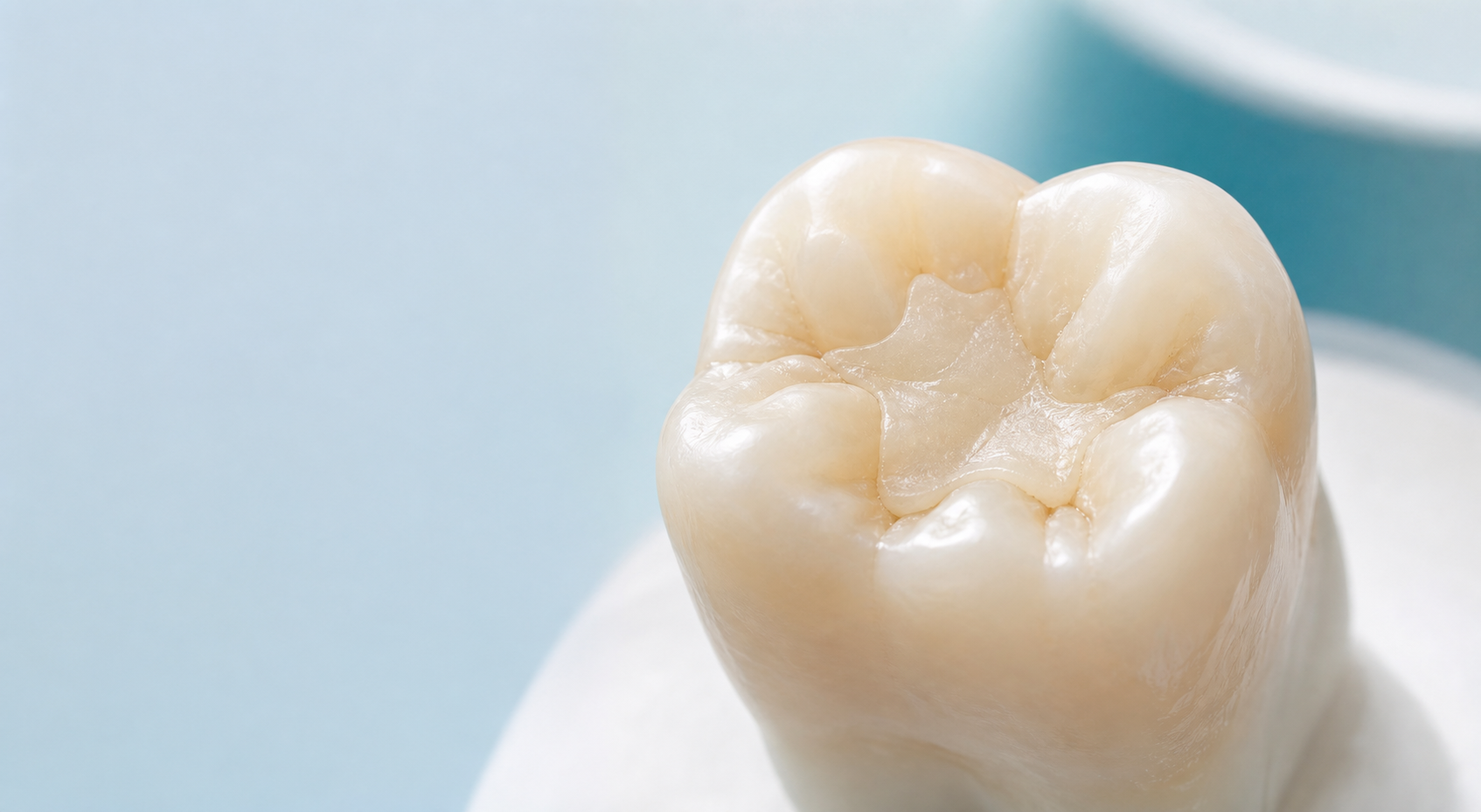
A dental filling is a restoration used to repair a limited area of a tooth. Most people hear about fillings in the context of cavities: a dentist removes decayed tooth tissue, prepares the area, and places a material that helps restore the tooth’s shape and function. Fillings may also be discussed for certain small chips, worn areas, or older restorations that need repair or replacement.
That does not mean every dark spot, discolored area, sensitive tooth, chip, or painful tooth needs a filling. Those findings can have different causes. A dentist uses an examination and may use dental X-rays or other imaging to understand the location and extent of a problem before discussing whether monitoring, a filling, another treatment, or no treatment is appropriate.
What a filling is meant to do
A filling is meant to restore a part of a tooth that can no longer stay as it is. That may be because tooth decay has damaged the enamel or because a small area of tooth structure has chipped or worn.
The goal is practical: remove or prepare the damaged area, protect the tooth from further breakdown in that spot, and rebuild enough shape for normal chewing and cleaning.
Fillings are common, but they are still individualized care. The amount and location of affected tooth structure, biting forces, moisture control, appearance goals, health history, and other clinical factors can influence the plan.
Common filling-material categories
Common categories include tooth-colored composite resin, glass ionomer cement, and dental amalgam. Some restorations are made outside the mouth from ceramic or metal and then attached to the prepared tooth; these are often described as indirect restorations, inlays, or onlays rather than routine direct fillings.
Each category has tradeoffs. Color, strength, size and location of the repair, ability to keep the area dry, cost, and relevant health considerations may matter. No one material is best for every person or every tooth, so material selection belongs in a discussion with a dentist rather than a universal recommendation.
Temporary versus permanent restorations
A temporary filling or restoration is intended as a short-term step. It may protect a prepared or treated area while the tooth is being evaluated, while another restoration is made, or between stages of care. A permanent restoration is intended to serve as the longer-term repair, but “permanent” does not mean it will last for life.
If a temporary restoration is placed, follow the dental team’s instructions and confirm what follow-up is planned. The reason, material, and timing are not the same in every case.
How fillings connect to cavities
Cavities develop when acids from bacteria in plaque damage the hard outer surfaces of teeth over time. If decay progresses far enough, the damaged tooth structure may need to be removed and restored.
That is where a filling can come in. A filling does not make the tooth “new,” and it does not remove the need for daily prevention. Teeth with fillings can develop new decay at their edges or elsewhere, and restorations can wear, chip, loosen, or fracture over time.
If tooth pain is part of why the topic came up, see what tooth pain can mean for general context.
Filling versus crown, in plain language
A filling repairs a limited area of a tooth. A crown covers more of the tooth, like a protective cap.
That difference matters because a tooth with a small repair need is not the same as a tooth with less remaining structure, cracks, heavy wear, or a large older restoration. The article cannot tell you which category your tooth belongs in. That decision depends on what your dentist sees and what the tooth needs to withstand.
If your dentist mentions both options, it is reasonable to ask what they are seeing and why one approach is being discussed.
Questions to ask before a filling
Helpful questions are usually simple:
- What problem is the filling meant to repair?
- How much of the tooth is involved?
- Is the goal to treat active decay, replace an old restoration, or repair damage?
- What material categories fit this tooth, and what are their main tradeoffs?
- Is the planned restoration temporary or intended as the longer-term repair?
- What should I watch for after the appointment?
- What can I do to lower the chance of new decay around this or other teeth?
These questions do not pressure you to decide alone. They help turn a dental term into a clearer conversation.
After a filling: sensitivity, bite, and maintenance
A tooth may feel sensitive for a short time after a filling. Contact the dental office if sensitivity or pain is severe, is worsening, does not settle as expected, or if the tooth feels unusually high or painful when you bite. Those symptoms do not identify the cause by themselves; a dentist can check whether the restoration or tooth needs evaluation or a bite adjustment.
Fillings still need regular brushing with fluoride toothpaste, cleaning between teeth, and professional follow-up based on individual needs. No filling has a guaranteed lifespan. Its future depends on the tooth, the restoration, biting forces, home care, decay risk, and other factors, and it may eventually need repair or replacement.
When to get checked
Arrange professional evaluation for new or worsening tooth pain, swelling, a broken tooth, a loose or broken filling, pain when biting, or a spot or change you are concerned about. Seek prompt dental or medical help for rapidly increasing swelling, trouble breathing or swallowing, heavy bleeding, or significant facial injury. The safest role for an article like this is to explain the vocabulary, not to diagnose the tooth.
Takeaway
A filling is a repair for part of a tooth after decay or damage has been removed or prepared. It is smaller in concept than a crown, but whether a filling is enough depends on the tooth, the amount of remaining structure, and your dentist’s evaluation.
Sources
- Dental Filling Options — MouthHealthy / American Dental Association
- Cavities — MouthHealthy / American Dental Association
- Tooth Decay — National Institute of Dental and Craniofacial Research
- Crowns — MouthHealthy / American Dental Association
- Treatment Options for Dental Caries — U.S. Food and Drug Administration
- Dental Fillings — National Institute of Dental and Craniofacial Research
- Root Canals — MouthHealthy / American Dental Association
- Having Your Tooth Filled — King's College Hospital NHS Foundation Trust