A child’s first dental visit is usually an early, preventive check-in, not a big treatment event. The American Academy of Pediatric Dentistry and American Dental Association recommend scheduling it after the first tooth appears and no later than the first birthday.
That timing can surprise parents. Baby teeth are temporary, but the habits and dental relationship around them start early. If you are still setting up home care, start with when to clean a baby’s mouth and teeth. The first visit gives a dentist a chance to look at the mouth, answer caregiver questions, and help parents understand cleaning, feeding habits, fluoride, thumb or pacifier habits, and what to watch for as teeth come in.
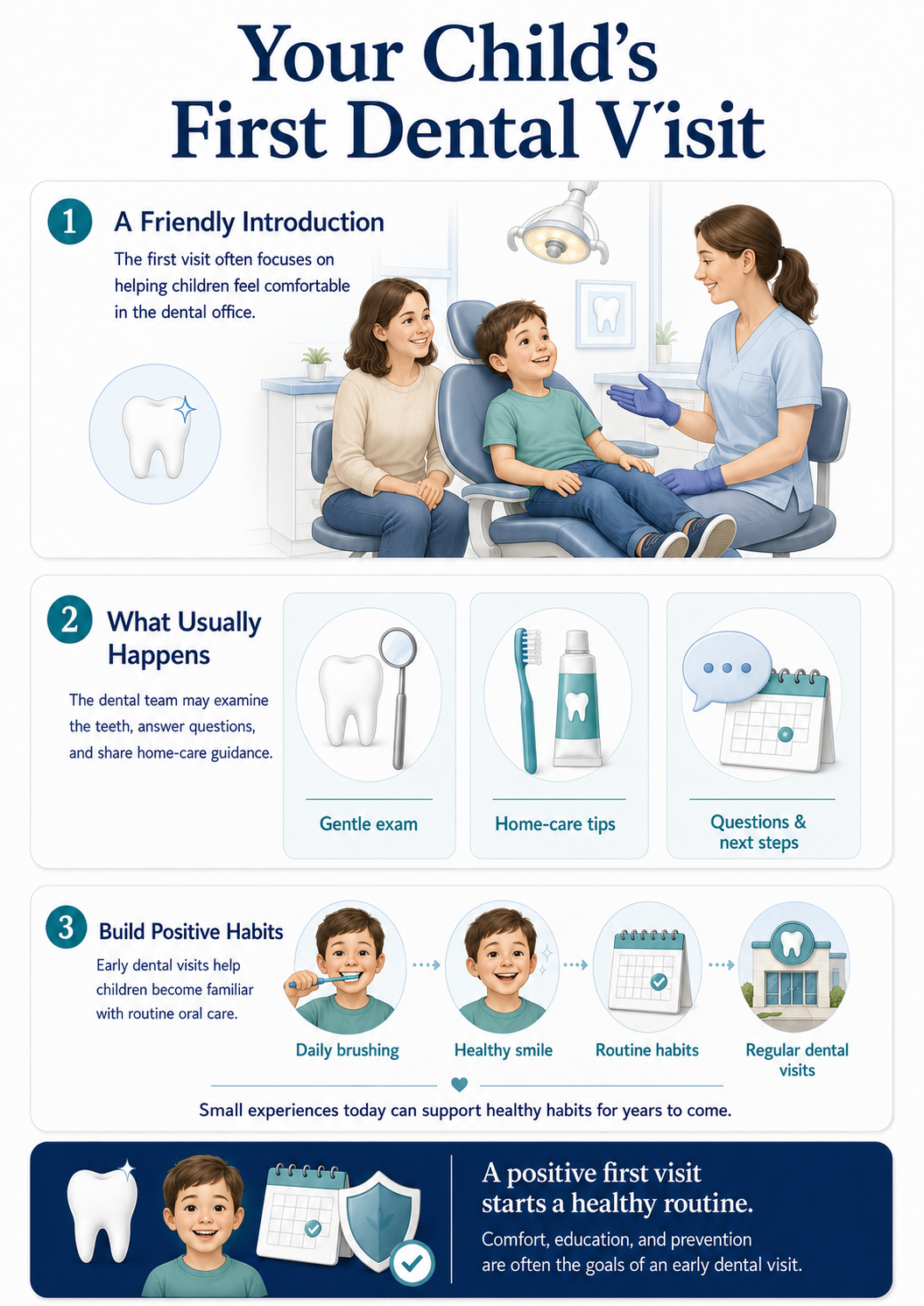
Why the first visit happens early
Early visits help families build a dental home: an ongoing relationship with a dental team for routine advice, prevention, and care. Starting that relationship early can also help the setting become more familiar over time, although every child responds differently to new people and places.
The first visit also helps parents get advice before a problem is obvious. A dentist may talk about brushing, toothpaste amount, cavity prevention, injury prevention, and habits such as thumb sucking or pacifier use. The exact conversation depends on the child, the office, and the family’s questions.
What may happen at the visit
Every dental office has its own flow, but a first visit may include:
- A gentle look at the child’s teeth, gums, bite, and mouth.
- Questions about brushing, feeding, bottles or cups, fluoride, and habits.
- Coaching for how to clean the child’s teeth at home.
- A chance for parents to ask what is normal and what needs follow-up.
- A plan for future visits based on the child’s needs.
Some children sit in a dental chair. Others sit on a parent’s lap. Some visits are very short. The goal is usually to gather useful information, support prevention, and make the dental setting less unfamiliar.
How parents can prepare
A simple approach may help. Tell the child they are going to meet someone who helps take care of teeth. Keep the explanation short and matter-of-fact. Avoid promising that nothing will feel strange, and avoid using scary words as reassurance. For more age-aware ideas, see how to prepare a child for a first dental visit.
Before the appointment, parents can bring:
- The child’s medical and dental history.
- A list of current questions.
- Information about toothpaste, bottles, cups, pacifiers, thumb sucking, or feeding routines if those are concerns.
- Any forms the office requested.
If the child has medical, developmental, sensory, or behavioral needs, it can help to call ahead and ask how the office prepares for young children who need extra support.
Good questions to ask
Parents do not need to know every dental term before the first visit. Useful questions include:
- How should we clean the teeth we can see now?
- How much toothpaste should we use at this age?
- Are there habits you want us to watch over the next few months?
- What should make us call before the next routine visit?
- When should we come back?
The dentist’s answers may depend on the child’s teeth, risk factors, water fluoride exposure, medical history, and cooperation during the visit.
When to contact a dentist sooner
This article is about routine first-visit preparation. If a child has tooth pain, swelling, a mouth injury, bleeding that worries you, visible tooth damage, or a sudden change in eating or comfort, contact a dentist or the child’s medical care team instead of waiting for a routine first appointment.
The calm takeaway
The first dental visit is an early prevention step. It helps parents learn how to care for baby teeth, gives the child a first experience with dental care, and creates a place to ask questions as the mouth changes.
Sources
- Frequently Asked Questions — American Academy of Pediatric Dentistry
- Baby Teeth — MouthHealthy / American Dental Association
- Policy on the Dental Home — American Academy of Pediatric Dentistry