The simple answer
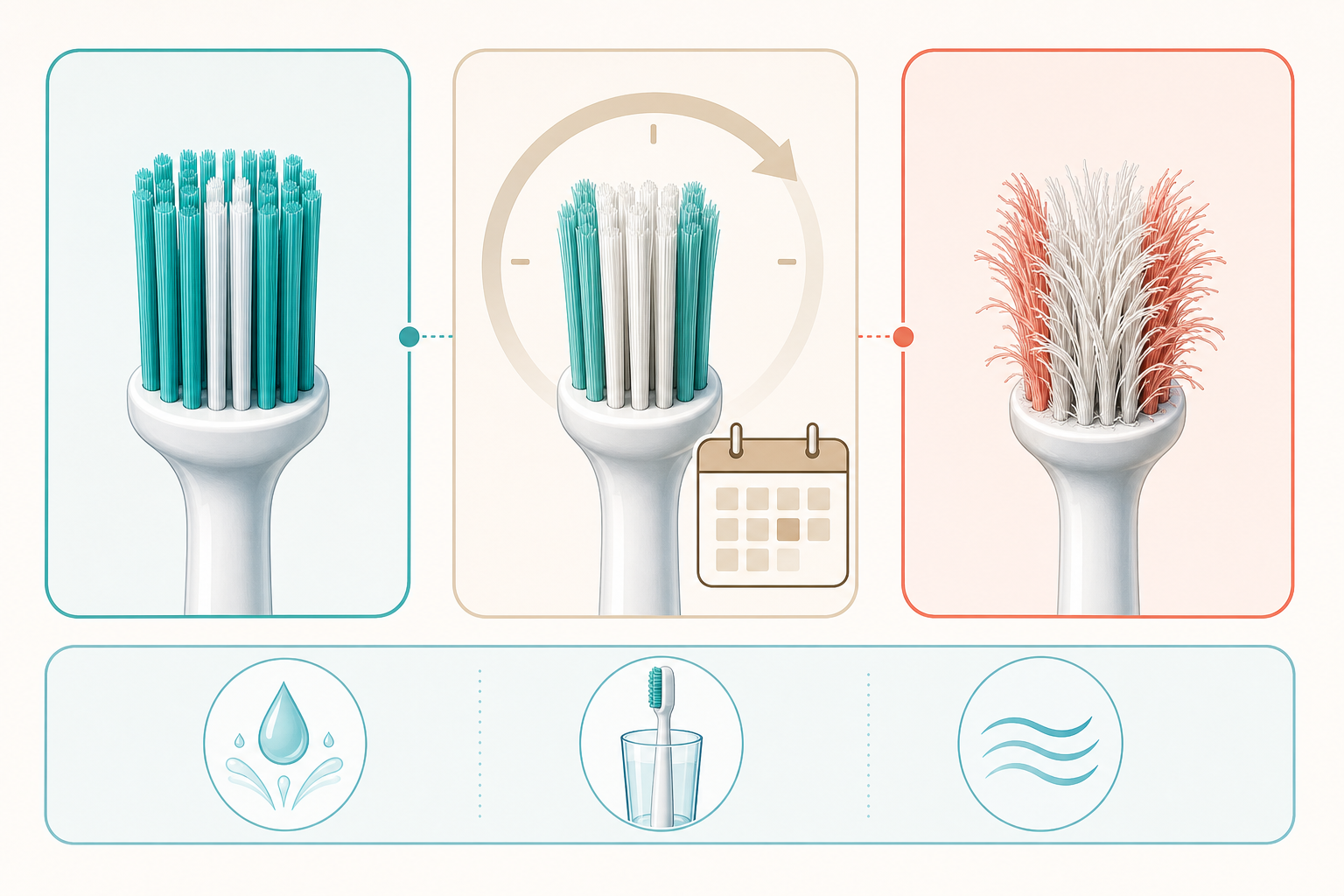
Replace your toothbrush—or the removable head on a powered toothbrush—about every three to four months. Replace it sooner if the bristles are matted, frayed, flattened, or spreading outward.
The calendar is a reminder, not a reason to keep using a worn brush. If the bristles lose their shape after six weeks, the condition of the brush matters more than waiting for month three.
Why worn bristles are the main cue
A toothbrush needs bristles that can reach tooth surfaces in a controlled way. As the bristles bend and fray, the brush becomes less effective. The American Dental Association therefore recommends replacement every three to four months or more often when the bristles are visibly worn.
Look at the brush head from the side and from the top. It is time for a new one when:
- Bristles no longer stand in their original rows.
- Tips look bent, frayed, or flattened.
- Bristles spread beyond the edge of the brush head.
- The head has damage that makes it uncomfortable or difficult to use.
Some brushes have colored indicator bristles, but you do not need that feature. The age and visible condition of the bristles are enough to guide a routine replacement.
What if the bristles wear out very quickly?
Early wear may simply mean the brush is getting a lot of use. It can also be a useful prompt to check your pressure. Brushing harder does not clean teeth better, and the ADA recommends gentle pressure with a soft-bristled toothbrush.
Try holding the handle with a relaxed grip and letting the tips of the bristles contact the teeth instead of pressing until the bristles bend. The full brushing technique guide shows how to cover the gumline and every tooth surface gently.
If you keep damaging brush heads quickly or cannot brush comfortably, ask a dentist or dental hygienist to watch your technique. They can give feedback that a general article cannot tailor to your mouth or movement needs.
Manual brushes and powered brush heads
The basic replacement rule applies to both. A powered handle does not follow the same replacement schedule as its removable brush head. The head is the part that wears against the teeth and needs regular replacement.
Check the brush-head instructions as well as the bristles. Different products may use different indicators or head designs, but a manufacturer’s reminder should not override obvious wear. Replace a damaged or frayed head rather than trying to straighten or repair it.
If you are comparing formats or features, see the guides to electric versus manual toothbrushes and choosing a toothbrush. They keep the buying decision separate from this page’s replacement cues.
Simple toothbrush care between replacements
Routine care does not need to be complicated. The ADA recommends:
- Do not share toothbrushes.
- Rinse the brush thoroughly after each use to remove toothpaste and debris.
- Store it upright when possible.
- Let it air-dry rather than keeping a damp brush sealed in a closed container.
Toothbrushes can carry microorganisms, but the ADA notes that there is no evidence that the bacteria found on toothbrushes cause adverse health effects. That is why calm, basic care makes more sense than trying to sterilize a brush after every use.
Do not microwave a toothbrush or put it in a dishwasher; high heat can damage it. Evidence about toothbrush sanitizers is limited. If a medical condition or treatment changes your infection-control needs, ask your medical or dental professional for advice that fits your situation.
An easy replacement routine
Choose a reminder that you will actually notice:
- Write the start month on a piece of tape inside the bathroom cabinet.
- Add a repeating calendar reminder every three months.
- Keep one unopened replacement brush or head at home.
- Check the bristles at the start of each month instead of relying only on memory.
You do not need to replace a brush on an exact day. The useful system is a three-to-four-month reminder plus regular checks for earlier wear.
Takeaway
Plan to replace your toothbrush or powered brush head about every three to four months. Change it sooner when the bristles are matted, frayed, flattened, or splayed. Rinse it after use, let it air-dry, and use gentle pressure so the new brush can do its job without being crushed.
Sources
- Toothbrushes — American Dental Association
- Oral Hygiene — National Institute of Dental and Craniofacial Research