Slow the claim down before you try it
Dental advice from influencers can feel persuasive because it is quick, visual, and personal. Someone may show a dramatic result, a favorite product, or a simple routine that seems easier than everything you have heard before.
Some advice online may be useful. Some may be incomplete or unsupported. Do-it-yourself dental methods can also cause harm or allow an underlying problem to go unrecognized, especially when a post promotes household whitening mixtures, abrasive charcoal, filing, tooth repair, or tooth movement without an examination.
You do not need to become a dental expert to pause wisely. You need a simple checklist. If the post is about tooth color, Oral Compass also has a broader guide to viral whitening trends.
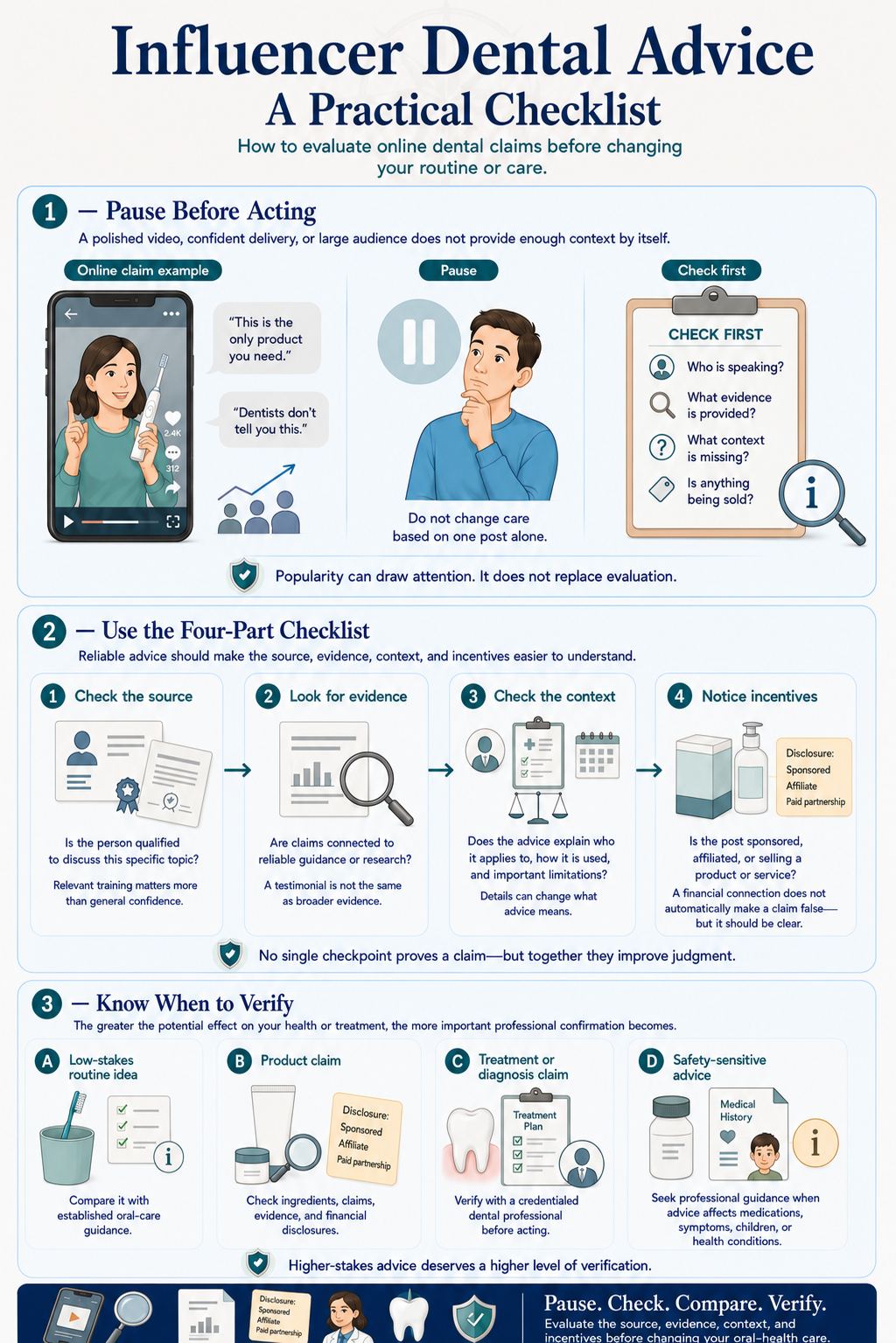
1. Who is making the claim?
Start with the source. Is the person a dental professional whose credentials you can verify, a patient sharing an experience, a seller, an affiliate, or someone repeating a trend?
Credentials do not make every statement perfect, and a non-expert can still share a useful question. But source context helps you decide how much weight to give the advice.
2. What exactly are they promising?
Try to turn the post into one clear sentence:
- “This whitens teeth.”
- “This removes plaque.”
- “This fixes bleeding gums.”
- “This replaces flossing.”
- “This repairs enamel.”
Once the claim is clear, it is easier to ask whether the evidence actually supports that specific promise.
3. What evidence is offered?
Testimonials, comments, and before-and-after photos can be interesting, but they are not the same as reliable dental evidence. Photos can be affected by lighting, filters, camera settings, wet teeth, and timing.
Look for evidence tied to the exact product, method, and promise—not simply a vague reference to “research.” Look for advice that matches established oral-health basics: gentle brushing twice daily, fluoride toothpaste, cleaning between teeth daily, limiting frequent sugar exposure, and getting dental evaluation for symptoms or changes. If a post makes broad product promises, compare them with the product label and a more complete guide to choosing a toothpaste.
4. What could go wrong?
Be especially cautious with household whitening mixtures, abrasive charcoal products, filing, at-home tooth repair, or tooth movement without a dental examination. A short video cannot show whether the method is appropriate for your enamel, gums, bite, or existing dental work.
Also pause when a claim tells you to ignore sensitivity, bleeding, swelling, pain, a broken tooth, or a visible change. Those signs may have different causes and deserve dental context instead of another trend. A separate guide explains why tooth pain cannot be diagnosed from one symptom online.
5. Does it replace professional care?
A helpful routine tip should not ask you to delay needed care. Social media cannot examine your teeth, check your gums, read X-rays, or know your dental history.
If the advice promises to treat gum disease, cavities, infection, tooth movement, broken teeth, or persistent pain without a dental visit, slow down and get professional guidance. Claims that gums can be “regrown” or disease can be reversed by one product deserve the same careful check; see the guide to receding-gum claims.
6. Is something being sold?
Selling a product does not automatically make advice false. It does mean you should notice the incentive. A product link, discount code, sponsorship, affiliate relationship, or personal brand can shape how advice is presented.
The Federal Trade Commission says a material connection—including payment or free or discounted products—should be disclosed clearly. A disclosure does not prove or disprove the dental claim, but it helps you interpret the recommendation’s context. When that relationship is unclear, be more careful about treating the post as neutral education.
A quick checklist
Before trying dental advice online, ask:
- Who is speaking, and what is their role?
- What exact claim are they making?
- Is there evidence beyond a photo, story, or comment section?
- Could the method damage enamel, gums, dental work, or soft tissue?
- Does it replace brushing, flossing, fluoride, or dental care?
- Is there a product, affiliate link, sponsorship, or incentive involved?
Bottom line
Influencer dental advice is easier to evaluate when you slow it down. Check the source, the claim, the evidence, the risks, whether it replaces care, and whether money is involved. If a trend asks you to file teeth, use household products to whiten or repair them, ignore symptoms, or skip care, stop and ask a dentist instead.
Sources
- Do-it-yourself (DIY) Dentistry — MouthHealthy / American Dental Association
- Dental Trends — MouthHealthy / American Dental Association
- Brushing Your Teeth — MouthHealthy / American Dental Association
- Toothpaste — MouthHealthy / American Dental Association
- Tooth Decay Process — National Institute of Dental and Craniofacial Research
- Disclosures 101 for Social Media Influencers — Federal Trade Commission