Seeing a promise that gums can “grow back naturally” can feel hopeful—especially if you have noticed a tooth looking longer or a changing gumline. The careful answer is that a changing gumline needs professional context. A product, supplement, massage, or brushing trick cannot tell you why gums look different or prove that lost tissue will regrow.
Start by separating the claim from the finding
Gum recession describes a gum edge that has moved away from its earlier position around a tooth. More than one factor can be involved, and the appearance alone does not establish the cause, whether it is active, or what care is appropriate.
That makes “regrow your gums” a much bigger claim than it may sound. Before believing a before-and-after photo or a product story, ask what exactly changed, how it was measured, and whether a dental professional assessed the area.
Gum recession basics explains the term and why it should not be self-diagnosed.
What daily care can reasonably support
Daily plaque control, gentle brushing with a soft-bristled toothbrush, cleaning between teeth, and regular dental care support oral health. They can help reduce plaque-related irritation and protect the areas you can clean.
Those habits are important, but they are not evidence that a home routine can rebuild lost gum tissue or determine why a gumline has changed. “Supports gum health” and “regrows gums” are not interchangeable claims.
How to read a receding-gum promise
Be cautious when a claim:
- promises visible regrowth on a fixed timetable;
- relies only on testimonials, photos, or vague “healing” language;
- says professional assessment is unnecessary;
- treats bleeding, sensitivity, or a loose tooth as something a product can settle; or
- offers one cause and one solution for every changing gumline.
These patterns do not establish that a product will work for a particular person. They can also distract from findings a dentist needs to examine.
When to contact a dentist
Arrange a dental visit if you notice a new or changing gumline, exposed root surface, persistent sensitivity, bleeding, swelling, pain, or a loose tooth. A dentist can examine the area, compare it with other findings, and explain whether monitoring or a treatment discussion is relevant.
You can ask: What are you seeing? Does the area appear stable? Is there a gum-health concern or another explanation? What can I do at home without making the area worse? Questions before a common dental treatment can help prepare that conversation.
The takeaway
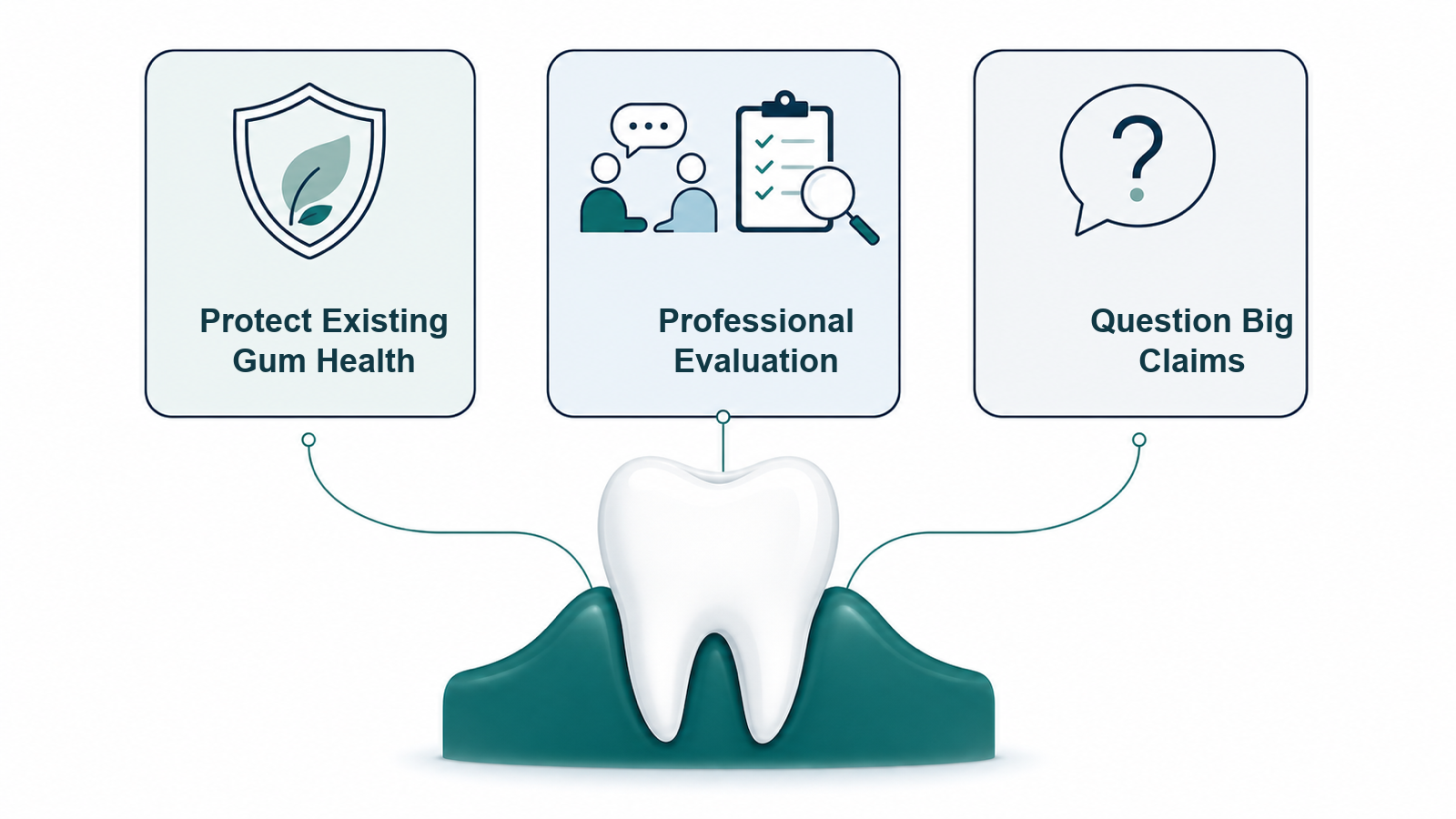
Home care can support gum health, but it cannot prove a regrowth claim, diagnose recession, or choose treatment. Treat bold “gums grow back” promises as a reason to ask better questions—not as a replacement for a dental evaluation.
Sources
- FAQs — American Academy of Periodontology
- Periodontal (Gum) Disease — National Institute of Dental and Craniofacial Research
- Brushing Your Teeth — MouthHealthy / American Dental Association