The quick answer
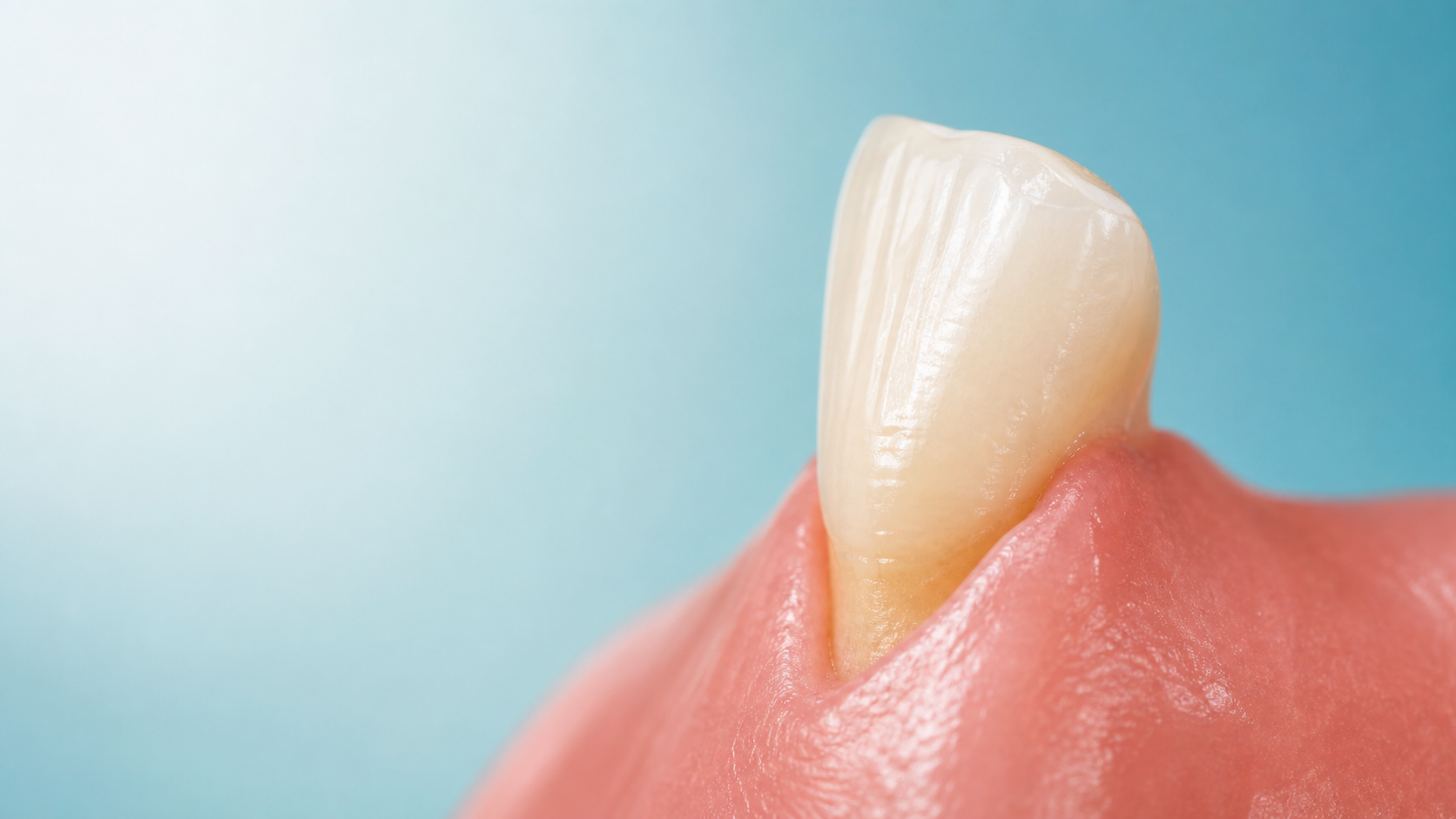
Gum recession means the edge of the gum has moved away from its earlier position around a tooth. This can make more of the tooth—or part of the root surface—visible, which may make a tooth look longer.
That description explains the term, but it does not explain why the change happened or what treatment, if any, is appropriate. Recession can look similar in a mirror even when the circumstances are different. A dentist needs to examine the area and consider the rest of your oral health.
What people may notice
Recession is often noticed as a change rather than a sudden feeling. You might see that one tooth looks longer, that the gumline is uneven, or that a small area near the gum has become more visible. An exposed root surface may also be sensitive to hot or cold.
These observations are worth recording, but they are not a home diagnosis. Photos taken in different lighting or at different angles can be misleading, and there is no reliable do-it-yourself measurement that tells you whether recession is active, severe, or related to gum disease.
If you notice a change, useful details for a dental visit include where it is, when you first noticed it, whether it seems to be changing, and whether you also have sensitivity, bleeding, pain, or a loose tooth.
Why the cause is not obvious from appearance
More than one factor can be involved in a changing gumline. Gum disease can cause gums to pull away from teeth. Brushing too hard can also irritate gums, but seeing recession does not prove that brushing pressure is the cause. A dental professional needs the examination and health context to interpret the change.
That is why this article stops at vocabulary. A causes-focused explanation or a treatment recommendation would need details that only an examination can provide.
For background on early gum inflammation, gingivitis basics explains what visible changes can—and cannot—tell you about gum health.
Why exposed root surfaces matter
When a root surface becomes exposed, it may be more sensitive to temperature. A dental professional can also check whether the area is difficult to clean or has other changes that need attention.
Sensitivity does not prove recession, and recession does not always cause discomfort. Mention both visible changes and symptoms so your dentist can put them together.
What gentle home care can do
Daily cleaning still matters, but harder brushing is not a way to move gums back into place. Use a soft-bristled toothbrush, angle it toward the tooth near the gumline, and move it gently in short strokes. Clean between the teeth each day without snapping or forcing floss into the gums.
The full routine is covered in how to brush your teeth properly. If you are worried about pressure, ask your dentist or dental hygienist to watch your technique and help you adjust it for your mouth.
Home care can help control plaque and support the surrounding tissues. It cannot tell you the cause of recession or measure whether it is progressing. Be cautious with products, exercises, or online “hacks” that promise to rebuild gums without a professional evaluation.
When to make a dental appointment
Arrange a dental visit if you notice a new or changing gumline, exposed root surface, persistent sensitivity, regular bleeding, swelling, pain, or a tooth that feels loose. A rapid change or several symptoms together is especially important to mention when you call.
If bleeding is part of the concern, why gums may bleed when you brush explains why that symptom needs context rather than a quick conclusion.
A dental professional may examine the gumline, measure the spaces around the teeth, review changes over time, and use X-rays when appropriate. Those findings help distinguish a stable appearance from a problem that needs monitoring or care.
Helpful questions for your dentist
- Is this area actually recession, or does it only look different to me?
- Does it appear stable, or should we monitor it over time?
- Is the root surface exposed or sensitive?
- Is my brushing technique gentle enough for this area?
- Are there signs of gum inflammation or another concern?
- What are the goals, benefits, and limits of any care you recommend?
The answers depend on your mouth. A general article can help you understand the words; it cannot choose treatment for you.
The main idea
Recession describes a change in the position of the gum edge. It is not a diagnosis of the cause, a severity score, or a treatment plan. Keep the area clean gently, distrust regrowth promises, and let a dental professional evaluate new or changing recession.
Sources
- FAQs — American Academy of Periodontology
- Periodontal (Gum) Disease — National Institute of Dental and Craniofacial Research
- Brushing Your Teeth — MouthHealthy / American Dental Association
- Bleeding Gums — MouthHealthy / American Dental Association