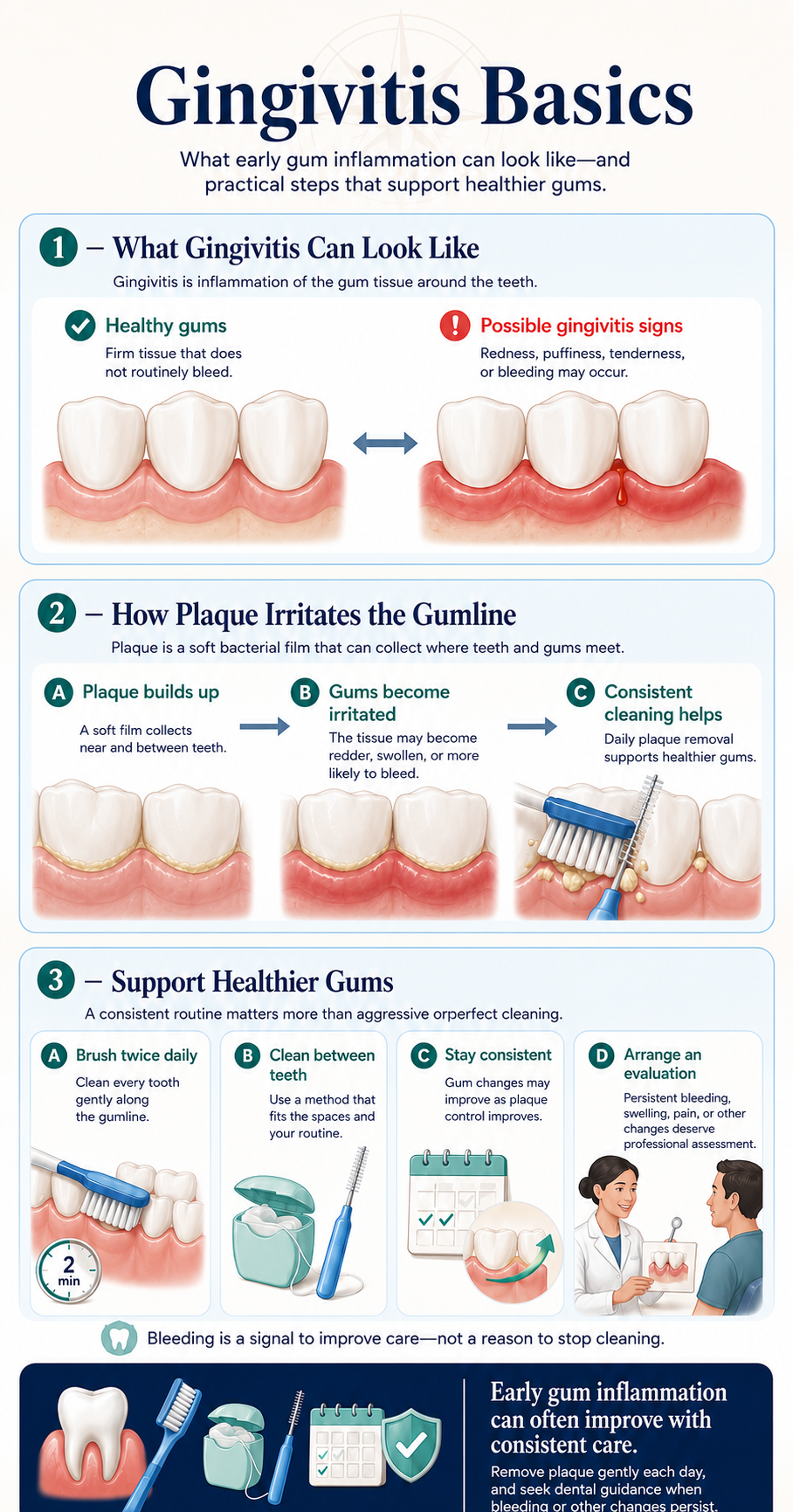
Gingivitis means inflammation of the gums. It is often linked to plaque collecting around the teeth and gumline, and it may be noticed as gums that look red or swollen or bleed easily. Those signs are not enough to diagnose yourself, because gum changes can have more than one explanation.
A dentist or dental hygienist can examine the gums, review your history, and determine whether gingivitis or another issue is present. The useful goal for a reader is to understand the term—not to stage gum disease at home.
What “gingivitis” means
The ending “-itis” means inflammation. In gingivitis, that inflammation is limited to the gums rather than involving the deeper structures that support the teeth.
This distinction matters. Gingivitis and periodontitis are not interchangeable words. Periodontitis involves loss or damage in the tissues and bone supporting the teeth and requires professional diagnosis. A photo, a single area of redness, or bleeding during brushing cannot tell you which condition is present.
How plaque fits in
Plaque is a sticky film of bacteria that continually forms on teeth. When it remains near the gumline, it can irritate the gum tissue and contribute to inflammation. Daily brushing and cleaning between teeth help disrupt plaque before it accumulates.
Plaque can be hard to see, so the appearance of a tooth is not a reliable plaque score. Once plaque hardens into tartar, it cannot be removed with ordinary brushing and requires professional cleaning. Read more about why plaque at the gumline matters and what happens during a dental cleaning.
What someone might notice
Gum inflammation may be associated with:
- redness or a change in color;
- puffiness or swelling;
- tenderness;
- bleeding during brushing or cleaning between teeth; or
- persistent bad breath.
These are reasons to pay attention, not a self-diagnosis checklist. Healthy gum appearance varies, and bleeding can have different contributors. Our guide to what healthy gums often look and feel like explains those limits, while why gums may bleed during brushing focuses on the symptom rather than the diagnosis.
How a dental team evaluates the gums
A dental professional may look at the color and shape of the gums, check for bleeding, assess plaque and tartar, take measurements around teeth, review X-rays when appropriate, and consider health history and risk factors.
No one sign answers every question. Bleeding, for example, may be important even when there is little pain. At the same time, not seeing blood does not prove that deeper gum support is healthy. A complete assessment puts the findings together.
Is gingivitis reversible?
Gingivitis related to plaque can often improve when plaque is controlled through effective home care and professional care when needed. That is different from promising that every red or bleeding area will resolve with brushing alone.
If tartar is present, home tools cannot safely replace professional removal. If inflammation has another contributor or deeper support has been affected, the appropriate plan may differ. A dentist or hygienist can explain what they found and which steps apply.
What supports gum health
General habits that support gum health include:
- brushing gently and thoroughly twice a day with fluoride toothpaste;
- cleaning between teeth regularly;
- keeping dental visits based on your dentist’s recommendation; and
- avoiding tobacco use.
More force is not better. Aggressive scrubbing does not substitute for complete, gentle plaque removal and may make brushing uncomfortable.
When to contact a dentist
Arrange a dental conversation if gum bleeding, swelling, tenderness, bad breath, recession, or another change persists or concerns you. Contact a dentist promptly for significant swelling, loose teeth, pain with chewing, or a sudden change.
Do not use this article to decide whether you have gingivitis or a more advanced gum condition. A professional examination is the boundary between general education and diagnosis.
Questions to ask at the visit
- What gum findings do you see?
- Is plaque or tartar contributing?
- Do the deeper supporting tissues look affected?
- Can you show me the areas that need more attention?
- What home-care technique should I focus on?
- Do I need a professional cleaning or follow-up assessment?
The practical takeaway
Gingivitis is a term for gum inflammation, often related to plaque at the gumline. It is an early and important signal, but it is not something to diagnose or stage from appearance alone. Gentle daily plaque control and a dental assessment for ongoing changes are the calm, useful next steps.
Sources
- Periodontal (Gum) Disease — National Institute of Dental and Craniofacial Research
- Ask the Expert: Do I Really Need to Floss? — National Institute of Dental and Craniofacial Research
- About Periodontal (Gum) Disease — Centers for Disease Control and Prevention