The quick answer
What do healthy gums look like? They are often comfortable, fit closely around the teeth, and do not routinely bleed during gentle brushing or cleaning between the teeth. They are not persistently swollen, sore, or tender.
That is a general baseline, not a home diagnostic test. Gum color and shape naturally vary, and healthy-looking gums do not prove that everything beneath the gumline is healthy. A dentist or dental hygienist uses an examination, your history, and sometimes measurements or X-rays to assess what is happening.
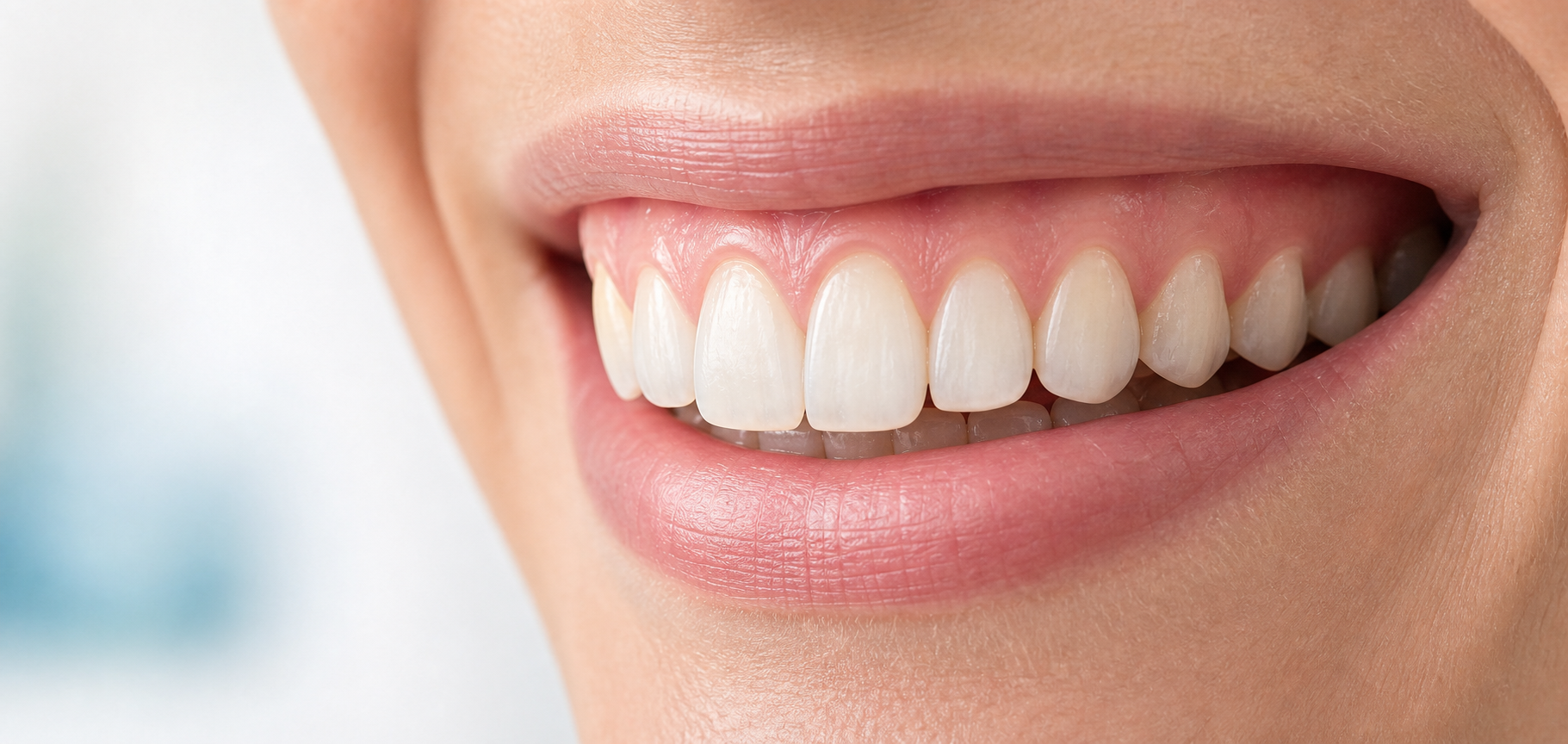
What healthy gums often feel like
Most of the time, healthy gums are easy to forget about. They generally do not hurt while you eat, brush, or clean between your teeth. They tend to sit snugly around the teeth rather than looking persistently puffy or pulling noticeably away.
People do not all have identical gum color, texture, or shape. Your usual baseline can be useful context, but a change can have more than one explanation. Pay attention to whether it keeps happening, is worsening, or comes with another concern.
What appearance can—and cannot—tell you
It is reasonable to notice a new area of swelling, a gumline that seems to be changing, or redness that persists. Those observations can help you describe a concern at a dental visit.
Color alone is not a reliable verdict. Lighting, natural variation, and changes in different areas of the mouth can make picture comparisons misleading. The safer question is not “Do my gums match a picture?” but “Is this normal for me, or has something changed?”
Changes worth discussing with a dentist include:
- bleeding that happens regularly or worries you;
- persistent swelling, tenderness, or pain;
- gums that appear to be pulling away from the teeth;
- teeth that feel loose or newly sensitive;
- persistent bad breath or a bad taste; or
- a sore, lump, red patch, or other change that does not settle.
These signs do not identify a cause on their own. They give a dental professional a reason to look more closely. Some gum problems can be present with few or no symptoms, so the absence of a warning sign is not proof that an examination is unnecessary.
Habits that support gum health
Plaque is a sticky film of bacteria that builds up on teeth. When it is not removed regularly, it can irritate the gums and harden into tartar. Once tartar forms, it cannot be brushed off at home; a dentist or dental hygienist removes it during professional care.
The everyday basics are pleasantly unglamorous:
- Brush twice a day with fluoride toothpaste and a soft-bristled toothbrush.
- Use gentle pressure and clean along the gumline rather than scrubbing hard.
- Clean between your teeth each day with floss or another interdental cleaner that works for you.
- Keep dental visits at an interval your dental team recommends for your needs.
For technique, see how to brush your teeth properly. For the buildup that can irritate the gumline, read what plaque is.
When bleeding changes the picture
Gums do not typically bleed repeatedly during gentle care. Bleeding can have different explanations, including irritation from brushing too hard or a new cleaning-between-teeth routine, so this article cannot tell you which explanation applies.
Do not respond by scrubbing harder or abandoning gentle cleaning. If bleeding is regular, persistent, or concerning, learn more about bleeding gums and arrange a dental conversation. Seek urgent dental advice for very sore or swollen gums, a loose tooth, or a lump or red patch in the mouth.
What a dental professional can add
A dentist or dental hygienist can compare what you notice with the rest of the picture. They may examine the gums for inflammation, ask about changes and health history, and measure the spaces around the teeth. When appropriate, X-rays can show changes that cannot be judged from a mirror or photograph.
A measurement or symptom is not a diagnosis by itself. The meaning depends on the examination and your circumstances. If you want to prepare, read what gum-pocket measurements mean and write down when you noticed the change, where it occurs, and whether it is getting better or worse.
A calm way to think about healthy gums
Use your usual comfort and appearance as a baseline, keep daily care gentle and consistent, and treat persistent changes as questions rather than conclusions. Healthy-looking gums can be reassuring, but only a dental examination can assess gum health or diagnose disease.
Sources
- Periodontal (Gum) Disease — National Institute of Dental and Craniofacial Research
- Gum disease — NHS
- Bleeding Gums — MouthHealthy / American Dental Association
- Brushing Your Teeth — MouthHealthy / American Dental Association