The quick answer
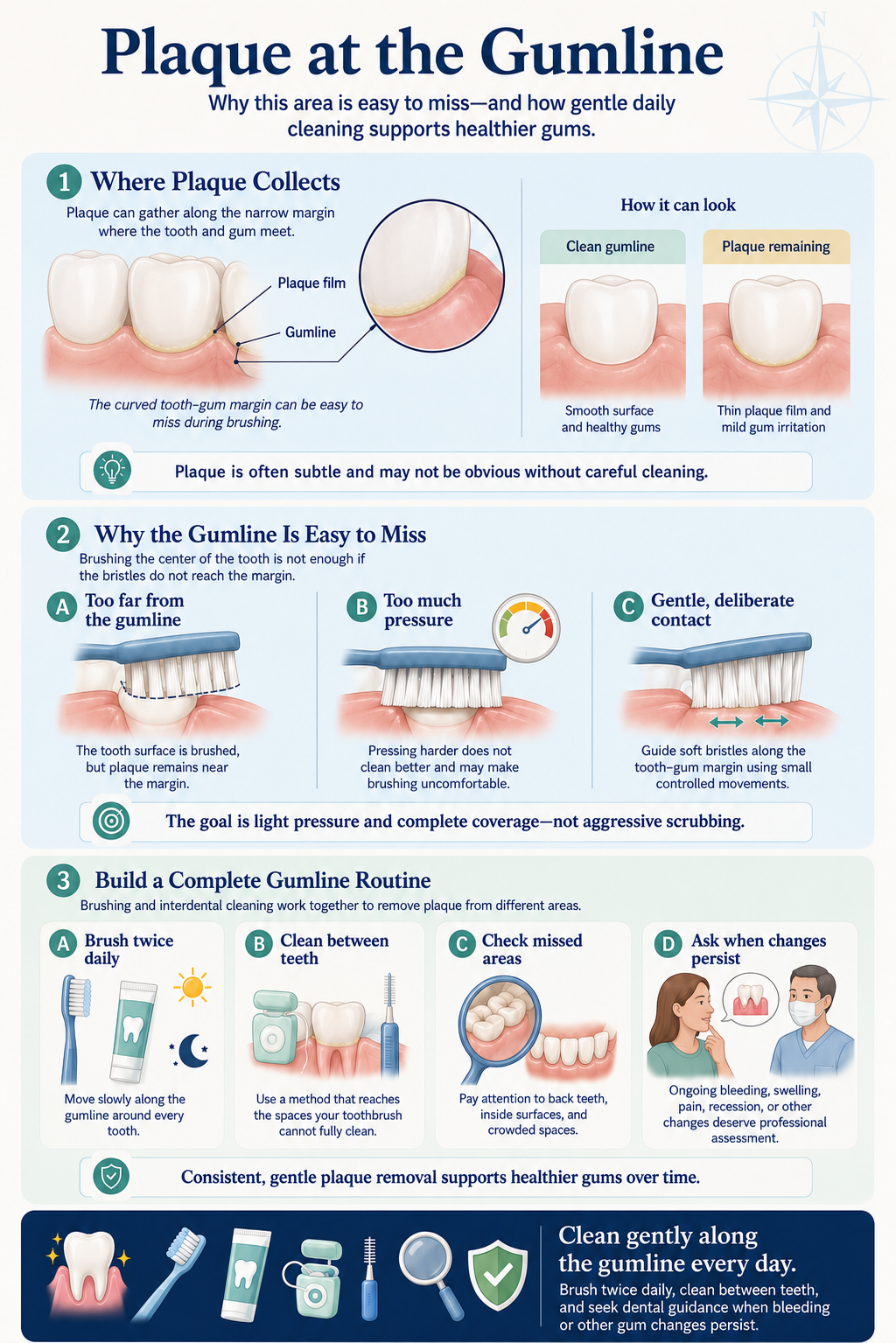
The gumline is the border where each tooth meets the gum. Plaque can collect along this edge and between teeth, and leaving it in place can contribute to gum inflammation. Gentle, consistent brushing and cleaning between the teeth help disrupt plaque before it builds up.
This does not mean you should scrub the gumline. More pressure is not the same as better cleaning. The useful target is complete, gentle coverage.
What plaque is
Dental plaque is a sticky film of bacteria that forms on teeth. It can be hard to notice, especially in small spaces or along the gumline. That is why a tooth that looks clean in the mirror can still benefit from regular brushing and interdental cleaning.
Plaque is different from tartar. Plaque can be disrupted with daily home care. When plaque is not removed, it can harden into tartar, also called calculus. Tartar cannot be brushed or flossed away; a dentist or dental hygienist removes it during professional care.
Why the tooth–gum border gets special attention
The gumline is not a separate part of the tooth to polish aggressively. It is simply an edge that is easy to miss. Bristles that stay only on the broad, visible tooth surfaces may not clean that border well. Plaque also collects between teeth, where ordinary toothbrush bristles do not reach effectively.
When plaque remains around the gums, it can contribute to redness, swelling, tenderness, and bleeding. Gingivitis basics explains how those early changes relate to plaque without turning them into a self-diagnosis. Those changes can have more than one explanation, however. You cannot judge the health of your gumline by how much plaque you think you see, and bleeding does not tell you a diagnosis by itself.
How daily cleaning helps
The American Dental Association recommends placing a soft-bristled toothbrush at about a 45-degree angle to the gums and moving it gently in short strokes. The goal is to let the bristles reach the tooth near the gumline—not to push them into the tissue.
A simple routine is enough:
- Brush twice a day with fluoride toothpaste and a soft-bristled toothbrush.
- Move slowly enough to cover the outer and inner surfaces near the gumline.
- Use gentle, short strokes instead of hard back-and-forth scrubbing.
- Clean between the teeth once a day with floss or another interdental cleaner.
For the full brushing sequence, use the existing guide to brushing your teeth properly. This article explains why the gumline matters; the brushing guide shows how to cover all tooth surfaces.
What home cleaning cannot do
Home care is for disrupting plaque. It is not a way to diagnose gum disease or remove tartar.
If you notice a hard deposit near the gums, do not try to scrape it off with a sharp object or a dental-looking tool bought online. Tartar requires professional removal, and you still cannot tell from appearance alone what the deposit is. Ask a dental office to examine it and explain what kind of cleaning, if any, is appropriate. Our guide to what happens during a dental cleaning explains the general purpose and limits of routine professional cleaning.
The same boundary applies to gum symptoms. Regular bleeding, swelling, pain, or a gumline that seems to be changing deserves a professional look. A dentist or dental hygienist can examine the area and assess factors that a mirror cannot show.
If the gumline bleeds while you clean
Do not respond by scrubbing harder, and do not assume that stopping all cleaning will solve the problem. Keep your technique gentle. If bleeding happens regularly, continues, or worries you, contact a dentist.
Bleeding can have several possible explanations. Read why gums may bleed when you brush for calm context without trying to diagnose the cause yourself.
Questions to ask at a dental visit
If you are unsure whether you are reaching the gumline effectively, useful questions include:
- Am I missing plaque in a particular area?
- Is my brushing pressure appropriate?
- Which between-teeth cleaner fits the spaces in my mouth?
- Is the buildup I notice plaque, tartar, or something else?
- Are there changes in my gums that need monitoring?
These questions let a dental professional tailor technique to your mouth without turning a general article into personal treatment advice.
The main idea
Think of the gumline as an easy-to-miss border, not a place that needs force. Gentle brushing near that edge, daily cleaning between teeth, and professional care for hardened buildup form a practical division of labor: home care disrupts plaque, while the dental office evaluates concerns and removes tartar.
Sources
- Periodontal (Gum) Disease — National Institute of Dental and Craniofacial Research
- Brushing Your Teeth — MouthHealthy / American Dental Association
- Bleeding Gums — MouthHealthy / American Dental Association