The simple answer
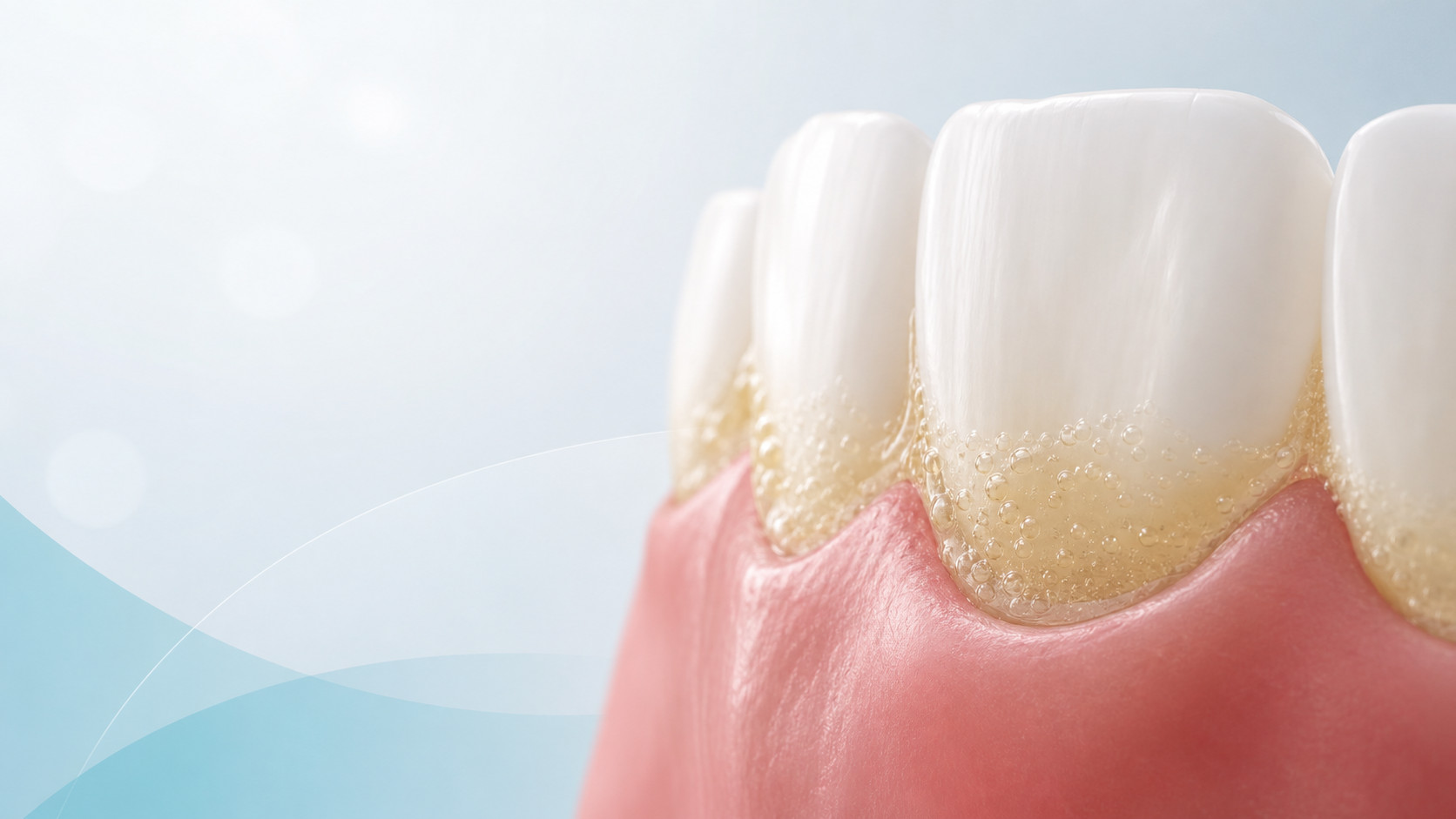
Plaque is a sticky, colorless film of bacteria that forms on teeth. It matters because plaque bacteria can use sugars and starches from food and drinks to make acids that attack tooth enamel over time.
Daily brushing and cleaning between teeth help disrupt plaque before it contributes to cavities or hardened buildup. They are not a way to diagnose your own mouth, though. The amount, location, and effects of plaque can vary by person and need a dental evaluation.
What plaque is
Plaque is a soft, sticky layer that builds up on tooth surfaces. It is often hard to see unless it is stained with a disclosing product. Because plaque forms again after cleaning, plaque control is part of everyday oral care rather than a one-time fix.
Plaque is not automatically a sign that something is seriously wrong. It is common. The concern is what can happen when plaque stays on teeth, especially when it is repeatedly exposed to sugars.
How plaque can affect teeth
When plaque bacteria are exposed to sugars, they can produce acids. Over time, repeated acid exposure can weaken enamel, the hard outer surface of a tooth. If that process continues, tooth decay can develop.
That is the basic plaque-to-cavity pathway:
- Plaque forms on teeth.
- Sugars from food or drinks reach plaque bacteria.
- The bacteria produce acids.
- Acid can attack enamel.
- Repeated damage can contribute to decay.
This does not mean one snack or one missed brushing causes a cavity. Cavities usually develop through a process over time.
Why daily cleaning targets plaque
The main job of daily home care is to disturb plaque regularly. Brushing twice a day with fluoride toothpaste and cleaning between teeth regularly are standard prevention habits; the right tools can vary with your mouth and dexterity.
Brushing your teeth helps clean many tooth surfaces. But toothbrush bristles do not clean every surface between teeth. That is why cleaning between teeth matters: it reaches areas a toothbrush may miss.
A realistic routine usually matters more than a perfect one. General prevention basics include brushing with fluoride toothpaste, cleaning between teeth, limiting frequent sugary foods and drinks, and keeping up with dental visits recommended for your situation. Learn more about preventing cavities.
Is plaque the same as tartar?
Plaque and tartar are related, but they are not the same thing. Tartar is hardened plaque, while plaque is the softer film that daily cleaning is meant to disrupt.
Plaque is soft and can be disrupted by daily brushing and between-teeth cleaning. If plaque is not removed, it can harden into buildup often called tartar or calculus. Once buildup has hardened, daily brushing and flossing are not meant to scrape it off at home.
Avoid trying to remove hardened buildup yourself with sharp tools or scraping devices. A dentist or dental hygienist can evaluate what is present and clean areas that home care cannot safely manage.
When to contact a dentist
Consider contacting a dentist if you have tooth pain, bleeding that concerns you, swelling, or signs you think could be decay. A dentist can check what is happening and explain the appropriate next step. Plaque alone cannot tell you whether you have a cavity or gum disease.
You do not need to decide on your own whether plaque is causing a specific symptom. The safer role for home care is simple: keep plaque disrupted day by day, and use dental care for evaluation.
Takeaway
Plaque is the daily-care target: a sticky bacterial film that forms on teeth and can contribute to acid attacks, cavities, and hardened buildup.
Brushing and between-teeth cleaning help, but they do not replace dental evaluation. The goal is steady, practical prevention, not self-diagnosis.
Common questions about plaque
Can plaque be removed at home?
Daily brushing and cleaning between teeth can disrupt soft plaque. If buildup feels hard or does not come away with normal cleaning, do not scrape it with a sharp tool; a dentist or dental hygienist can evaluate and remove hardened tartar safely.
Is plaque the same as tartar?
No. Plaque is a soft bacterial film. If it stays on teeth, some can harden into tartar, also called calculus. Hardened tartar is not the same home-care target as soft plaque.
Does plaque always mean I have a cavity?
No. Plaque is common and does not diagnose a cavity. Cavities develop through a process involving repeated acid attacks and other factors, so a dental examination is needed to determine whether decay is present.
Sources
- Cavities — MouthHealthy / American Dental Association
- Tooth Decay — National Institute of Dental and Craniofacial Research
- Tooth decay — NHS
- Oral Hygiene — National Institute of Dental and Craniofacial Research