The simple answer
You cannot control every cavity risk perfectly, but you can lower your risk with a few repeatable habits.
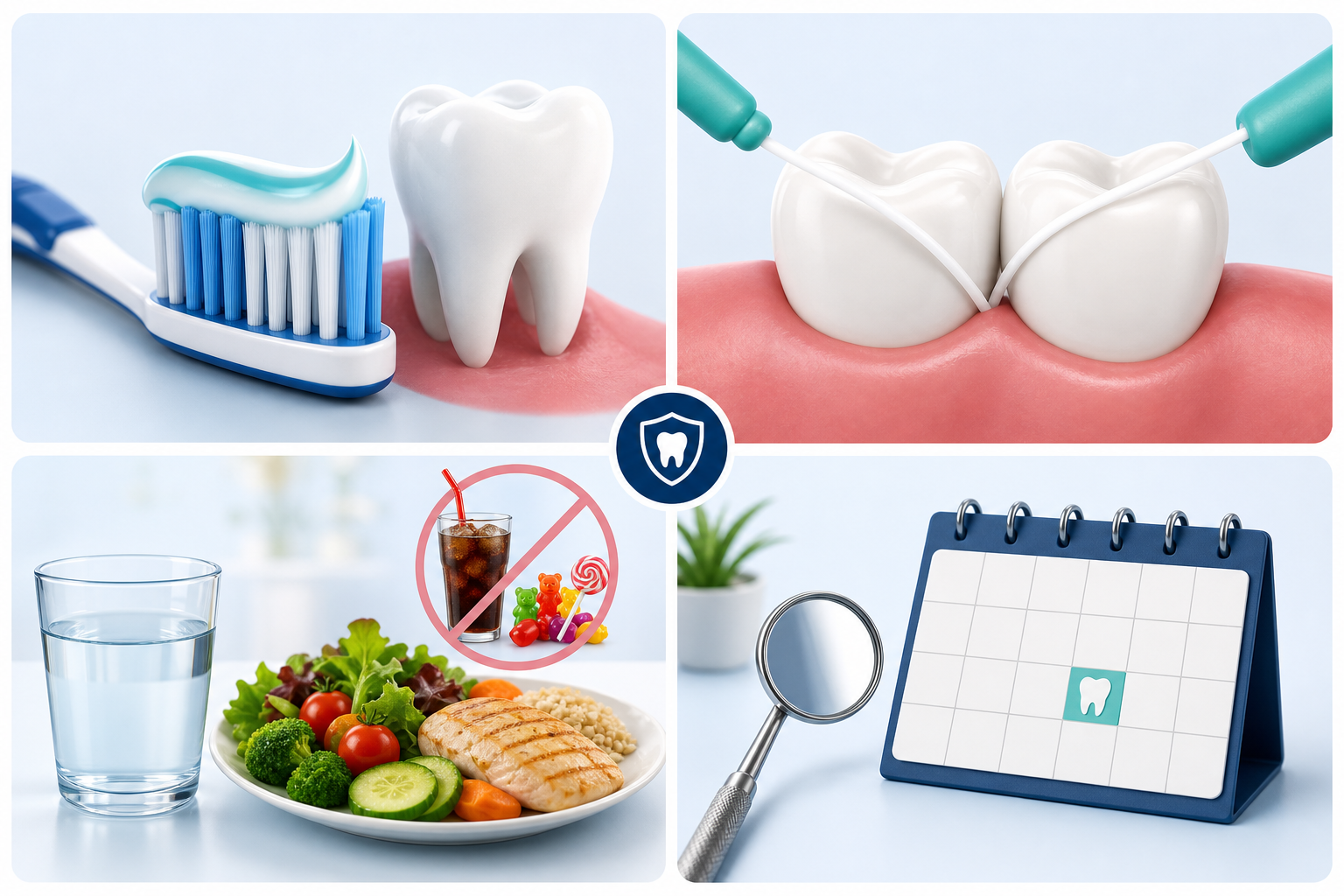
The basics are not complicated: brush twice a day with fluoride toothpaste, clean between your teeth every day, and reduce how often your teeth are exposed to sugary foods and drinks.
The goal is not a flawless routine. It is a practical system that gives your teeth more protection over time.
Why cavities can still happen
Cavities form when bacteria in plaque use sugars and starches from food and drinks to produce acids. Repeated acid exposure can weaken the hard outer layer of a tooth.
That process is influenced by more than one thing. Brushing matters, but so do fluoride, saliva, how often you snack or sip sweet drinks, and whether plaque remains in hard-to-clean areas.
A cavity is not proof that you failed. It is a signal that one or more parts of the prevention system may need attention.
Build a realistic cavity-prevention routine
Brush twice a day with fluoride toothpaste
Brush your teeth twice a day for about two minutes using fluoride toothpaste.
Fluoride helps strengthen enamel and supports replacement of minerals lost during acid attacks. After brushing, spit out the excess toothpaste. Avoid rinsing right away with water when possible so fluoride can remain on the teeth longer. The separate guide on rinsing after brushing explains that step in more detail.
Clean between your teeth every day
A toothbrush does not fully clean the spaces between teeth. Floss or another appropriate interdental cleaner can help remove plaque and food debris from those areas.
One daily session is a realistic goal for most people. The best tool is one you can use consistently and comfortably. If you use string floss, follow a gentle C-shape flossing technique rather than snapping it into the gums.
Pay attention to how often sugars reach your teeth
Sugar is not the only factor in tooth decay, but frequent sugary foods and drinks give plaque bacteria more chances to make acid.
A useful approach is to notice frequency without treating it as the only factor or labeling foods as completely “good” or “bad.” Repeated sipping on sweet drinks or frequent grazing on sugary snacks can create more acid exposures across the day. Sugar amount and frequency both matter, and neither one predicts an individual cavity by itself.
Choosing water between meals and keeping sweet foods or drinks closer to mealtimes may be easier for some people than trying to eliminate them entirely.
Keep your routine simple enough to repeat
A prevention plan works best when it fits your actual life.
Try building around a few anchors:
- Brush after waking and before bed.
- Keep floss or another interdental cleaner where you brush.
- Make water the default drink between meals when practical.
- Keep dental appointments recommended for your situation.
- Ask your dental team what part of your routine would make the biggest difference for you.
Small changes that happen most days are more useful than an ideal plan that does not last.
What about fluoride treatments, sealants, or extra products?
Some people may benefit from preventive options beyond a home routine, such as fluoride varnish, dental sealants, or other care recommended by a dentist.
Whether those options make sense depends on factors such as age, cavity history, tooth anatomy, fluoride exposure, and overall oral-health risk. A dentist can explain why a particular option is—or is not—being recommended for you.
When to contact a dentist
Contact a dental office if you have tooth pain, sensitivity that continues, swelling in or around your mouth, a visible hole or dark area on a tooth, or a broken tooth.
These signs can have different causes. A dental professional can examine the area and help determine the next step. The guide to what a cavity can look and feel like explains why symptoms alone cannot confirm tooth decay.
Takeaway
Cavity prevention is not about perfection. It is about giving your teeth steady protection: fluoride toothpaste twice a day, daily cleaning between teeth, fewer frequent sugar exposures, and dental care that fits your needs.
A simple routine you keep is more valuable than a complicated routine you abandon.
Sources
- Cavities — MouthHealthy / American Dental Association
- Fluoride — MouthHealthy / American Dental Association
- Dental Floss/Interdental Cleaners — American Dental Association
- Tooth decay — NHS
- Take care of your teeth and gums — NHS
- The Tooth Decay Process: How to Reverse It and Avoid a Cavity — National Institute of Dental and Craniofacial Research
- Diet and Dental Health — MouthHealthy / American Dental Association