The simple answer
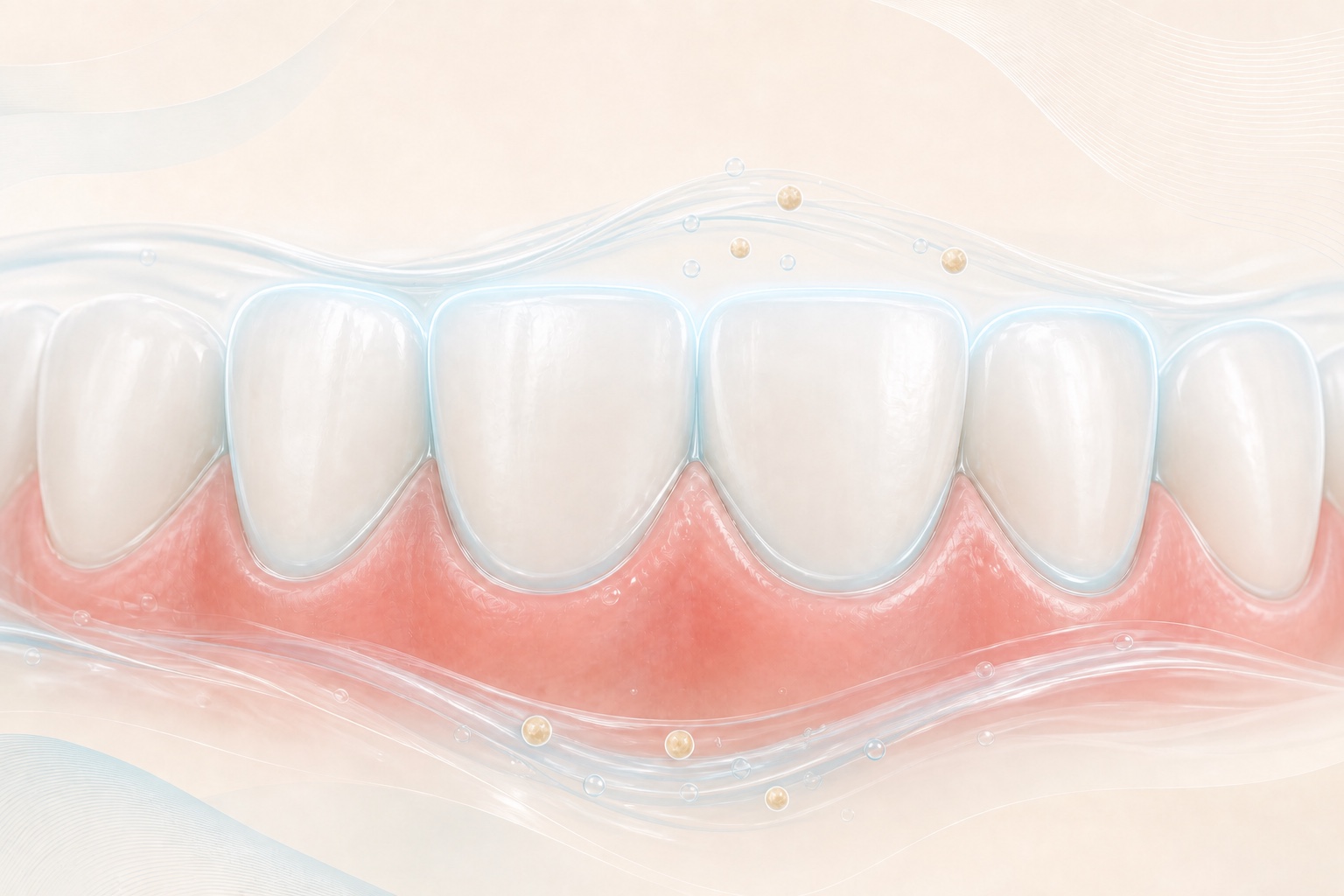
Saliva helps protect your teeth in three important ways: it washes away some food particles, buffers and clears acids, and supplies minerals that help repair early mineral loss from enamel. It also keeps the mouth comfortable and helps with chewing and swallowing.
This is one reason dry mouth can matter for oral health. When the mouth does not have enough saliva, teeth may have less natural support against tooth decay and irritation.
Dry mouth has many possible causes, so persistent dry mouth is something to discuss with a dentist or doctor rather than trying to diagnose on your own.
Three ways saliva protects teeth
Daily oral care often focuses on brushing, flossing, and fluoride. Those matter. Saliva matters too because it is working in the background between those routines.
Saliva helps by:
- Clearing: Flow and swallowing move some food particles and acids away from teeth and gums.
- Buffering: Components in saliva help neutralize acids in the mouth.
- Repairing: Calcium and phosphate in saliva help enamel regain minerals after an acid attack, especially alongside fluoride.
Saliva also moistens and begins to break down food, making it easier to chew and swallow. It does not replace brushing with fluoride toothpaste or cleaning between teeth. Think of saliva as one part of the protection system, not the whole system.
How saliva connects to cavities
Cavities form through a process that involves plaque bacteria, sugars or starches, acid, tooth minerals, and time. Saliva helps the mouth recover between acid attacks by clearing and buffering acids and supplying minerals that enamel can use for early repair.
When saliva flow is reduced, teeth may spend more time in conditions that make decay more likely. That does not mean dry mouth automatically causes a cavity, but it can be one factor in a person’s overall risk.
This is why a dental team may ask about dry mouth, medications, and medical history when they are thinking about cavity risk. Saliva is protective, but it cannot guarantee that a cavity will not form; fluoride, plaque control, eating patterns, and individual factors still matter. Cavity prevention works best as a combination of habits and professional care.
What dry mouth can feel like
Dry mouth can feel different from person to person. Some people notice a sticky or dry feeling. Others may feel thirsty often, have trouble chewing or swallowing dry foods, notice cracked lips, or feel burning or soreness.
Those symptoms can have more than one cause. Medication effects, health conditions, cancer treatment, or nerve injury may be involved. A dry feeling does not identify the cause by itself.
Do not stop or change a medicine because your mouth feels dry unless the clinician who prescribed it tells you to. A dentist or doctor can help you think through safer options.
General habits that may help comfort
For everyday comfort, simple habits may help some people:
- Sip water as needed.
- Keep up with brushing twice daily using fluoride toothpaste.
- Clean between teeth daily.
- Avoid tobacco and alcohol, which can worsen dryness.
- Ask a dentist or doctor about ongoing dryness instead of guessing at the cause.
Some people need specific dry-mouth products or medical evaluation, but that decision depends on the person. A general article cannot choose a treatment plan.
When to ask for care
Ask a dentist or doctor about dry mouth if it is persistent, worsening, or affecting eating, swallowing, speaking, or comfort. Also ask for care if dryness comes with mouth sores, signs of infection, new tooth sensitivity, frequent cavities, or a burning feeling.
If the timing seems connected to a medication, bring the medication list to your appointment. The answer may involve adjusting care around the medicine, but medication changes should come from the prescribing clinician.
The takeaway
Saliva quietly helps protect your teeth by washing, moistening, and supporting mineral balance. If your mouth often feels dry, it is worth bringing up. You do not have to solve the cause alone, and you should not change medicines without professional guidance.
Sources
- Dry Mouth — National Institute of Dental and Craniofacial Research
- Tooth Decay — National Institute of Dental and Craniofacial Research
- Dental Erosion — American Dental Association