The simple answer
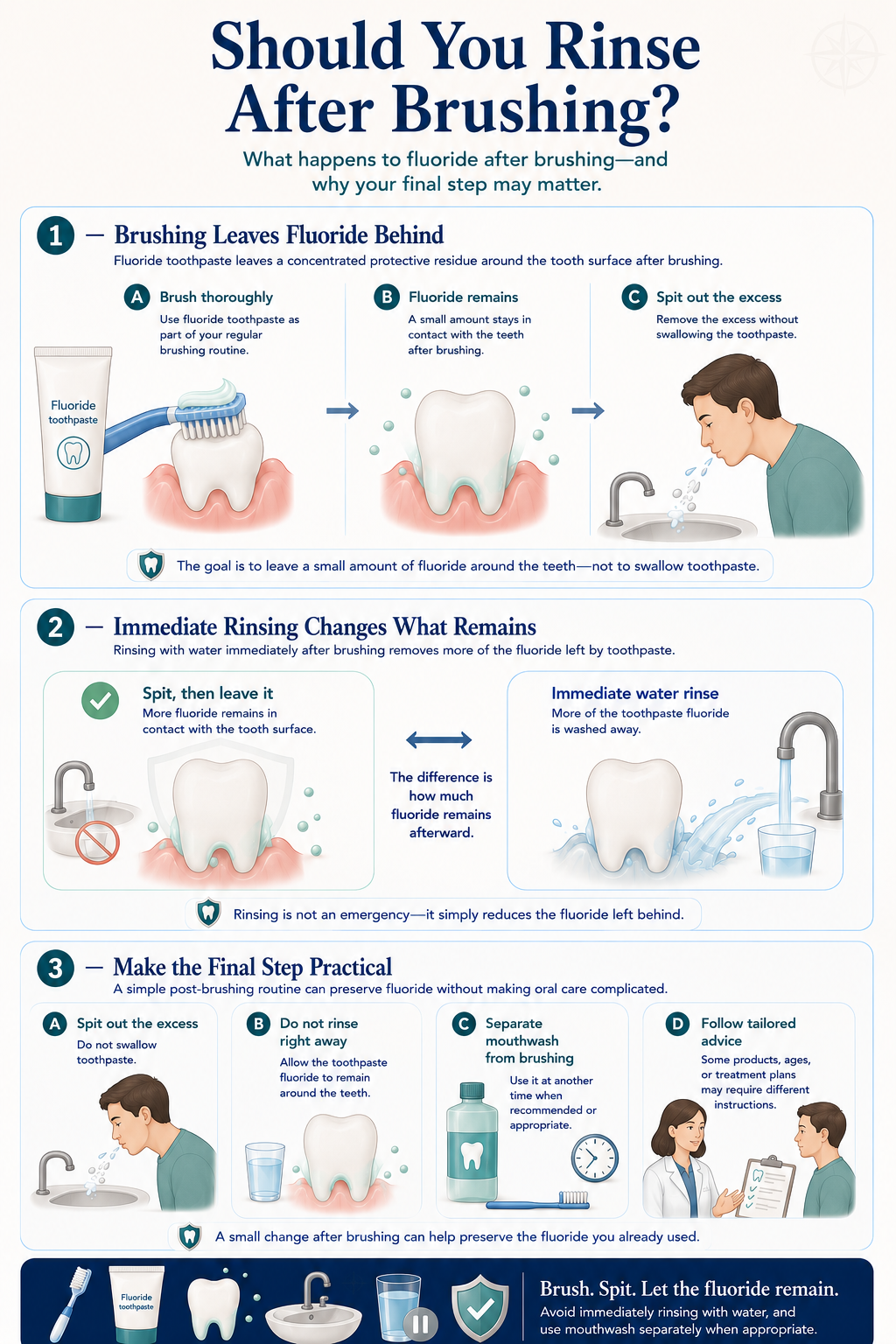
If you have just brushed with fluoride toothpaste, the usual advice is to spit out the excess toothpaste and not intentionally swallow it. Many public-health guidelines also advise skipping an immediate water rinse because rinsing dilutes and removes some of the concentrated fluoride left in the mouth.
Think of “spit, don’t rinse” as a useful default, not a test you can fail. Rinsing does not make the whole brushing session pointless, and normal post-brushing choices are not an emergency. Product directions and advice from your dentist or hygienist should take precedence when they are more specific.
Why an immediate rinse can matter
Fluoride toothpaste helps prevent tooth decay. Brushing cleans the teeth and spreads fluoride over their surfaces. Spitting removes excess foam without deliberately washing away everything that remains.
Water rinsing immediately afterward lowers the amount of fluoride left in the mouth. A small crossover study in healthy adults also found higher short-term fluoride levels in saliva after brushing without rinsing than after brushing followed by a water rinse.
That does not tell us the exact extra cavity protection any one person will get from changing this habit. The direct research on rinse behavior is more limited than the broader evidence for brushing with fluoride toothpaste. This is why the advice is best framed as a practical way to support fluoride contact—not a guarantee or a universal mandate.
A practical after-brushing routine
For a standard fluoride-toothpaste routine:
- Brush all tooth surfaces thoroughly with the appropriate amount of fluoride toothpaste.
- Spit out the excess toothpaste. Do not intentionally swallow it.
- If you can do so comfortably, skip the immediate water rinse.
- Follow the label if your toothpaste gives different after-use directions.
You do not need extra toothpaste to make this work. If the lingering taste or foam makes brushing hard to tolerate, do not abandon brushing. Spit thoroughly, check the product directions, and ask a dental professional whether a different fluoride toothpaste or after-brushing routine would better fit your needs.
What about mouthwash?
Mouthwash is not interchangeable with a water rinse, and its timing depends on the product. NHS guidance advises using fluoride mouthwash at a different time from brushing so it does not wash away the more concentrated fluoride left by toothpaste. American Dental Association guidance also notes that the best order can depend on the ingredients and manufacturer directions.
If you use an over-the-counter or prescription rinse, read its label and follow any dental instructions. The guide to using mouthwash correctly explains why there is no single timing rule for every rinse.
When individual instructions differ
General “spit, don’t rinse” advice may need to be adapted when:
- you use prescription or higher-fluoride toothpaste;
- a dentist has recommended a particular fluoride, sensitivity, or therapeutic product;
- dry mouth, swallowing difficulty, sensory sensitivity, or another need makes the usual routine uncomfortable or impractical; or
- the product label specifies a particular order, rinse, or waiting period.
In these situations, do not combine or rearrange products by guesswork. Follow the product directions and the plan given by the dental professional who knows why the product was recommended.
What about children?
Children should use an age-appropriate amount of fluoride toothpaste and have help or supervision while they learn to brush and spit. “Spit, don’t rinse” never means that a child should swallow toothpaste.
A child who cannot spit reliably needs a routine based on their age, swallowing ability, toothpaste amount, and product directions—not a rigid adult rule. The guide to how much toothpaste children should use covers age-based amounts. Ask a dentist or pediatric healthcare professional if you are unsure what is appropriate for your child.
Keep the main routine in perspective
Not rinsing is one small part of cavity prevention. Brushing twice daily with fluoride toothpaste, cleaning all tooth surfaces, cleaning between teeth, limiting frequent sugar exposure, and getting appropriate dental care matter more than performing one step perfectly.
The takeaway
For many people using fluoride toothpaste, a sensible default is: brush, spit out the excess, do not intentionally swallow, and skip the immediate water rinse. The aim is to avoid washing away fluoride right after brushing—not to make ordinary routines feel dangerous. Follow product directions or individualized dental advice when they differ.
Sources
- How to keep your teeth clean — NHS
- Delivering better oral health: Chapter 9 — Fluoride — UK Government
- Mouthrinse (Mouthwash) — American Dental Association
- Kinetics of fluoride after brushing with the no-rinse method — BMC Oral Health