The quick answer is intentionally small: from the first tooth until age 3, use a smear of fluoride toothpaste about the size of a grain of rice. From ages 3 through 6, use no more than a pea-size amount. A caregiver should put the toothpaste on the brush and help or supervise.
Those amounts are much smaller than the full ribbon often shown in toothpaste advertising. They are designed to provide fluoride at the tooth surface while limiting how much a young child might swallow.
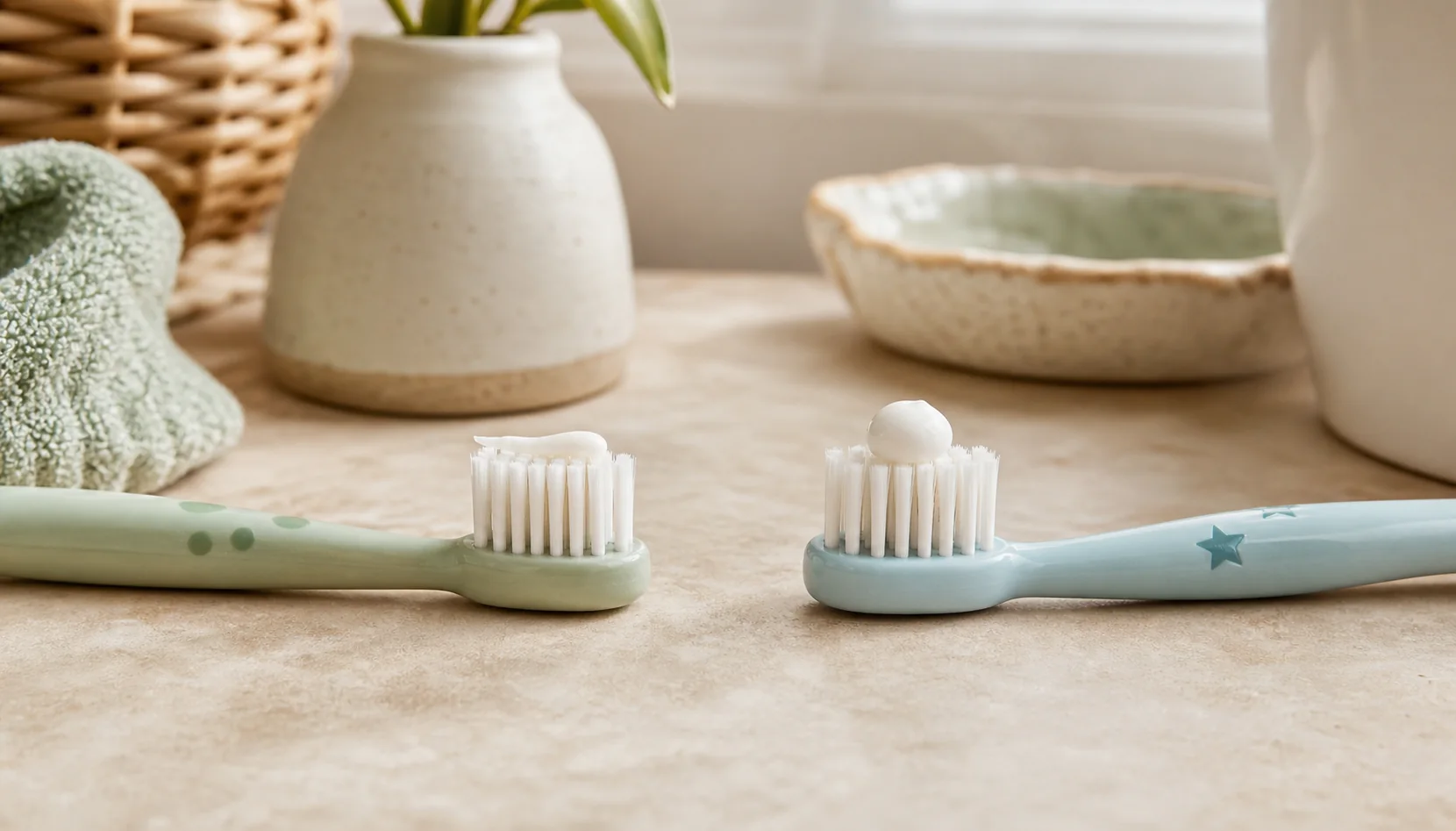
Toothpaste amounts by age
Before the first tooth
Before teeth appear, caregivers can gently wipe the gums with a clean, damp cloth or gauze. This toothpaste amount guide starts when the first tooth appears.
Under age 3, once teeth appear
The American Academy of Pediatric Dentistry and American Dental Association recommend a tiny smear of fluoride toothpaste, about the size of a grain of rice, from the first tooth until age 3.
Keep the brushing caregiver-led. Babies and toddlers cannot manage the amount, placement, or swallowing risk on their own.
Why advice for children younger than 2 can sound different
U.S. guidance is not worded identically. The pediatric dental and ADA guidance starts a rice-size smear when the first tooth appears. The CDC also lists the rice-size limit before age 3, while advising caregivers to consult a dentist or doctor before using fluoride toothpaste for a child younger than 2.
If your child’s dentist or pediatrician has given specific advice, follow that plan. A general age guide cannot account for every child’s cavity risk, swallowing, drinking water, or other fluoride sources.
Ages 3 to 6
Use no more than a pea-size amount of fluoride toothpaste. Caregivers should dispense it, continue to help or supervise, and teach the child to spit rather than swallow the excess.
At this age, many children want to brush by themselves, but they may still miss tooth surfaces or swallow toothpaste without meaning to.
Older children
After age 6, the rice-size-versus-pea-size comparison is no longer the main age rule in these young-child recommendations. Continue using fluoride toothpaste as directed on the product label and by the child’s dental professional.
Older children can take on more of the routine as their coordination and ability to spit improve, but readiness varies. Supervise until the child can use an appropriate amount, brush effectively, and reliably spit out the excess. The guide to helping a child brush more independently offers a practical way to share the routine without handing it over too soon.
Why supervision matters
The toothpaste amount is only one part of safe brushing. Caregivers also help by:
- Putting the toothpaste on the brush.
- Watching that the child uses only the planned amount.
- Helping the child brush all tooth surfaces.
- Reminding the child to spit out excess toothpaste.
- Storing toothpaste where very young children do not use it unsupervised.
Supervision helps children get the cavity-prevention benefit of fluoride toothpaste while reducing unnecessary swallowing. Keep toothpaste out of reach when a very young child is not brushing with an adult.
When to ask a dentist or doctor
Ask your child’s dentist or doctor if your child is younger than 2, repeatedly swallows toothpaste, has special health needs or a higher cavity risk, uses well water, or has several possible fluoride sources.
Those details can change the best guidance for an individual child.
If taste, foam, or texture makes the routine difficult, the sensory-friendly toothbrushing guide offers general setup ideas while keeping toothpaste choices and child-specific guidance within the dentist or pediatric clinician boundary.
What this guide does not cover
This article does not cover fluoride supplements, emergency advice, toxicity concerns, brand comparisons, or the broader public debate about fluoride. It also cannot tell whether one child needs different instructions.
For a day-to-day home routine, the practical starting point is small, supervised, and age-appropriate: rice-size before age 3, pea-size from ages 3 through 6, and individual guidance when the child’s circumstances call for it.
Sources
- Fluoride Therapy — American Academy of Pediatric Dentistry
- Toothpastes — American Dental Association
- Baby Teeth — MouthHealthy / American Dental Association
- About Fluoride — Centers for Disease Control and Prevention