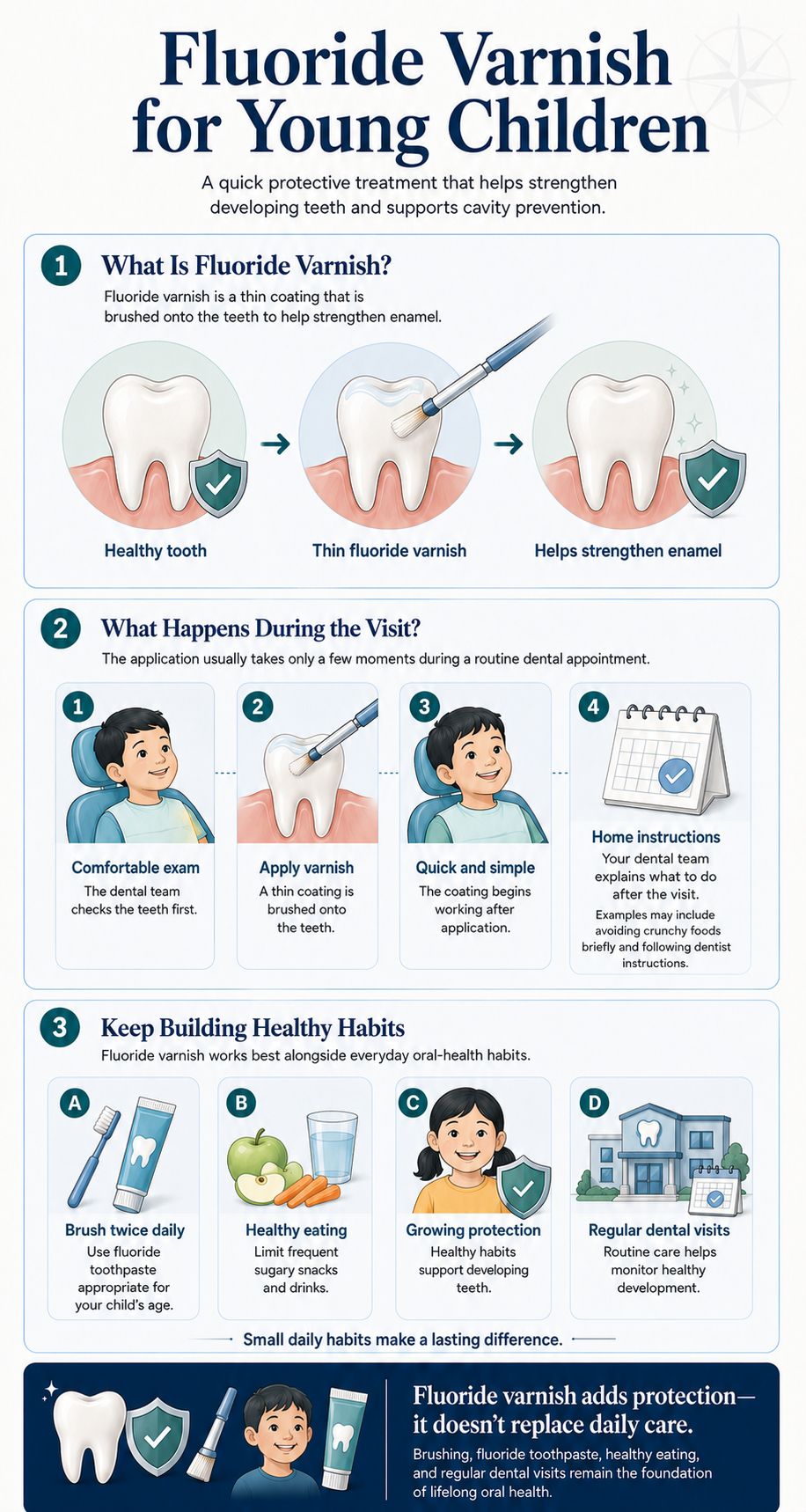
Fluoride varnish is a concentrated fluoride coating that a dental or other trained health professional applies to a child’s teeth. Its purpose is to help prevent cavities and support the enamel—not to clean the teeth, fill a cavity, or replace daily brushing.
Caregivers may hear about varnish at a dental visit, pediatric medical visit, school program, or public-health clinic. Whether it is recommended, and how often, depends on the child’s age, cavity risk, fluoride exposure, and professional assessment.
What fluoride varnish is
Fluoride is a mineral used in several cavity-prevention settings. A varnish is one professional way to place fluoride directly on tooth surfaces. The coating is painted on in a small amount and stays in contact with the teeth for a period after the visit.
The important distinction is professional application. Fluoride varnish is not a home paint-on product and is not the same as fluoride toothpaste, mouth rinse, supplements, or fluoridated drinking water.
What it is meant to do
Tooth enamel regularly loses and regains minerals. Fluoride can make enamel more resistant to acid and can support remineralization of the earliest mineral loss. Professional varnish provides fluoride at the tooth surface as one part of cavity prevention.
It does not make cavities impossible. A child’s overall risk can also be affected by brushing, eating and drinking patterns, existing tooth changes, access to dental care, and other individual factors. Our guide to preventing cavities explains the broader prevention picture.
How varnish differs from toothpaste and water
The word “fluoride” appears in several kinds of guidance because the setting and role are different:
- Fluoride toothpaste is used at home in a small, age-appropriate amount while brushing. Caregiver supervision matters for young children. See how much toothpaste kids should use.
- Fluoridated water provides frequent exposure to a low level of fluoride when a community water system contains the recommended amount. Water fluoride varies by location and source.
- Fluoride varnish is applied by a professional directly to the teeth as an additional preventive measure when appropriate.
These forms are not interchangeable, and having one source of fluoride does not by itself answer whether another is appropriate. A dentist or pediatrician can consider the child’s full context.
Why a pediatrician may mention it
Young children often see a medical professional several times before they have an established dental home. Some medical practices and public-health programs include oral-health screening and fluoride-varnish application for eligible children.
This does not turn a medical visit into a complete dental examination. A child still benefits from an ongoing dental relationship. If you are preparing for one, read what parents can expect at a first dental visit.
What caregivers can ask
Before the application, ask:
- Why are you recommending varnish for my child?
- How does it fit with the fluoride in our water and toothpaste?
- What should my child expect during the application?
- What instructions should we follow afterward?
- When should my child next see a dentist?
Share relevant information about the child’s health, known allergies or reactions, swallowing difficulties, dental history, and main source of drinking water. Follow the specific aftercare instructions from the professional applying the varnish; products and office protocols can differ.
What not to assume
Fluoride varnish does not mean a child has a cavity. It may be offered as prevention based on age, risk, program policy, or professional judgment.
It also does not replace:
- caregiver-assisted brushing with an age-appropriate amount of fluoride toothpaste;
- regular dental assessment;
- attention to frequent sugar exposure; or
- treatment of an existing cavity.
Varnish and dental sealants are also different. Varnish places fluoride on tooth surfaces, while sealants are protective coatings placed in the grooves of selected back teeth.
When individual guidance matters
Ask the child’s dentist or doctor before making a child-specific fluoride decision, especially if you are unsure about well water, unusually high local fluoride, fluoride supplements, swallowing, or several fluoride products. Do not estimate a supplement dose or professional schedule from a general article.
If a child has tooth pain, swelling, visible damage, or a suspected cavity, varnish information is not a substitute for a dental evaluation.
The practical takeaway
Fluoride varnish is a professional preventive coating that can help protect young teeth from cavities. It is one fluoride context—not a replacement for toothpaste, water guidance, dental visits, or treatment. Ask why it is being recommended for your child, how it fits with other fluoride sources, and which instructions apply after the visit.
Sources
- Fluoride & Dental Health — National Institute of Dental and Craniofacial Research
- Fluoride Therapy — American Academy of Pediatric Dentistry
- Community Water Fluoridation Frequently Asked Questions — Centers for Disease Control and Prevention