The simple answer
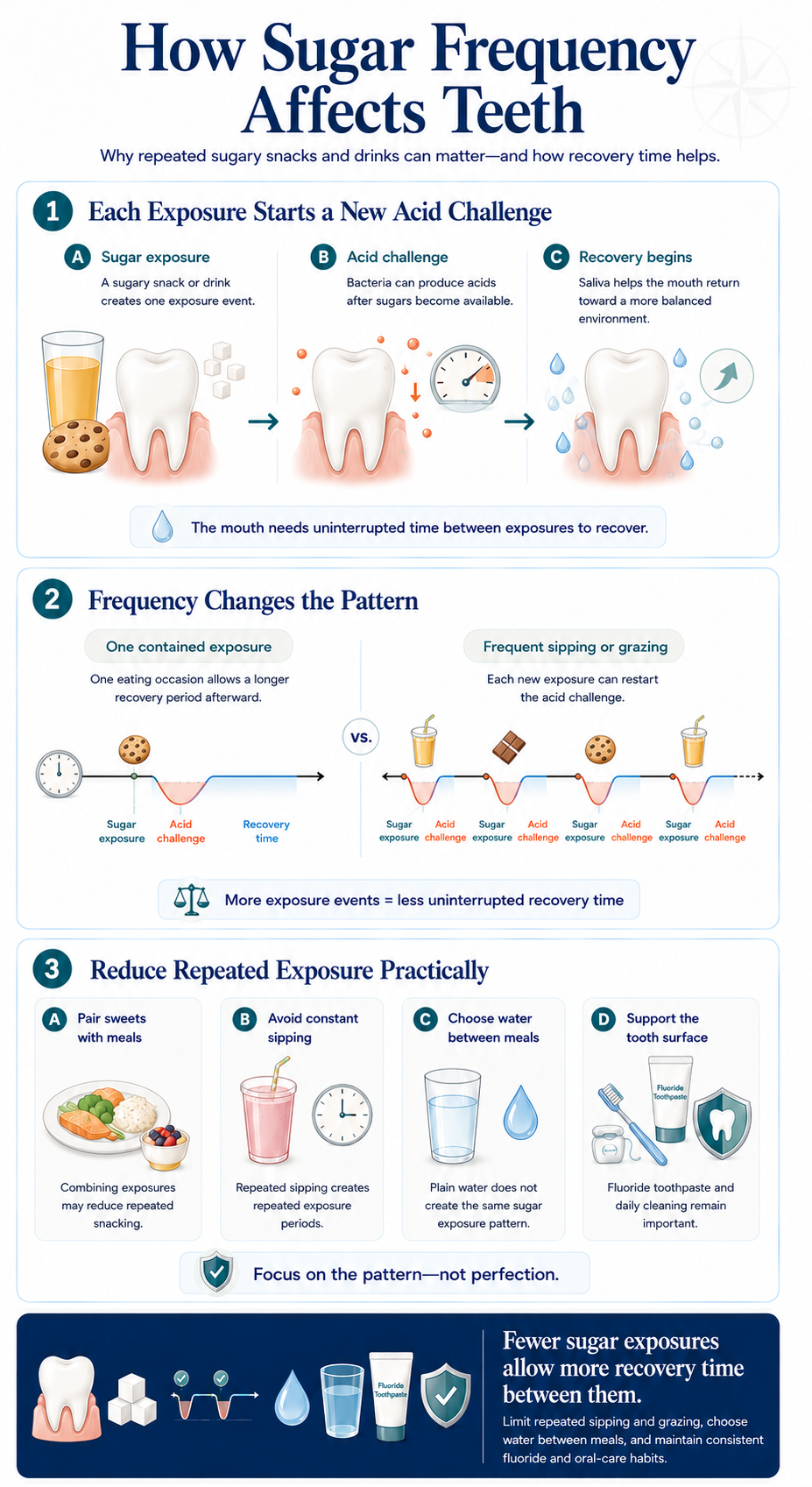
Sugar affects teeth partly because of frequency. When sugary foods or drinks reach dental plaque, bacteria in plaque can make acids. Repeated acid exposures across the day can give teeth less time to recover between snacks or sips.
That does not mean one sweet food automatically causes a cavity, or that frequency is the only thing that matters. Amount and frequency are closely connected, and cavities usually develop through a pattern over time. Plaque, fluoride, saliva, daily cleaning, and individual risk also affect the balance.
The practical goal is not to feel guilty about every bite. It is to notice how often sugar reaches your teeth and look for small changes that are realistic for your life.
Why frequency can matter
Your teeth go through mineral loss and repair cycles throughout the day. After sugary foods or drinks, plaque bacteria can produce acids that challenge the tooth surface. Saliva and fluoride help support recovery, but repeated exposures can make that balance harder.
Frequency is one reason sipping a sweet drink for hours can be different from having the same drink with a meal. The longer or more often teeth are exposed, the more often plaque bacteria have the chance to make acid.
This is why prevention advice includes limiting frequent sugary snacks and drinks alongside reducing overall sugar. Research cannot neatly separate the contribution of amount from frequency, so neither should be treated as the only measure of risk. If your main question is about quantity, see how much sugar is too much for teeth.
Drinks can keep the exposure going
Sugary drinks can be easy to stretch out without noticing. Soda, sweet tea, juice drinks, sports drinks, sweetened coffee, and similar drinks can bathe the teeth repeatedly when they are sipped over time.
Water between meals is a lower-risk default for teeth. If you do have a sweet drink, having it with a meal and finishing it in a reasonable window may reduce repeated exposure compared with sipping all afternoon.
This is general oral-health education, not a diet plan. If you have medical dietary needs, follow the advice from your medical and dental professionals.
Snacks are not only about being sweet
Sugary or starchy snacks can give plaque bacteria more carbohydrate to use. The important idea is the pattern: frequent grazing can create repeated exposures, even when each snack feels small.
A helpful question is: “Are my teeth getting long breaks between sugary or starchy exposures?” For some households, the most realistic change is keeping sweets closer to meals. For others, it is choosing water between meals or setting a snack time instead of constant nibbling.
None of this needs to become perfection. A prevention habit that feels manageable is more useful than a strict plan that collapses after a few days.
How this connects to plaque and enamel
Plaque is a sticky film of bacteria that forms on teeth. Sugar does not act alone; it matters because plaque bacteria can use sugars and starches to produce acids.
Those acids can weaken enamel over time. Fluoride toothpaste, saliva, brushing, and cleaning between teeth all help shift the balance back toward protection.
This is why cavity prevention is a system. Reducing frequent sugar exposure is one part of that system, alongside daily cleaning and fluoride.
Practical ways to lower repeated exposure
Small, boring changes often work best:
- Keep water nearby between meals.
- Avoid slowly sipping sweet drinks over long stretches when you can.
- Pair sweet foods with meals more often than constant grazing.
- Keep brushing twice a day with fluoride toothpaste.
- Clean between teeth daily so plaque does not sit undisturbed in tight spaces.
- Ask your dental team what matters most for your mouth if you keep getting cavities.
These habits do not guarantee that you will never get a cavity. They simply support the conditions that help teeth stay stronger over time.
When to ask for dental guidance
If you have frequent cavities, dry mouth, a medical condition that affects eating patterns, or a diet plan directed by a clinician, do not try to solve everything on your own from a general article.
A dentist or hygienist can help you understand where your cavity risk may be coming from and which changes are most realistic for you.
The takeaway
Sugar frequency matters because each exposure can give plaque bacteria another chance to make acid. You do not need a perfect diet for healthy teeth. You need a realistic routine that gives your teeth more protected time between exposures.
Sources
- Nutrition and Oral Health — American Dental Association
- Diet and Dental Health — MouthHealthy / American Dental Association
- The Tooth Decay Process: How to Reverse It and Avoid a Cavity — National Institute of Dental and Craniofacial Research