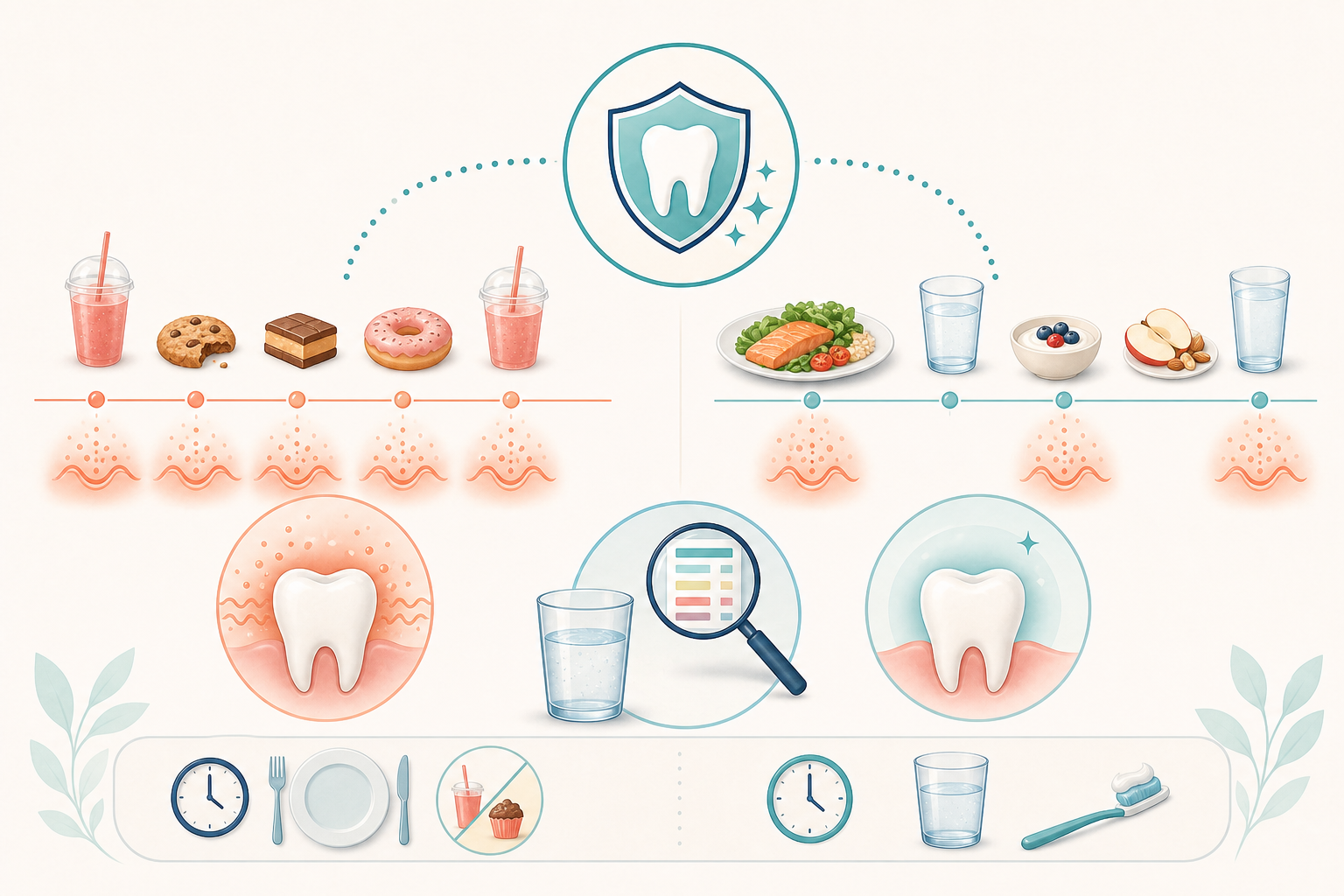
There is no single number that separates “safe” sugar from “too much” for every person’s teeth. Both the total amount and the number of times teeth are exposed matter. A small sweet drink sipped for hours can create more repeated opportunities for acid production than the same drink finished with a meal.
For a public-health benchmark, the World Health Organization recommends keeping free sugars below 10% of total daily energy intake and suggests reducing them below 5% for additional health benefits, including lower cavity risk. Those percentages are population guidance, not an individualized dental prescription.
For someone eating about 2,000 calories a day, WHO explains that 10% is about 50 grams of free sugars and 5% is about 25 grams. Those examples are not universal daily limits: energy needs vary, especially for children, and a gram total cannot show how often teeth are exposed or account for fluoride, saliva, plaque control, and individual cavity risk.
Why frequency matters as well as quantity
Bacteria in dental plaque use sugars from foods and drinks and produce acids. Those acids can pull minerals from enamel. Saliva helps the mouth recover between exposures, but frequent sipping, grazing, or repeated sweet snacks start the process again.
This means two questions are useful:
- How much sugar is in this? Total intake still matters.
- How often are my teeth exposed? A sweetened drink or snack spread across the day creates repeated exposures.
You do not need to count every “acid attack.” A practical goal is to reduce repeated sugary moments, especially between meals and over long periods. For a closer look at this process, read how sugar frequency affects teeth.
What counts as free or added sugar?
The terms are related but not identical.
- Added sugars on a U.S. Nutrition Facts label include sugars added during processing, syrups and honey, and sugars from concentrated fruit or vegetable juices.
- Free sugars, the term used by WHO, include added sugars plus sugars naturally present in honey, syrups, fruit juices, and fruit-juice concentrates.
- Total sugars also include sugars naturally present in foods such as whole fruit and plain milk.
That distinction matters when reading a label. A plain dairy product and a sweetened version may both show total sugar, but only the sweetened product may list added sugar. Whole foods also behave differently in the mouth from juices or highly processed snacks, so one number does not tell the entire dental story.
How to read the Nutrition Facts label
For packaged food or drinks in the United States:
- Check the serving size and servings per container. The sugar listed may cover less than the amount you actually eat or drink.
- Find Includes X g Added Sugars under Total Sugars.
- Look at the % Daily Value (%DV) to compare products. FDA describes 5% DV or less per serving as low and 20% DV or more as high for added sugars.
- Compare similar products, including serving sizes, instead of judging one item in isolation.
The FDA Daily Value for added sugars is 50 grams based on a 2,000-calorie diet. It is a label reference for comparison—not a universal personal allowance and not a goal to reach. Children and adults with different energy or health needs should not automatically use 50 grams as their limit.
Where hidden sugars show up
Sweetness is not always obvious. Added or free sugars can appear in:
- Flavored yogurt, milk, oatmeal, and breakfast cereal.
- Granola bars, snack bars, sauces, dressings, and condiments.
- Sweetened coffee or tea, sports drinks, energy drinks, soda, and flavored waters.
- Juice, smoothies, fruit drinks, and products made with juice concentrate.
- Honey, agave, maple syrup, and other syrups marketed as alternatives to table sugar.
“Organic,” “natural,” or “no refined sugar” does not mean a product is free of sugars that oral bacteria can use. “No added sugar” also does not mean “sugar-free”; check Total Sugars and the ingredient list for context.
Why the eating pattern matters
It is easy to turn one sweet into many exposures by eating it piece by piece over a long period. The important issue is not that every snack affects teeth in the same way. It is that frequent snacking or grazing can repeatedly expose plaque to sugars.
If a family chooses a sweet, having it as part of a meal is generally more tooth-friendly than grazing on it throughout the day. More saliva is usually released during a meal, which helps clear food and lessen acids. This is a practical risk-reduction step, not a guarantee against cavities.
Sugary drinks can turn one choice into many exposures
Drinks are easy to sip repeatedly. Soda, sweet tea, energy and sports drinks, fruit drinks, juice, sweetened coffee, and flavored milk can all contribute sugars. Some are also acidic, which adds an enamel-erosion concern separate from cavities.
Helpful changes include:
- Choose plain water between meals more often.
- Finish a sweet drink in one sitting instead of carrying it for hours.
- Have sweet drinks with a meal rather than as a repeated between-meal habit.
- Reduce syrup, sweetener, or flavored add-ins gradually if an abrupt change feels unrealistic.
WHO recommends no sugar-sweetened beverages for children younger than 2. Families can ask a pediatrician, dentist, or registered dietitian for age-appropriate nutrition guidance.
Practical family strategies
Perfection is not required. Start with one pattern that happens often:
- Make water the easy default drink at home and on the go.
- Create regular meal and snack times instead of continuous grazing.
- Pair an occasional sweet with a meal and finish it, rather than stretching it across the afternoon.
- Compare two versions of a regular grocery item and choose the lower-added-sugar option when it still works for the family.
- Keep convenient lower-sugar snacks visible and available.
- Avoid using sweets as a constant reward.
Sugar reduction works alongside—not instead of—fluoride toothpaste, cleaning between teeth, and regular dental care. Learn more about what causes cavities and everyday cavity prevention.
The practical answer
“Too much” is not just a daily gram total. For teeth, risk generally rises as free-sugar intake rises and as sugary exposures become more frequent. Use public-health limits as a broad guide, use labels to compare products, and focus first on the sweet drinks, sticky snacks, and grazing habits that expose teeth again and again.
Small, repeatable reductions are more useful than a perfect plan that a family cannot sustain.
Sources
- Sugars and dental caries — World Health Organization
- Healthy diet — World Health Organization
- Added Sugars on the Nutrition Facts Label — U.S. Food and Drug Administration
- Nutrition and Oral Health — American Dental Association
- Diet and Dental Health — MouthHealthy / American Dental Association