Yes, an alcohol-free mouthwash can work. What it does depends on its active ingredients and intended purpose—not simply on whether it contains alcohol.
“Alcohol-free” describes one part of the formula. It does not tell you whether the rinse contains fluoride, an antimicrobial ingredient, or only flavoring meant to freshen breath for a short time.
Look at the purpose, not just the alcohol-free label
Mouthrinses generally fall into two broad groups:
- Cosmetic rinses mainly make the mouth feel fresher or mask bad breath temporarily.
- Therapeutic rinses contain active ingredients intended to help with a specific concern, such as cavities, plaque, gingivitis, or bad breath.
An alcohol-free rinse can be in either group. To understand what a product is designed to do, read the active-ingredient list and the claims in its label directions.
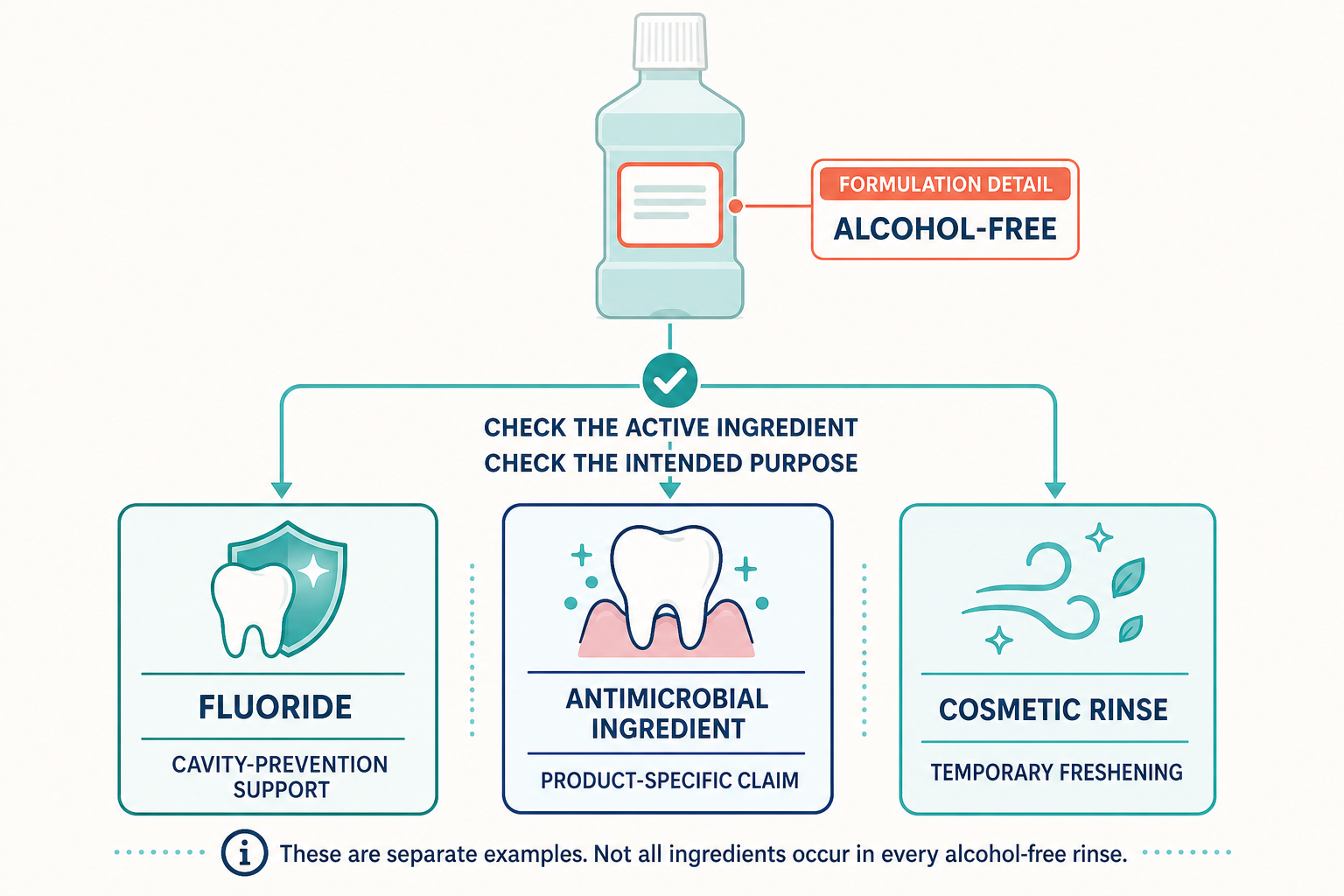
Active ingredients do the therapeutic work
Different ingredients serve different purposes:
- Fluoride helps prevent tooth decay. Evidence from supervised studies in children and adolescents shows that regular fluoride mouthrinse can reduce decay in permanent teeth, although the size of the benefit in other settings and the evidence about unwanted effects are less certain.
- Antimicrobial ingredients may help control plaque, gingivitis, or bad breath, depending on the ingredient and formulation. The American Dental Association identifies ingredients such as cetylpyridinium chloride, chlorhexidine, and essential oils in therapeutic rinses. Some therapeutic rinses, including chlorhexidine rinses, are available only by prescription.
- Flavoring agents can make breath seem fresher without providing a broader therapeutic effect.
Alcohol is used in some formulas, including as a solvent or carrier, but it is not the ingredient responsible for every possible mouthwash benefit. An alcohol-free product still needs an appropriate active ingredient—and evidence for the claim it makes—to provide a therapeutic effect.
Is alcohol-free mouthwash better for dry or sensitive mouths?
It may feel more comfortable for some people. Alcohol can have a drying effect, so the American Dental Association notes that an alcohol-free rinse may be prudent for people managing dry mouth. A product without alcohol may also avoid alcohol-related burning for people who find that sensation uncomfortable.
That does not mean every alcohol-containing rinse causes dry mouth, or that every alcohol-free rinse is gentle. Other ingredients can affect taste, comfort, or irritation. If a rinse repeatedly causes burning, dryness, soreness, or taste changes, stop using it and ask a dentist, pharmacist, or other appropriate health professional about the pattern.
What “alcohol-free” does not guarantee
An alcohol-free label does not automatically mean that the rinse:
- contains fluoride;
- reduces plaque or gingivitis;
- treats the cause of bad breath;
- relieves tooth sensitivity or dry mouth;
- is more effective than a rinse containing alcohol;
- is comfortable or suitable for every person; or
- can replace brushing and cleaning between teeth.
The useful question is not only “Does it contain alcohol?” but also “What is this product meant to do, and which active ingredient supports that purpose?”
How to assess an alcohol-free rinse
Start with three label checks:
- Purpose: Is the product meant for temporary breath freshening, cavity-prevention support, plaque or gingivitis control, dry-mouth comfort, or another stated use?
- Active ingredient: Does the ingredient match that purpose?
- Directions and age limits: Can the intended user follow the directions and reliably spit out the rinse? The American Dental Association says children younger than 6 should not use mouthrinse unless a dentist directs it because they may swallow too much. Product labels may set additional precautions or age limits.
Do not assume products with similar front-label language have the same ingredients. Fluoride content and antimicrobial activity are separate from alcohol-free status.
For timing questions—especially when fluoride toothpaste is also involved—see Should You Rinse After Brushing?. Mouthwash remains an addition to, rather than a replacement for, brushing with fluoride toothpaste, cleaning between your teeth, or dental care.
When individualized guidance may help
A dentist or hygienist can help clarify which product purpose fits your oral-health needs, particularly if you have persistent dry mouth, recurring irritation, ongoing bad breath, a higher cavity risk, dental appliances, or difficulty with your usual home-care routine. This does not always mean that mouthwash is necessary.
Prescription rinses should be used only according to the instructions provided for them. An alcohol-free label alone is not a reason to choose or change a prescription product.
The bottom line
Alcohol-free mouthwash can work when its active ingredients match the benefit you want. Check the intended purpose, active ingredients, directions, and age guidance. Choose based on those details and tolerability—not on the alcohol-free claim alone.
Sources
- Mouthrinse (Mouthwash) — American Dental Association
- Fluoride mouthrinses for preventing dental caries in children and adolescents — Cochrane