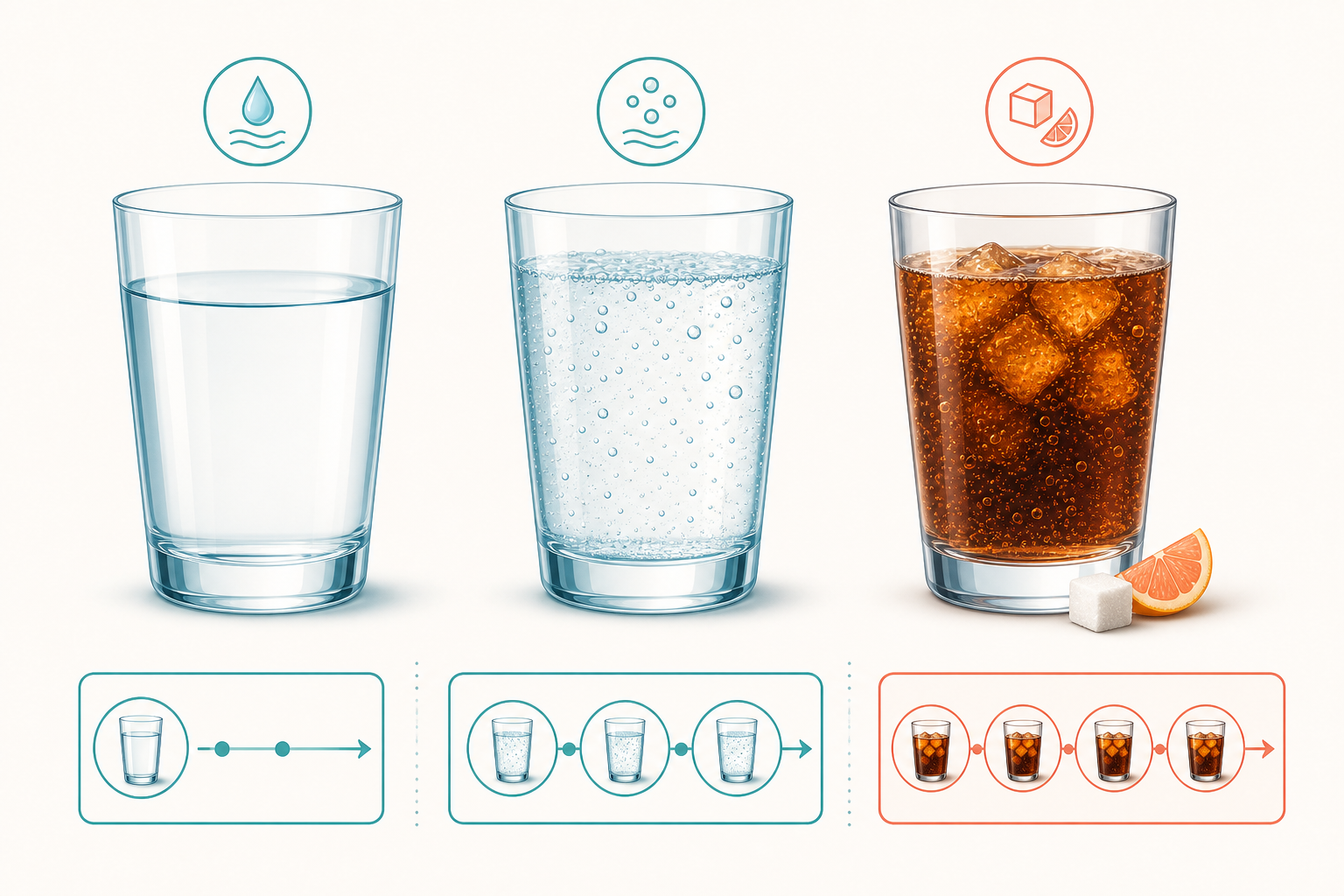
Plain sparkling water is generally a lower-risk choice for teeth than soda, especially when it has no sugar and no added acids. It is mildly acidic because dissolved carbon dioxide forms carbonic acid, but carbonation alone does not make it equivalent to a sugary or strongly acidic soft drink.
The details still matter. Citrus flavorings, added acids, sugar, and sipping a drink repeatedly over many hours can increase acid exposure.
Why carbonation gets blamed
Carbonation gives water its bubbles. When carbon dioxide dissolves in water, a small amount of carbonic acid forms and lowers the drink’s pH.
That sounds alarming, but pH is only part of the story. A drink’s overall erosive potential also depends on its other acids, how long it contacts the teeth, and how often that exposure happens. Plain carbonated water and soda should not be treated as interchangeable.
Acidity and enamel
Dental erosion is the chemical wearing away of tooth structure by acids that do not come from bacteria. Over time, repeated acid exposure can soften and thin enamel. Unlike an early cavity process, lost enamel does not simply grow back.
Erosion and cavities are related to acid, but they are not the same process. Cavities develop when plaque bacteria use fermentable carbohydrates, including sugars, and produce acids. What Causes Cavities? explains that process in more detail.
Plain versus flavored sparkling water
An unflavored, unsweetened sparkling water is usually the simplest option. Flavored products vary widely. Some contain citric acid or other added acids, and some contain sugar or sweetened juice.
In laboratory testing, flavored sparkling waters have shown more erosive potential than plain water. A laboratory result cannot predict exactly what will happen in one person’s mouth, where saliva, drinking pattern, and other factors matter. It is still a useful reason to read the ingredient list rather than assuming every sparkling water is the same.
Look for:
- Added sugar or sweetened juice
- Citric acid, phosphoric acid, or other added acids
- A label that describes the drink as soda, tonic water, energy water, or another sweetened beverage rather than simply carbonated water
Sparkling water versus soda
Regular soda often combines substantial acidity with sugar. That creates two concerns: direct acid exposure that can contribute to erosion, and fermentable sugar that plaque bacteria can use in the cavity process.
Plain sparkling water does not bring that same sugar exposure. This is why replacing soda with unsweetened sparkling water can be a practical step down in dental risk, even though plain sparkling water is not perfectly neutral.
Sugar-free soda removes the sugar component, but it may still contain stronger food acids. “No sugar” does not always mean “non-acidic.”
Frequency matters
How you drink can matter as much as what you drink. Sipping an acidic beverage slowly throughout the day creates repeated contact with the teeth. Drinking it with a meal generally limits the exposure to a shorter window and allows saliva to help clear and buffer acids afterward.
Practical ways to reduce exposure include:
- Choose plain, unsweetened sparkling water most often.
- Have acidic or flavored versions with meals instead of sipping them for hours.
- Swallow rather than holding or swishing the drink around your teeth.
- Use still water as your main between-meal drink.
- After an acidic drink, rinse with plain water if convenient.
- Avoid brushing immediately after an acidic exposure; give saliva time to help the mouth recover first.
A straw may reduce contact with some front teeth when used normally, but it does not make an acidic drink harmless.
When enamel erosion becomes a concern
Enamel erosion can be gradual. Possible signs include increasing sensitivity, teeth looking more yellow as the enamel thins, rounded or worn edges, or small cupped areas on chewing surfaces. These changes can have more than one cause, so appearance alone is not a diagnosis. Why Do Teeth Hurt With Cold Food or Drinks? gives more context about sensitivity.
It may be worth asking a dentist if you notice new sensitivity or visible wear, drink acidic beverages very frequently, have regular reflux or vomiting, or have been told that your enamel is wearing. A dental examination can help distinguish erosion from grinding, abrasion, decay, and other causes.
The takeaway
You do not need to treat plain sparkling water like soda or avoid it entirely. The lower-risk pattern is simple: choose unsweetened varieties without added acids most often, keep acidic drinks to shorter occasions, and avoid all-day sipping. If you notice sensitivity or wear, a dentist can help assess what is contributing.
Sources
- Dental Erosion — American Dental Association
- Tooth Decay Process: How to Reverse It and Avoid a Cavity — National Institute of Dental and Craniofacial Research
- The erosive potential of flavoured sparkling water drinks — International Journal of Paediatric Dentistry