The best toothbrush is not necessarily the most expensive one. A practical choice has soft bristles, fits comfortably in your mouth and hand, and lets you reach every tooth with gentle control.
Both manual and powered toothbrushes can clean effectively. Features matter when they make thorough, consistent brushing easier—not simply because they sound advanced.
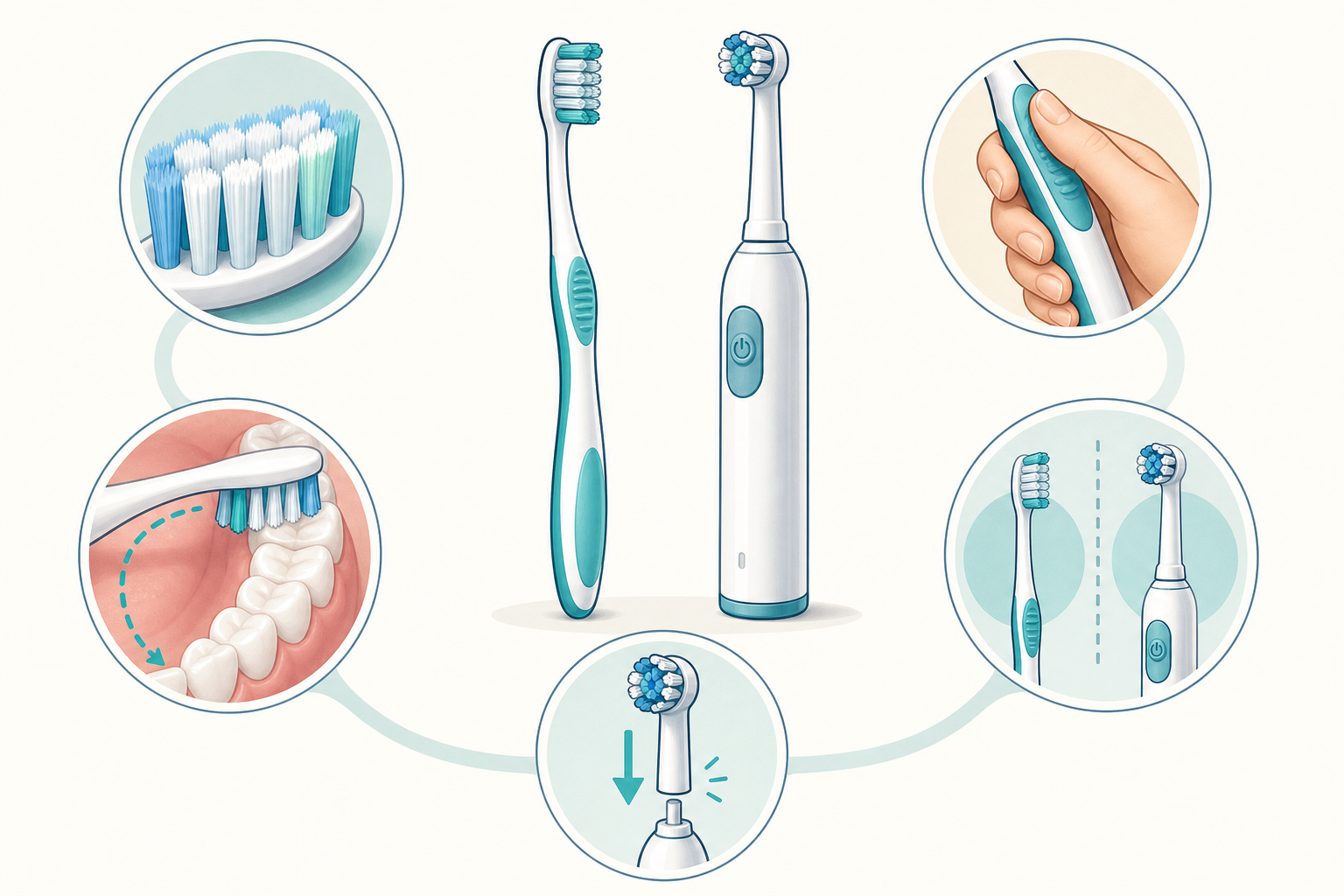
Start with soft bristles
Soft bristles are the general default. The American Dental Association recommends them with gentle pressure because this combination can lower the chance of injuring the gums.
Medium or hard bristles are not a better everyday choice just because they feel stronger. Plaque removal depends on reaching the tooth surfaces and gumline with good technique; aggressive scrubbing is not a shortcut. If pressure is a concern, the brushing technique guide explains a gentler approach.
Choose a head that can reach
The brush head should move comfortably around the back teeth and along the inside surfaces without forcing your mouth open or making you skip tight areas. A small or compact head works well for many adults, but the practical test is reach and control rather than a particular shape.
Head shape and elaborate bristle patterns matter less than whether you can place the bristles where they need to go. If a large head bumps into your cheeks or makes the back teeth difficult to reach, try a smaller one.
Check the handle in your hand
A handle should feel secure without requiring a tight pinch. Look for a length, thickness, weight, and grip surface that let you guide the brush gently.
People with limited grip or hand movement may find a wider handle, a grip aid, or a powered brush easier to control. A dentist or dental hygienist can help when an adaptation needs to fit a particular physical limitation.
Manual or powered: keep the choice practical
This buying decision does not require declaring one category the universal winner.
- A manual brush can be effective, is simple to replace, and gives direct control over movement and pressure.
- A powered brush supplies the bristle motion and may be easier for some people with limited dexterity, disabilities, or dental appliances such as braces.
A powered brush can still miss surfaces if it is moved too quickly or positioned poorly. A manual brush can work well when it is used thoroughly. Choose the format that makes it easier to brush all surfaces for about two minutes, twice a day.
For a closer look at the evidence, cost, and feature tradeoffs, see the electric-versus-manual toothbrush guide.
If you consider a powered model, focus on usable features: a comfortable handle, a head that fits, simple controls, a timer if it helps your routine, and replacement heads you can obtain and afford. Extra modes, app scores, or premium styling do not guarantee better oral-health outcomes.
Braces and other dental appliances
Brackets, wires, retainers, and other appliances can create more edges to clean around. A compact head may improve access, and some people find powered motion easier. The right brush still depends on the appliance and the person’s ability to reach around it.
Ask the dentist or orthodontic team to show which areas are being missed before buying several specialized tools. That keeps the recommendation tied to an actual cleaning barrier rather than a product promise.
Accessibility is part of effectiveness
The brush needs to fit the person using it. Hand weakness, tremor, limited arm movement, sensory preferences, mouth opening, caregiver assistance, and tolerance for vibration can all affect whether a tool is usable.
Possible adjustments include a larger handle, lighter grip, powered motion, a smaller head, or a quieter and simpler brush. No one adaptation works for everyone. When brushing remains difficult, a dentist or dental hygienist can help match the tool and routine to the barrier.
Technique and consistency outrank premium features
A toothbrush only cleans where its bristles make contact. The core job is to reach the outer, inner, and chewing surfaces of every tooth and clean gently near the gumline. See why the gumline matters for more context.
That makes a comfortable, affordable brush you use consistently more valuable than a feature-heavy brush that is awkward, painful, or difficult to maintain.
Know when the brush is worn
Plan to replace a manual toothbrush or powered brush head about every three to four months, and sooner if the bristles become matted or frayed. Worn bristles become less effective.
The condition of the bristles matters more than waiting for an exact calendar date. The toothbrush replacement guide explains the wear cues and simple storage steps.
A quick buying checklist
Before choosing, ask:
- Are the bristles soft?
- Can the head comfortably reach my back teeth and inner surfaces?
- Can I hold and guide the handle without squeezing hard?
- Would manual or powered motion better fit my dexterity, appliance, sensory comfort, and budget?
- Are replacement brushes or heads easy for me to get?
- Am I paying for a feature I will actually use?
The practical takeaway
Choose a soft-bristled toothbrush that fits your mouth, hand, abilities, and routine. A suitable head and comfortable handle help you reach more surfaces; good technique and consistent use do the real work. Premium features are optional, not proof of a better result.
Sources
- Toothbrushes — American Dental Association
- Home Oral Care — American Dental Association
- How to Keep Your Teeth Clean — National Health Service
- Toothbrushing Tips for People With Reduced Dexterity — The Rotherham NHS Foundation Trust