The short answer is that fluoride toothpaste can help remineralize early weakened enamel, before a cavity becomes a hole. It cannot grow new enamel, fill a cavity, or restore the shape of a chipped, cracked, or worn tooth.
That difference is easy to miss when a package says “repair,” “restore,” or “rebuild.” The useful question is not whether the word sounds scientific. It is what change the product actually claims to support.
Remineralization is not regrowth
Enamel is the hard outer covering of a tooth. Acids can pull minerals from it during the early stages of the tooth-decay process. Saliva supplies minerals such as calcium and phosphate, while fluoride can help replace lost minerals and make enamel more resistant to future acid exposure.
That mineral exchange is called remineralization. It works within enamel that is still present. It does not create a new layer of tooth in a place where enamel or tooth structure is already missing.
The guide to what causes cavities explains how mineral loss can progress from an early surface change to permanent damage. Once a cavity has formed, toothpaste does not fill the hole; a dentist needs to evaluate it and discuss the appropriate care.
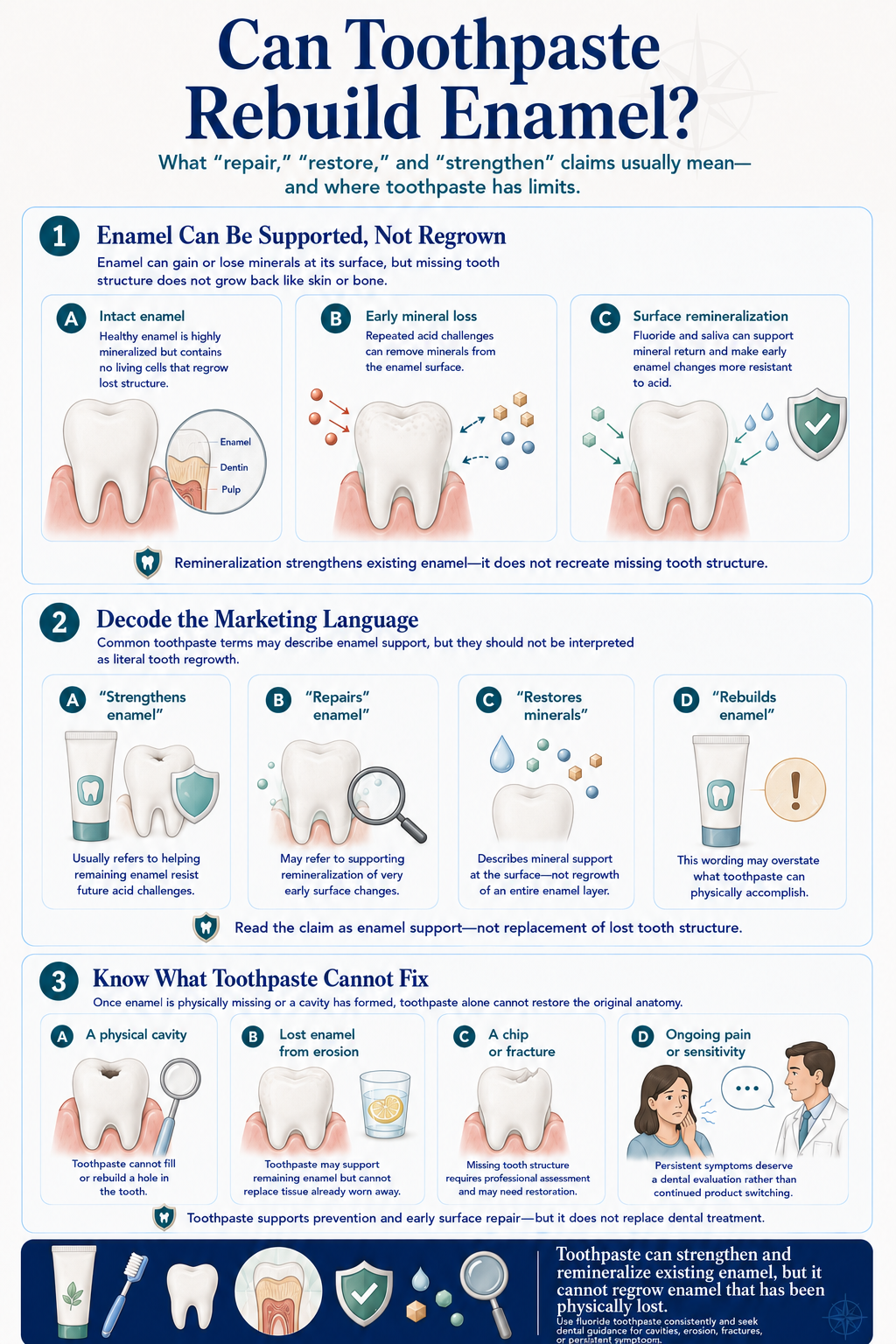
How to read “repair” and “rebuild” claims
The same word can cover very different promises. Read the complete claim and the active-ingredients panel:
- “Helps prevent cavities” describes reducing future decay risk. For an ADA Seal cavity-protection claim, the toothpaste must contain fluoride.
- “Helps remineralize weakened enamel” describes mineral support during the early stage of decay.
- “Helps protect against enamel erosion” is a prevention or wear-reduction claim, not a promise to replace enamel already lost.
- “Repairs” or “rebuilds enamel” needs more context. The wording may refer to remineralization, even though it can sound like structural regrowth.
An ADA Seal can help verify that a product submitted evidence for the specific claims named in its Seal statement. It does not mean every phrase on every toothpaste package has the same meaning. How to choose a toothpaste offers a broader label-reading guide.
What toothpaste can and cannot do
Fluoride toothpaste is a useful part of daily cavity prevention. It can help slow or reverse the earliest mineral-loss stage when the enamel surface is still present. Its benefit also depends on the larger pattern: regular brushing, cleaning between teeth, fluoride exposure, saliva, and how often teeth face sugars and acids.
Acid erosion is a different process from bacteria-related tooth decay. It can cause progressive, irreversible loss of tooth mineral, so a toothpaste marketed to “protect against erosion” is making a prevention or reduction claim—not promising to regrow enamel that has already been lost. If you suspect acid wear, ask a dentist to assess the cause and the extent rather than trying to scrub the area harder or relying on a “rebuild” label.
Toothpaste cannot tell whether a white spot, rough edge, dark area, sensitivity, or pain is early decay, a cavity, erosion, a crack, or something else. It also cannot restore missing tooth shape. Some formulas may help reduce sensitivity, but symptom relief does not identify or repair the cause.
When to ask a dentist
Arrange a dental visit if you notice a visible hole, chip, crack, dark area, persistent sensitivity, or pain. A dentist can examine the area, determine what changed, and explain whether it needs monitoring, preventive support, or restorative care.
A marketing claim should not be used to decide that a visible or painful change is safe to manage at home. It is also reasonable to ask a dentist about product choice if you have frequent cavities, dry mouth, exposed roots, dental restorations, or a prescribed high-fluoride product.
A quick enamel-claim checklist
Before relying on a package claim, ask:
- Is the claim about prevention, remineralization, sensitivity, whitening, or structural repair?
- What active ingredient supports that claim?
- Does the wording refer to early mineral loss, or does it imply that missing structure will return?
- Is there an ADA Seal statement for the specific benefit being advertised?
- Do I have a symptom or visible change that needs an examination instead of another toothpaste?
Bottom line
Toothpaste can support enamel health, especially when it provides fluoride as part of a consistent prevention routine. In that limited sense, “repair” may mean remineralizing early weakened enamel. It does not mean regrowing lost enamel, filling a cavity, or rebuilding a chipped or cracked tooth.
For the wider prevention routine, see how to prevent cavities. The goal is to understand the claim’s limits—not to dismiss useful fluoride toothpaste or expect it to replace an examination and dental care.
Sources
- Tooth Decay Process — National Institute of Dental and Craniofacial Research
- Fluoride — National Institute of Dental and Craniofacial Research
- Toothpastes — American Dental Association
- Dental Erosion — American Dental Association
- Cracks in the Code: What Really Keeps Teeth Strong — National Institute of Dental and Craniofacial Research