The short answer
When a dentist says they are “watching” a cavity, spot, or early tooth change, they usually mean they have made a plan to monitor a finding and reassess it rather than treating it immediately. Monitoring is not the same as ignoring the tooth, and it is not a diagnosis you can make from a photo or symptom.
The word “cavity” can also be used loosely. A dentist may be describing an early, noncavitated enamel change, a suspicious area that needs more information, or a cavity that has already formed. Those situations are not interchangeable. What a cavity can look and feel like explains why symptoms and appearance alone cannot establish what is happening.
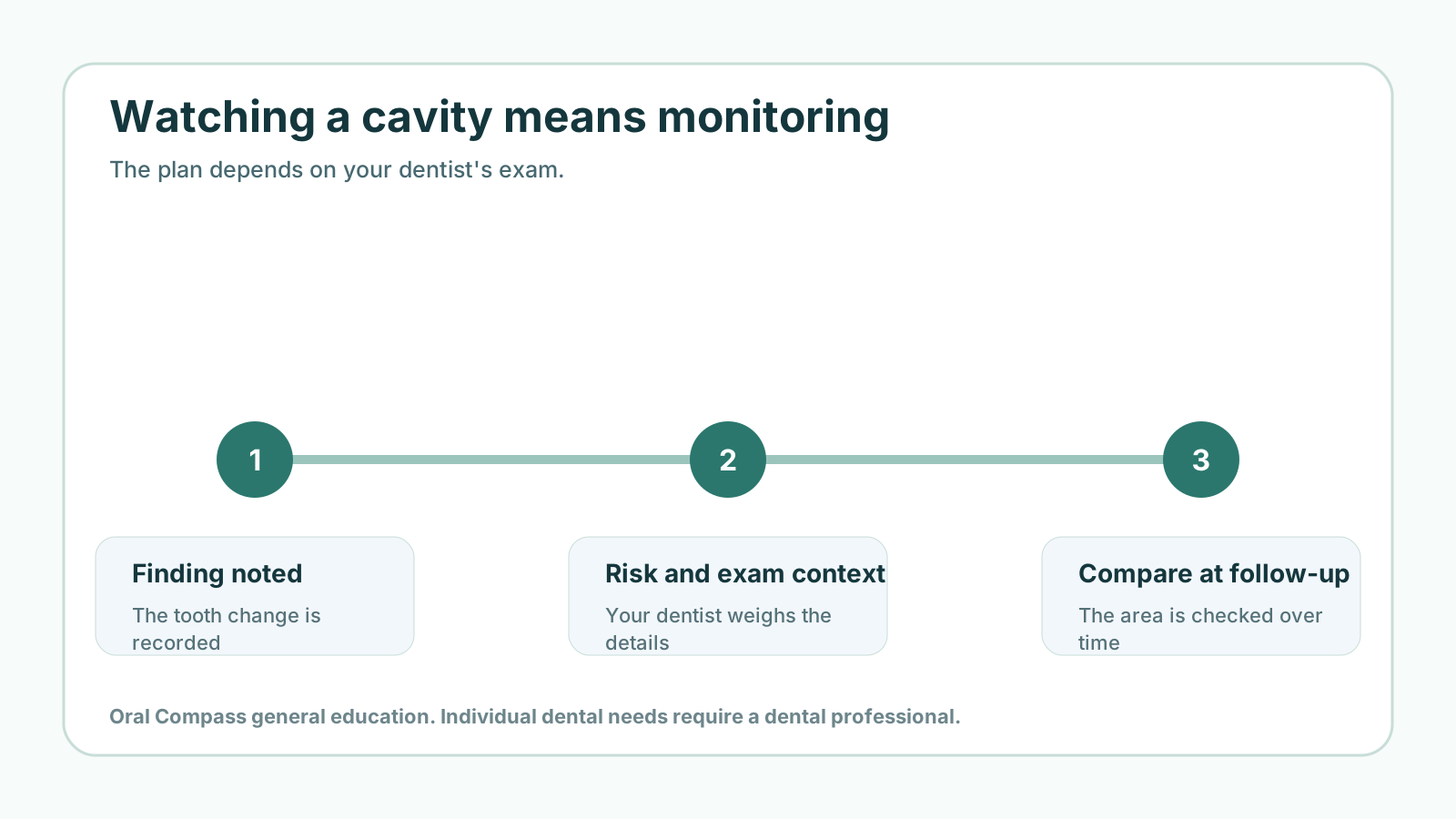
Monitoring is not the same as delaying necessary care
Some early tooth-decay changes can be managed with preventive or nonrestorative care, and professional guidance describes monitoring selected lesions during care. But not every early finding is appropriate to watch, and a formed cavity, pain, infection, or progression may change the options.
Monitoring should have a reason, a next check, and a threshold for changing course. It is different from deciding on your own to skip an appointment, wait indefinitely, or reject a recommended filling or other treatment. The dentist who examined the tooth must interpret the finding and its timing for that person.
What may affect a monitoring decision
There is no single “watching” rule for every tooth. Depending on the finding, a dental professional may consider:
- Whether the surface is intact or has a visible hole or breakdown.
- Where the finding is located and whether it is visible on an X-ray or clinical exam.
- Whether it appears active, stable, or changed compared with an earlier visit or image.
- Symptoms such as pain or sensitivity, while remembering that early decay may cause no symptoms.
- A person’s cavity history and other factors that affect caries risk, including plaque control, fluoride exposure, diet pattern, saliva, and difficulty cleaning the area.
- Whether the person can return for the planned follow-up and carry out the recommended prevention steps.
These factors help a clinician assess risk and disease activity; they do not let an online article decide what should happen to a particular tooth. What causes cavities provides background on the decay process and the role of repeated acid exposure.
What monitoring may involve
“Watching” may involve documenting the location and appearance of a finding, checking the tooth surface at later visits, comparing photographs or dental X-rays when appropriate, and reviewing prevention steps. The details depend on the tooth and the dental professional’s plan.
Ask for the plan in concrete terms:
- What exactly are we watching: an enamel change, a cavity, staining, or an area seen on an X-ray?
- What evidence supports that interpretation, and what remains uncertain?
- When should it be checked again, and how will it be compared?
- What change would make you recommend a different option?
- Which home-care or fluoride instructions are part of the plan?
If the proposed follow-up is unclear, what happens at a dental checkup gives general context for exams and questions, but it cannot set a personal appointment interval.
Why timing cannot be set by a general article
Tooth decay can be slow, fast, or inactive at different times, and symptoms do not reliably show how far a process has gone. NIDCR notes that early decay often has no symptoms, while more advanced decay can cause pain, sensitivity, infection, and tooth loss. A general “wait this many months” rule could therefore be unsafe.
Use the timing given by the dental office for the tooth that was examined. If a visit is missed or the plan no longer feels clear, contact the office rather than treating “watching” as an open-ended delay. If treatment has been recommended, ask what the benefit of that timing is and what the risks of waiting are; questions to ask about a tooth problem can help organize that conversation.
Contact a dentist sooner if symptoms change
Contact a dental professional for guidance if the tooth develops new or worsening pain, sensitivity, pain when biting, a visible hole or darkening, swelling, a bad taste, drainage, or fever. These signs do not identify the cause by themselves, but they are reasons not to rely on an old monitoring plan without checking in.
Seek urgent help for swelling around the eye or neck, or swelling that makes breathing, swallowing, or speaking difficult. Local emergency dental services or emergency guidance can help with the appropriate route. Do not wait for a routine monitoring visit when severe symptoms or facial swelling are present.
Common questions
Does “watching” mean I definitely have a cavity?
No. It may refer to a suspected or early change, an area seen on an X-ray, or a cavity that a dentist is tracking. Ask for the exact finding and whether it is a confirmed diagnosis, a suspected problem, or a finding being monitored.
Can an early cavity get better?
Some early decay before a hole forms can be stopped or reversed with appropriate fluoride and other professional preventive care. That does not mean every early finding will reverse or that a formed cavity can be repaired with home care alone. The distinction depends on the tooth and examination.
Is monitoring the same as choosing no treatment?
No. Monitoring is an active follow-up plan. It may include prevention, documentation, and reassessment, with a change in treatment if the finding progresses or the circumstances change. Ask what the next step is and what would trigger it.
What if I do not know when to return?
Call the dental office and ask when the tooth should be reassessed, what to do if you miss that date, and which symptoms should prompt an earlier call. Do not use a general online timeline to replace that plan.
The main idea
“Watching a cavity” means a dental professional is monitoring a specific finding under a plan. It does not mean every early lesion is safe to leave untreated, and it does not mean necessary care should be postponed. The useful next step is to understand what was found, what will be compared, when follow-up should happen, and what change would alter the plan.
Sources
- Tooth Decay — National Institute of Dental and Craniofacial Research
- Caries Risk Assessment and Management — American Dental Association
- Caries Management Clinical Practice Guidelines — American Dental Association
- Tooth decay — NHS
- Caries Lesion Activity and Progression Assessment — ORCA and EFCD consensus report