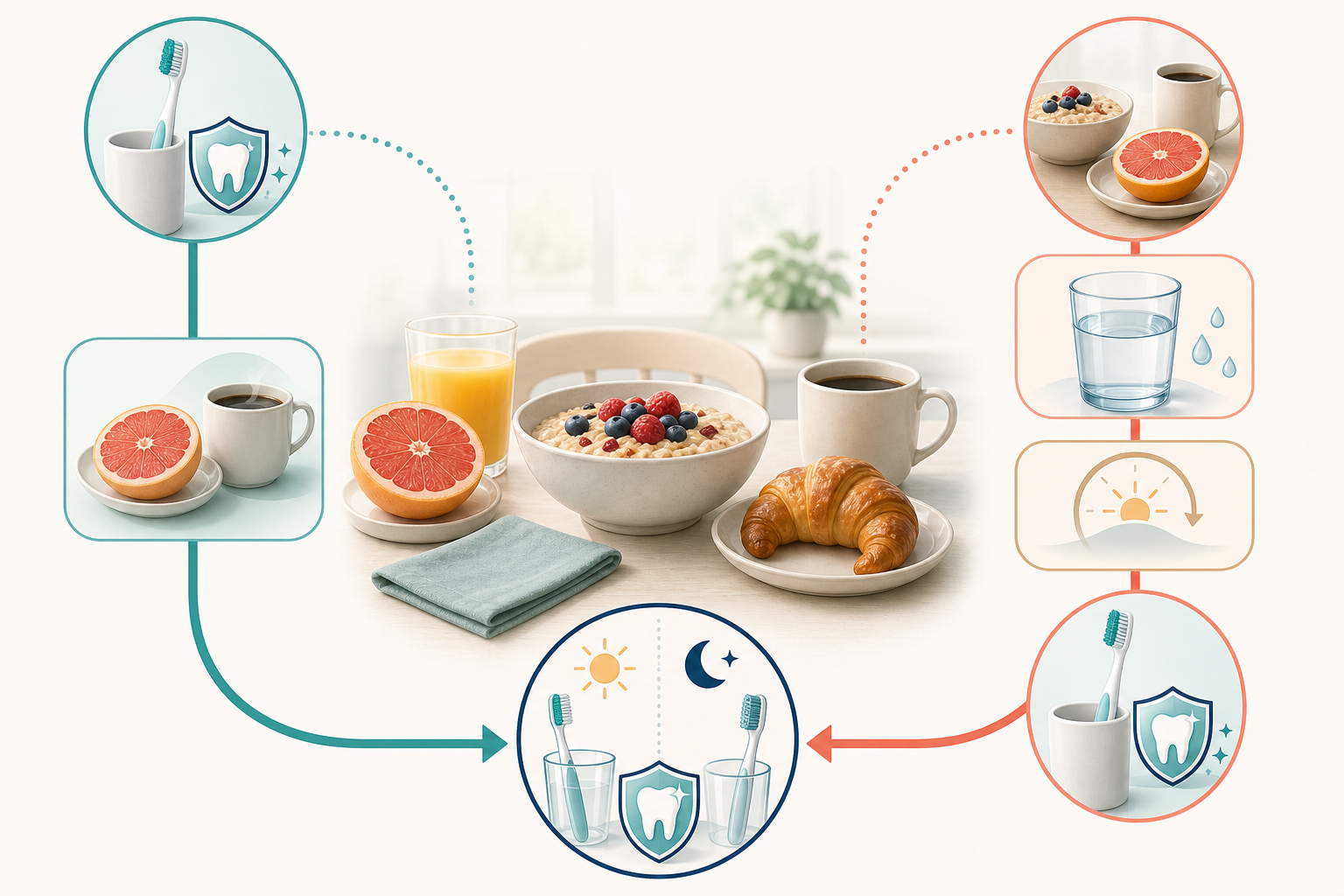
You can brush before or after breakfast. There is not one sequence that everyone must follow. What matters most is brushing gently and thoroughly twice a day with fluoride toothpaste—and choosing morning timing you can repeat.
If breakfast includes acidic foods or drinks, brushing beforehand is a simple option. If you prefer to brush afterward, avoid rushing straight from an acidic breakfast to the toothbrush. Rinse with water and give your mouth some time first; some dental guidance suggests waiting about an hour after an acidic exposure.
Why brush before breakfast?
Plaque continues to collect while you sleep. Brushing when you wake up removes that buildup and can freshen morning breath before you eat or drink.
Brushing first also makes the acid-timing question easier. You do not have to fit a waiting period between fruit juice, citrus, or another acidic breakfast item and leaving home.
There is a tradeoff: breakfast can change how a freshly brushed mouth tastes. If that makes the routine unpleasant, another consistent time may work better.
Why brush after breakfast?
Some people prefer to clear away the taste and food left after breakfast. That can be a reasonable routine too, especially when breakfast is not notably acidic and there is time to brush gently rather than hurriedly.
Breakfasts are not all the same. Plain oatmeal and water do not create the same acid exposure as citrus juice or a fizzy drink. Coffee is acidic as well, although what you add and how long you sip it can change the overall oral-health picture.
Why not brush immediately after something acidic?
Acidic foods and drinks can temporarily change the tooth surface. The American Dental Association recommends rinsing with water after acidic items, and some guidance advises waiting about an hour before brushing so saliva has time to clear and buffer acids.
That does not mean an ordinary variation in timing has ruined your enamel. A current UK evidence review found no strong evidence that toothbrushing timing is important enough to tell everyone to delay brushing after every meal. The practical message is narrower: if your breakfast is acidic, brushing before it—or rinsing with water and waiting before brushing afterward—is a cautious choice.
Do not scrub harder to make up for waiting. Normal brushing with a soft-bristled brush and fluoride toothpaste is unlikely to cause erosive enamel wear.
A practical way to choose
Try the routine that fits your breakfast and schedule:
- Brush before breakfast if you drink juice, eat citrus, sip an acidic drink, or tend to forget once the day starts.
- Brush after breakfast if that feels cleaner and you can leave time after acidic items.
- Rinse with water after an acidic breakfast if you will brush later.
- Keep the basics steady: brush for about two minutes, twice daily, with fluoride toothpaste, using gentle technique.
Morning brushing is only one of the two daily sessions. Brushing last thing at night is especially useful because it clears plaque and leaves fluoride on the teeth during sleep. For technique, see How to Brush Your Teeth Properly. You can also read How to Prevent Cavities and Should You Rinse After Brushing?.
The takeaway
Before breakfast is often the simplest choice when breakfast is acidic. After breakfast can also work when you allow time after acidic foods or drinks. A gentle, complete, twice-daily fluoride routine matters more than following one rigid morning rule.
Sources
- Home Oral Care — American Dental Association
- Dental Erosion — American Dental Association
- Chapter 8: oral hygiene — UK Department of Health and Social Care
- Bad breath — NHS