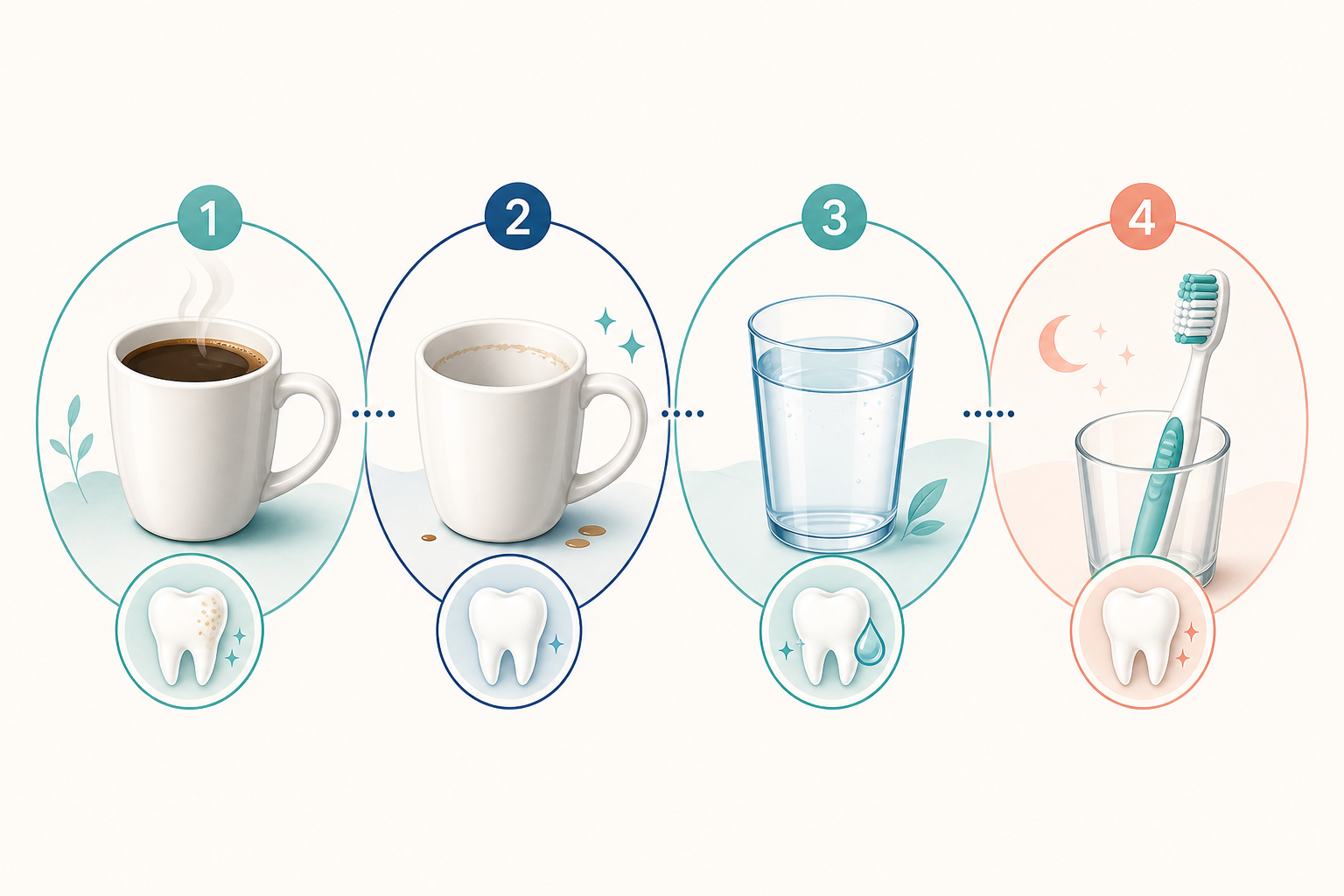
You do not have to stop drinking coffee to care for your teeth. Coffee is best known for causing surface stains. Sweetened coffee drinks add a cavity concern, and caffeine may make existing dry-mouth symptoms harder to manage. Coffee is also acidic, but acidity alone does not tell you whether a drink will cause enamel wear.
The most practical approach is to avoid stretching one cup across many hours, use water afterward, give your mouth time before brushing, and be deliberate about sugary add-ins.
Why coffee stains teeth
Coffee contains dark pigments that can collect on the outer surface of enamel. This is called extrinsic staining. It may make teeth look yellow, brown, or less bright over time, especially with frequent exposure.
Surface stain is different from intrinsic discoloration, which is within the tooth. Tooth development, aging, injury, decay, and other factors can change a tooth’s internal color. That distinction matters because a product that removes surface stain may do little for discoloration coming from inside a tooth.
Coffee does not stain everyone in the same way. Natural tooth color, enamel surface, plaque and tartar buildup, smoking or tobacco use, home care, and how often someone drinks pigmented beverages can all affect appearance.
Is coffee’s acidity bad for enamel?
Coffee can add to dietary acid exposure, but that does not mean an ordinary cup automatically damages enamel. Dental erosion is the chemical loss of hard tooth tissue from acid, separate from bacterial tooth decay. Whether a drink is erosive depends on more than its pH.
Frequency, contact time, the drink’s overall chemistry, the rest of a person’s diet, saliva, reflux or vomiting, and other factors can all influence erosive wear. Coffee should be considered within that full pattern rather than treated as the only cause.
To reduce contact time:
- Drink coffee in a defined period rather than sipping the same cup for hours.
- Do not swish or hold it around the teeth.
- Drink or rinse with plain water afterward.
- Avoid adding another acidic ingredient, such as lemon.
If you notice increasing sensitivity, thinning-looking edges, smooth worn areas, or changes in tooth shape, ask a dentist to evaluate the pattern rather than assuming coffee is the only cause.
Wait before brushing
If you plan to brush after coffee, do not rush straight from the cup to the toothbrush. The American Dental Association advises rinsing with water rather than brushing immediately after acidic beverages. MouthHealthy gives a cautious general recommendation to wait about one hour after acidic foods or drinks so saliva has time to clear acids and the surface can reharden.
This does not mean one ordinary variation in timing has ruined your enamel. Rinse with water and brush later with fluoride toothpaste; do not replace routine brushing with constant brushing after every cup. If you need a schedule that fits reflux, dry mouth, orthodontic appliances, or a high risk of cavities, ask your dental team for individualized advice.
Dry mouth changes the picture
Saliva moistens the mouth, clears food particles, buffers acids, and supplies minerals that help protect teeth. Persistent dry mouth can raise the risk of cavities and oral infections.
Caffeine can dry the mouth or worsen dryness for some people. Coffee is not necessarily the original cause: dry mouth can also relate to medicines, health conditions, radiation treatment, dehydration, or other factors. If your mouth often feels sticky or dry, do not simply blame the morning cup.
Practical steps include drinking water, noticing whether caffeinated coffee worsens symptoms, and discussing persistent dryness with a dentist or doctor. Do not stop or change a prescribed medicine on your own. Learn more about how saliva protects teeth.
Sugar and flavored coffee drinks
Plain coffee does not create the same cavity concern as a drink with added sugar. Sugar, flavored syrups, sweetened creamers, whipped toppings, and blended add-ins can turn coffee into a repeated sugar exposure.
The pattern matters. Finishing a sweetened coffee with a meal limits the exposure to one period; sipping it throughout the morning repeatedly supplies sugar to plaque bacteria. How sugar frequency affects teeth explains why repeated exposure matters. Useful changes include:
- Order fewer pumps of syrup or step down sweetness gradually.
- Choose an unsweetened milk or creamer when that works for you.
- Skip a sugary topping you do not especially value.
- Finish the drink rather than continuously topping it up.
- Follow with plain water.
This is about reducing a repeatable risk, not making coffee joyless or labeling one drink “bad.”
How to reduce staining while still enjoying coffee
No strategy can promise stain-free teeth, but these habits can help:
- Keep up consistent brushing with fluoride toothpaste and cleaning between teeth.
- Rinse with water after coffee instead of scrubbing immediately.
- Limit how long coffee stays in contact with the teeth.
- Ask whether a professional dental cleaning could remove accumulated surface stain or tartar.
- If using a whitening toothpaste, understand that it mainly removes surface stains and does not change every type of discoloration.
Avoid abrasive DIY scrubs and acidic “natural whitening” mixtures. They can wear or irritate oral tissues without addressing the cause of discoloration. For a broader evidence check, read whether viral whitening trends work.
What whitening can—and cannot—do
Whitening toothpastes typically rely on mild abrasives to remove extrinsic surface stain. Peroxide-based products bleach tooth color more broadly, but results depend on the type of discoloration. Tooth-colored fillings, crowns, veneers, and other restorations do not whiten like natural teeth, so a result may be uneven.
Temporary tooth sensitivity and gum irritation are common side effects of bleaching. If you already have sensitivity, ask a dentist which options make sense before starting. Cold sensitivity can have several causes, and whitening is not the right explanation for every sensitive tooth.
A dental evaluation can also identify surface stain that may respond to cleaning, tooth decay or injury that needs attention, and restorations that will not change color with bleaching.
When discoloration deserves evaluation
Coffee staining usually develops gradually across several exposed teeth. Contact a dentist when:
- One tooth becomes darker, especially after an injury.
- A color change is new, localized, or progressing quickly.
- Discoloration comes with pain, swelling, a visible hole, or significant sensitivity.
- A white, brown, or black area does not look like ordinary surface stain.
- You are considering whitening but have untreated dental concerns or visible restorations.
These features do not diagnose a specific problem. They are reasons to have the color change identified before trying to cover it.
The balanced takeaway
Coffee can contribute to surface stain, and frequent acidic exposure may matter for enamel. Caffeine may aggravate dry mouth, while syrups and sweeteners add a cavity concern. You can reduce those effects by containing the drinking window, using water afterward, waiting before brushing, and being deliberate about added sugar.
Keep the coffee if you enjoy it. The goal is a routine that protects your mouth without turning a familiar drink into a source of fear.
Sources
- Whitening — American Dental Association
- Dietary Acids and Your Teeth — MouthHealthy / American Dental Association
- Dental Erosion — American Dental Association
- Dry Mouth — National Institute of Dental and Craniofacial Research
- Nutrition and Oral Health — American Dental Association