Hearing “root canal” can make a dental recommendation feel frightening. In general, root canal treatment is an attempt to keep a natural tooth in place when the soft tissue inside it has become inflamed or infected. It is not a diagnosis you can make from pain alone, and it is not the answer to every tooth problem.
What is inside a tooth?
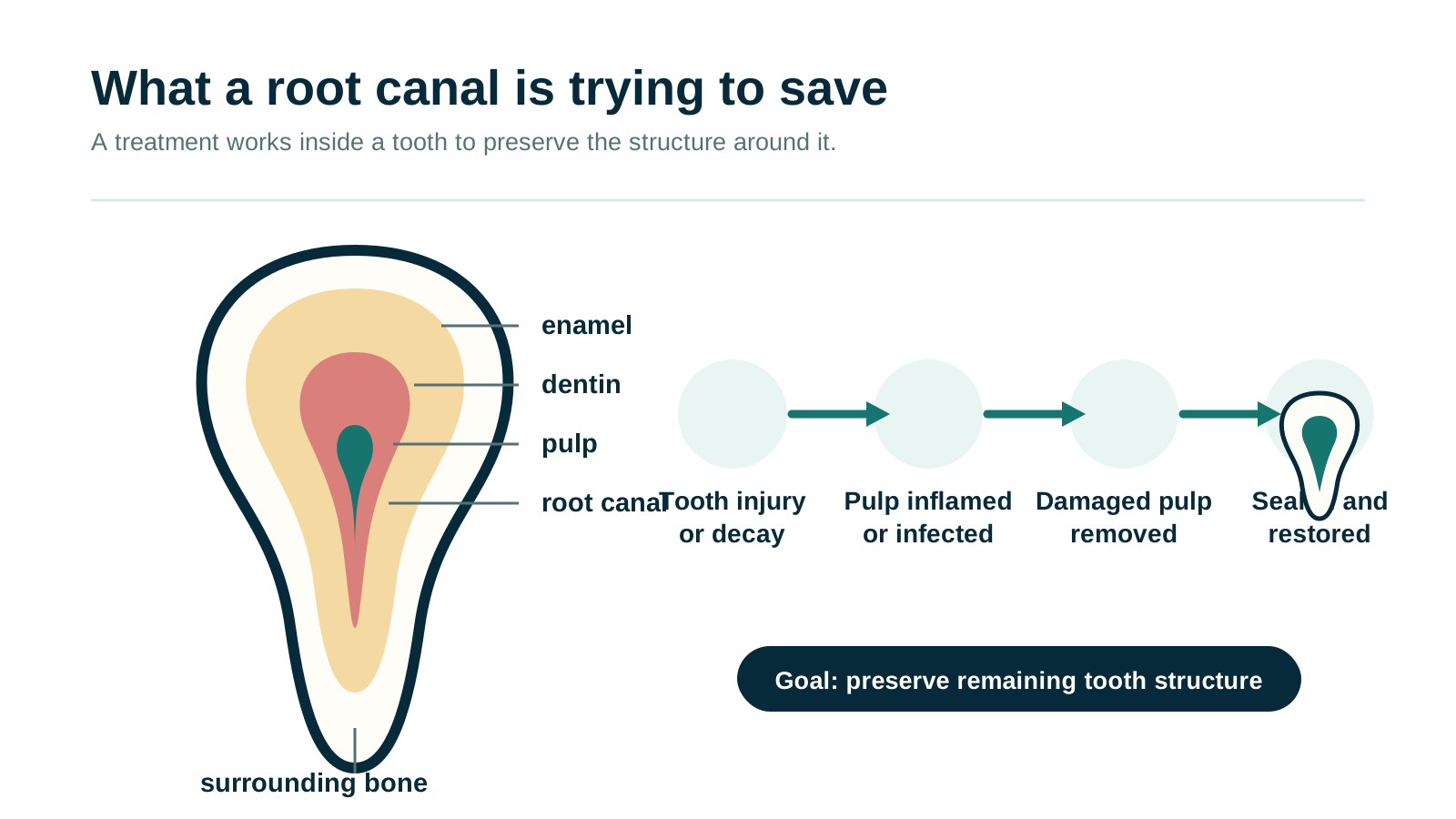
Under the hard outer layers of a tooth is the pulp: soft tissue containing nerves, blood vessels, and connective tissue. The pulp helps a tooth develop. When a tooth is fully developed, it can continue to function after pulp tissue is removed and the inside is sealed.
Our guide to tooth anatomy for dental findings offers a broader look at the layers a dentist may be discussing.
Root canal treatment, also called endodontic treatment, works inside the tooth. A clinician removes inflamed or infected pulp, cleans the inside spaces, then fills and seals them. The general goal is to address a problem in the tooth’s inner tissue while preserving the tooth structure that can still be used.
That goal is important, but it is not a promise that every tooth can be kept or that every treatment has the same outcome. The condition of the tooth, surrounding tissues, the amount of restorable tooth structure, and the restoration all matter. A dentist or endodontist can explain what they see in your specific case.
Root canal treatment does not rebuild missing tooth structure, replace a crown or filling that is needed afterward, or guarantee that pain will disappear or the tooth will last. It treats the inside of the tooth; the rest of the treatment plan depends on the tooth and the findings around it.
Why a crown or filling may be part of the conversation
After root canal treatment, the tooth needs to be restored and protected. Depending on the tooth and how much structure remains, a dentist may discuss a filling, crown, or another restoration. That discussion is about helping the tooth function and protecting the remaining structure; it is not a one-size-fits-all rule.
Dental crowns basics explains the general role of a crown without deciding whether one is right for you.
Tooth pain does not automatically mean a root canal
Tooth pain, sensitivity, pressure, and changes around a tooth can have more than one cause. Some people have little or no pain with a dental problem, while some painful symptoms come from conditions that need a different approach. An examination, and sometimes imaging or other testing, helps a dental professional determine what is happening.
If you have a new, persistent, worsening, or concerning tooth symptom, contact a dentist. What does it mean if my tooth hurts? can help you describe the pattern without trying to diagnose it yourself.
Discomfort and recovery
During treatment, local anesthetic is used, so the experience is not expected to feel like un-numbed dental work. You may still feel pressure, and a treated tooth or the surrounding area can be sore once the anesthetic wears off. Temporary numbness and mild soreness can last for a few days; recovery varies with the tooth, the infection or inflammation, and the stage of treatment. Follow the instructions from your dental team, attend the planned restoration and follow-up visits, and contact them if pain or swelling is worsening, does not settle, or concerns you.
Until the tooth has its planned permanent restoration, ask your dentist what to eat and how to protect it. Do not use a general recovery description to decide that your own symptoms are normal.
Alternatives, retreatment, and extraction
The appropriate options depend on whether the tooth can be restored, what the examination and tests show, and your circumstances. Depending on the case, a dentist or endodontist may discuss root canal treatment, another endodontic procedure such as retreatment or surgery, or extraction. Extraction may be necessary when a tooth cannot be predictably restored or treated, but that boundary can only be assessed for the individual tooth. If extraction is discussed, ask how the space would be managed and whether a specialist opinion is useful.
There are no guaranteed outcomes. A tooth that has already had root canal treatment can sometimes need additional treatment if it does not heal as expected or develops a new problem; retreatment is not always feasible, and extraction may still be recommended.
When a dental symptom needs urgent attention
Contact a dentist promptly for severe or worsening pain, swelling, fever, a bad taste or drainage, or trouble opening your mouth. Seek emergency medical care immediately for swelling that makes it hard to breathe, speak, or swallow, or swelling near the eye or that is rapidly increasing. These symptoms can have several causes, and the urgency cannot be determined from this article alone.
Questions that can make the conversation clearer
- What finding is leading you to discuss root canal treatment?
- What is happening inside or around the tooth as you understand it?
- What is the goal of treatment in this situation?
- What restoration might the tooth need afterward, and why?
- What alternatives are appropriate to discuss for this tooth?
- What follow-up or warning signs should I understand?
- What discomfort or swelling should prompt me to call, and how should I reach the dental team after hours?
You can also use our questions to ask before a common dental treatment guide to prepare for a broader treatment-planning conversation.
The takeaway
Root canal treatment is generally intended to treat a problem in the pulp and preserve as much of a natural tooth as is appropriate. The term describes a treatment category, not a diagnosis you should draw from symptoms alone, and it does not guarantee that a tooth can be saved. A clear explanation of the findings, goal, restoration plan, alternatives, expected recovery, and warning signs can make the next conversation easier.
Sources
- What is a Root Canal? — American Association of Endodontists
- Tooth Decay — National Institute of Dental and Craniofacial Research
- Root canal treatment — NHS
- Treatment Options for the Diseased Tooth — American Association of Endodontists
- Dental abscess — NHS