A caregiver check-back should feel like the planned second half of brushing, not a surprise inspection. Let the child practice, check a few routine basics, help with areas the child cannot yet manage reliably, and keep dental concerns for a dentist to evaluate.
Children build brushing independence gradually. If you are deciding how much of the job a child should handle, first read brushing your child’s teeth when they want to do it themselves. This guide focuses on the calm follow-up after the child has had a turn.
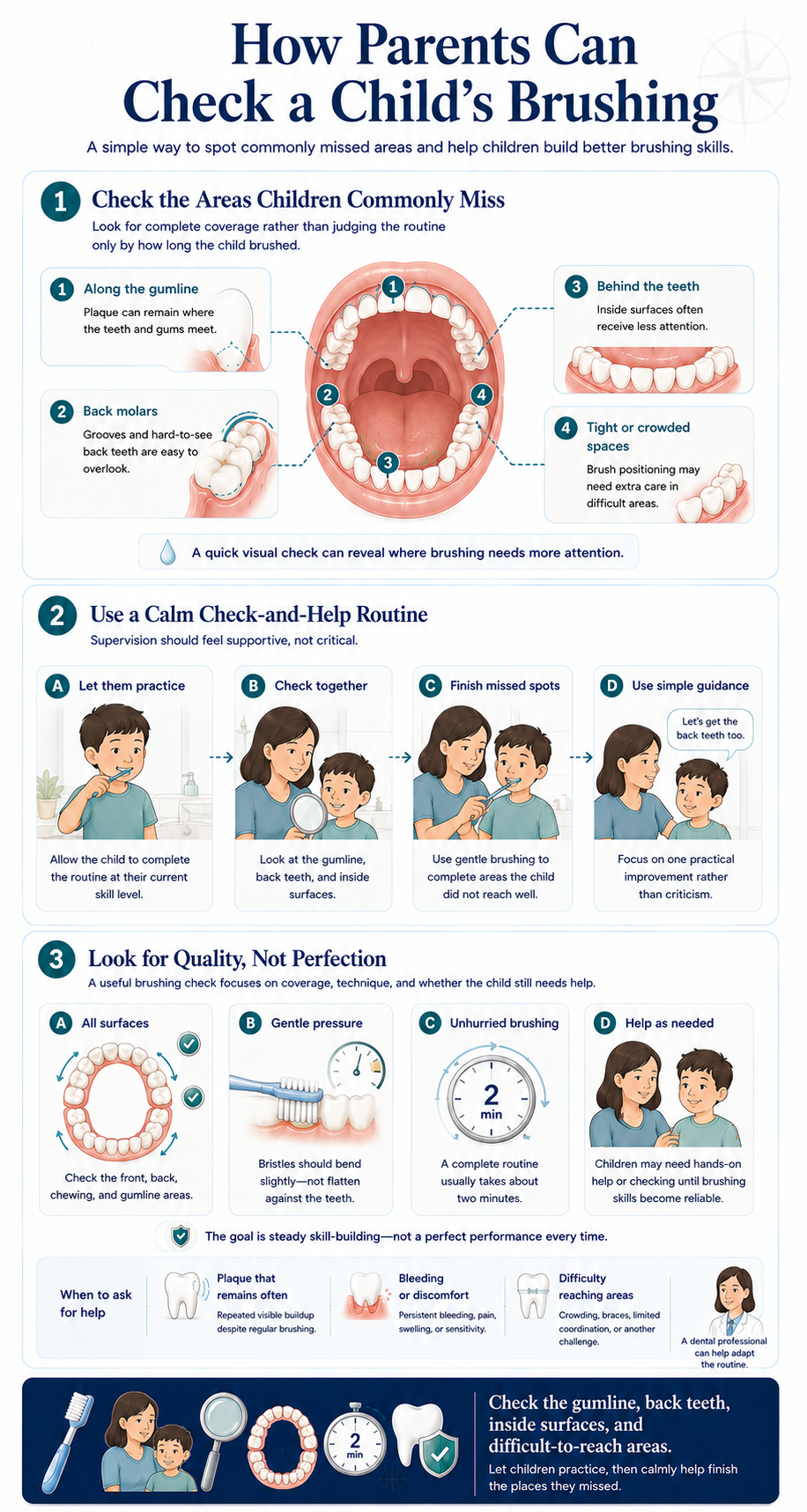
Make the check-back predictable
Tell the child about the helper turn before brushing begins. A short phrase such as, “You take the first turn, then I will help with the back teeth,” makes the sequence clear.
When the same pattern happens most days, the follow-up can feel less like a correction. The morning and bedtime tooth routine for kids can help families place that shared step inside a predictable routine.
Step 1: Let the child practice
Give the child a real role that fits their current ability. They might put the brush in their mouth, begin on the front teeth, or brush one section before the caregiver helps.
Practice matters, but it does not require pretending the child is ready to manage every part alone. Young children generally need an adult to brush, assist, or supervise, and readiness varies.
Step 2: Check routine basics
Keep the check brief and practical. A caregiver can notice whether:
- Brushing happened at the planned time.
- The intended amount of toothpaste was used.
- The child gave attention to the front, back, inside, outside, and chewing surfaces.
- The child needs help reaching an area.
This is a routine check, not a search for disease. Parents do not need to grade the child, inspect every spot, or decide whether a tooth or gum is healthy based on appearance.
Step 3: Help where needed
Use a short helper turn to cover areas the child may have rushed or cannot reach well. Back teeth and inside surfaces are common places for a young brusher to need assistance, but this article is not a replacement for the full toothbrushing technique guide.
Try neutral language:
- “Let’s give the back teeth a helper turn.”
- “You practiced; now I will finish this section.”
- “We are working as a team.”
Avoid language that turns the follow-up into a verdict, such as “You did it wrong” or “Let me see how bad it is.” The purpose is to support a health routine, not win an argument.
Step 4: Let a dentist evaluate concerns
A caregiver check-back cannot diagnose cavities, gum disease, infection, enamel problems, or whether a child is brushing effectively enough for their individual risk. If you notice pain, swelling, injury, a persistent spot or change, bleeding that concerns you, or difficulty eating, contact a dentist rather than repeatedly inspecting the area at home.
A dentist can also help decide how much assistance a particular child still needs. Age is only one factor; coordination, attention, tooth position, dental appliances, and individual oral-health needs can matter too.
If the helper turn causes conflict
Keep the language short and the sequence consistent. Offer limited choices that do not make care optional, such as which section the child starts or whether the caregiver helps before or after a familiar song.
If brushing or the check-back regularly becomes overwhelming, the guide to child toothbrushing refusal offers broader ways to lower friction. Persistent or severe difficulty, pain, and safety concerns deserve professional support rather than a longer home inspection.
Adjust support gradually
As the child becomes more reliable, the caregiver may move from doing most of the brushing, to finishing missed areas, to shorter check-backs. There is no universal birthday when supervision should disappear.
The useful question is not, “Did my child pass?” It is, “What support helps this child complete the routine safely and consistently today?”
The calm takeaway
Keep check-backs predictable, brief, and neutral. Let the child practice, notice routine basics, help where needed, and leave diagnosis to a dentist. That protects both the brushing habit and the relationship around it.
Sources
- Frequently Asked Questions — American Academy of Pediatric Dentistry
- Toothbrushes — American Dental Association
- Healthy Habits - Babies and Kids — MouthHealthy / American Dental Association