Caregivers hear a lot of anxious advice about bottles, sippy cups, and teeth. The calmer version is that patterns matter more than perfection. Repeated exposure to drinks other than water—especially when teeth are not cleaned afterward or a child is put to bed with a bottle—can give plaque bacteria more opportunities to make acids. One snack, bottle, or cup does not guarantee decay.
Why the pattern matters
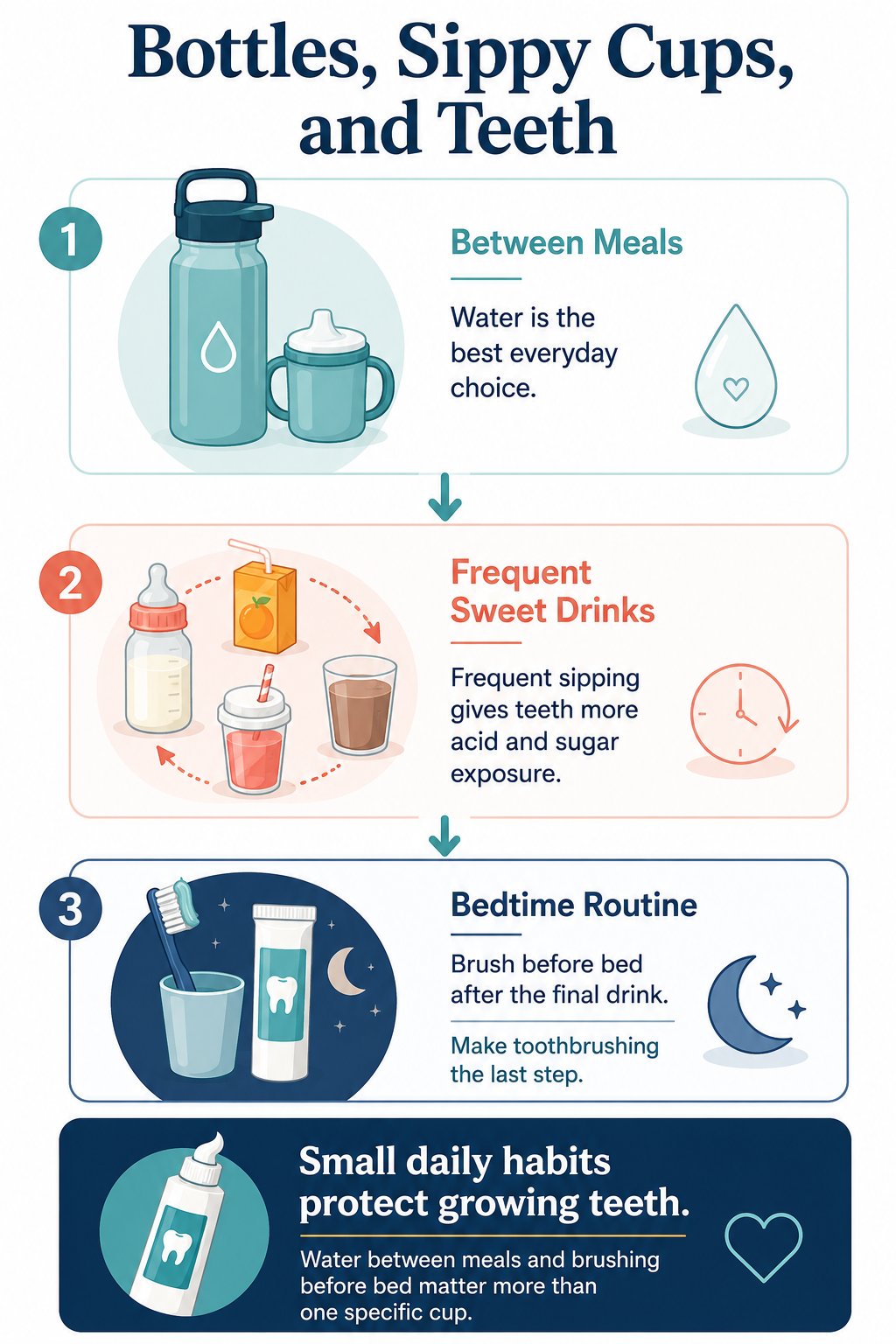
Tooth decay develops over time through a mix of factors, including plaque, sugar exposure, fluoride, saliva, brushing, and individual risk. When a drink with sugars reaches the teeth again and again, plaque bacteria can repeatedly make acids that challenge tooth surfaces.
This is why slowly sipping a non-water drink over a long stretch can be different from having it as part of a meal. It is also why bedtime deserves its own attention: milk or another drink can remain around teeth when a child falls asleep with a bottle.
How sugar frequency affects teeth explains the repeated-exposure idea for the whole family.
Bottles, cups, and what is in them
A bottle or cup is not automatically a problem. The oral-health question is what reaches the teeth, how often, and whether it is part of a bedtime pattern. Water is the simple lower-risk option for teeth between meals and after brushing. Other drinks can fit into a child’s feeding needs and family routine, but they do not have the same relationship with teeth as water.
This is general oral-health context, not feeding, nutrition, weaning, or sleep-training advice. If your child has a medical, nutritional, feeding, or growth plan, follow the guidance from the professionals who know that plan.
A gentle way to adjust routines
Families do not need a sudden, perfect overhaul. A practical approach is to notice one repeat pattern—such as a cup that travels all afternoon or a bottle that is part of falling asleep—and discuss a gradual change that works for your child.
Some families start by making water easier to reach between meals, keeping drinks other than water closer to meals, or making tooth cleaning the consistent final step before bed. The right pace may look different when feeding, sensory needs, illness, or family schedules are involved.
Keeping the focus on teeth, not blame
Early-childhood routines are often shaped by comfort, culture, sleep, childcare, medical needs, and plain exhaustion. Warnings such as “bottle rot” are not helpful. The useful message is that teeth benefit from fewer repeated non-water exposures and a dependable cleaning routine, while families can make changes one manageable step at a time.
Why baby teeth matter and when to start cleaning a baby’s mouth and teeth offer more age-appropriate oral-health context.
When to ask for professional guidance
Ask a dentist or pediatric dental professional for guidance if you notice a change in a child’s teeth, have questions about a routine, or need help adapting oral care to a special feeding or medical situation. A first dental visit for a child can also be a good setting for calm, nonjudgmental questions.
The takeaway
Bottles and sippy cups are everyday tools, not a reason for shame. For teeth, the important pattern is how often non-water drinks reach the mouth and what happens at bedtime. Small, sustainable shifts toward water between meals and a final tooth-cleaning routine can support young teeth while respecting a child’s broader needs.
Sources
- About Feeding From a Bottle — Centers for Disease Control and Prevention
- Tooth Decay — National Institute of Dental and Craniofacial Research